
Otto Barenberg is a student at Harvard Law School and the Digital Director of OnLabor.
In today’s news and commentary, talks between Boeing and the Machinists union stall; Sweden rebukes Tesla; and the AFL-CIO secures an agreement to enhance worker participation in artificial intelligence research.
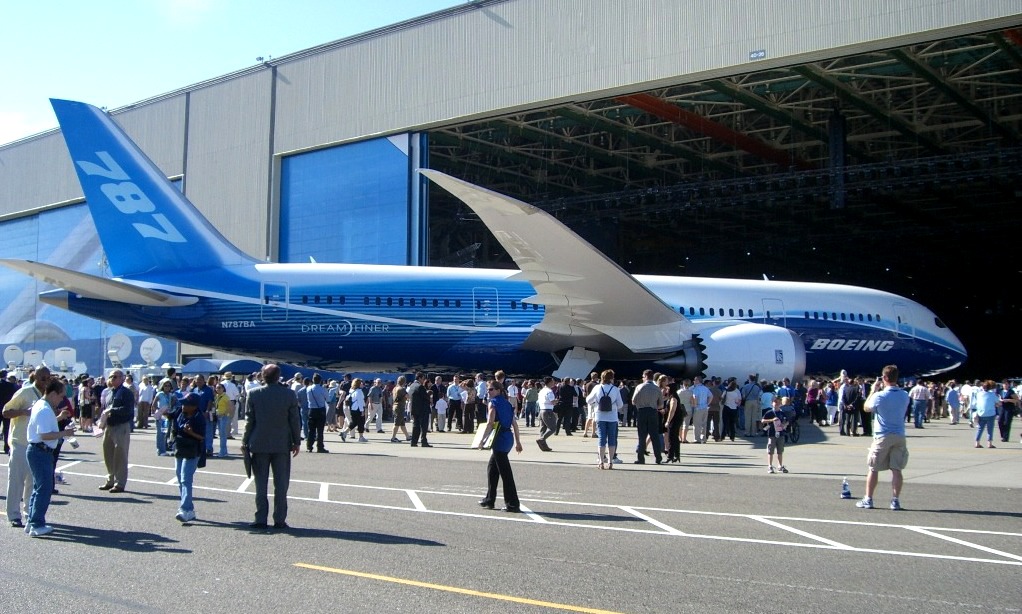
Last week, negotiations between Boeing and the Machinists union broke down again, one month after nearly 33,000 Boeing employees walked out over inadequate pay. Boeing filed an unfair labor practice charge against the union on Thursday, alleging the Machinists failed to bargain in good faith. The beleaguered airplane manufacturer claimed the Machinists had clung to “unreasonable demands,” while the Machinists, who have filed ULPs of their own against Boeing, argued the company was “hell-bent” on its proposal. Jon Holden, president of Machinists Local 751, also argued Boeing overstated its latest offer. The company’s suggested 2% annual bonus was lower than that earned by workers in eleven of the past twelve years, its retirement proposals failed to address several substantive concerns, and its proposed 30% pay hike was still well below the 40% increase union members had been holding out for. As of last week, no additional negotiating sessions had been scheduled.
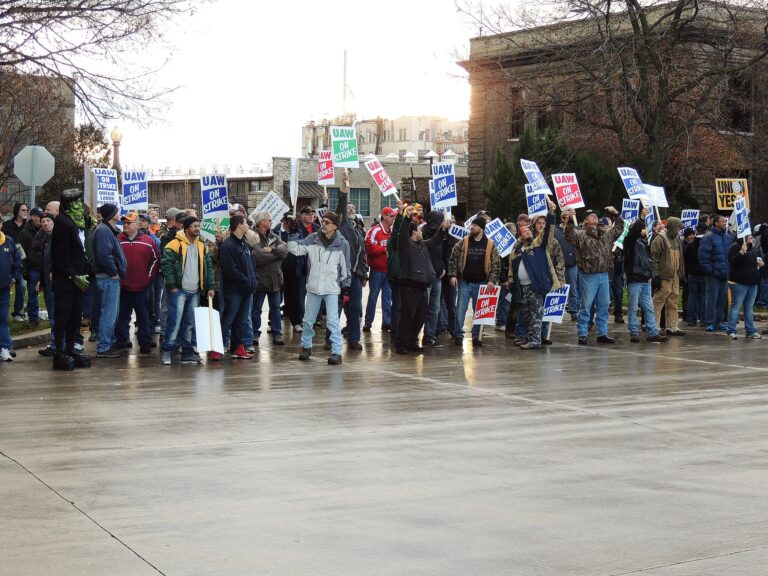
A Swedish court ruled last week that it can’t intervene in a postal company’s blockade of Tesla’s Swedish facilities. Patrik Alm, a Solna District Court judge, said the Swedish constitution bars the government from interfering in labor disputes: “parties in the labor market have the right to take action, and the state should not intervene.” The postal workers were one of nearly a dozen Swedish unions to initiate solidarity strikes and boycotts against Tesla last year, after the U.S. automaker refused to sign a collective bargaining agreement with IF Metall, the powerful union that represents mechanics at Tesla’s Swedish repair shops. In support of the mechanics’ year-long strike, postal workers have blocked deliveries of key components, spare parts, and new-vehicle license plates, a move that has slowed Tesla’s expansion into the Swedish market and garnered Elon Musk’s ire. “Now it’s probably time for Tesla to stop fooling around and respect the Swedish collective agreement model,” the postal workers union’s president, Gabriella Lavecchia, said. “The fact that they spend so much time and energy trying to get around the game rules is just a signal that they have big problems.”
Last month, the AFL-CIO announced a “first-of-its-kind partnership” with the U.S. National Science Foundation to foreground workers in research on emerging technologies. The memorandum of understanding establishes a five-year collaboration between the AFL-CIO’s Technology Institute and NSF, linking scientists with workers and unions to explore the effects of AI, quantum computing, and semiconductor advancements on labor market dynamics and workers’ well-being. In a statement, AFL-CIO President Liz Shuler said the partnership “will advance our vision of a future in which federally funded science and technology innovation incorporates the needs of workers, creates good union jobs, and provides workers pathways for training and upward mobility.” Emboldened by the CHIPS & Science Act, NSF has broadened its mission to more actively shape the economic and social effects of the basic scientific research it supports. Both NSF and the AFL-CIO hope the agreement will serve as a model for collaboration between unions and federal agencies on technological and workforce development.

Daily News & Commentary
Start your day with our roundup of the latest labor developments. See all
March 27
“Cesar Chavez Day” renamed “Farmworkers Day” in California after investigation finds Chavez engaged in rampant sexual abuse.
March 26
Supreme Court hears oral argument in an FAA case; NLRB rules that Cemex does not impose an enforceable deadline for requesting an election; DOL proposes raising wage standards for H-1B workers.
March 25
UPS rescinded its driver buyout program; California court dismissed a whistleblower retaliation suit against Meta; EEOC announced $15 million settlement to resolve vaccine-related religious discrimination case.
March 24
The WNBPA unanimously votes to ratify the league’s new CBA; NYU professors begin striking; and a district court judge denies the government’s motion to dismiss a case challenging the Trump administration’s mass revocation of international student visas.
March 23
MSPB finds immigration judges removal protections unconstitutional, ICE deployed to airports.
March 22
Resurgence in salting among young activists; Michigan nurses strike; states experiment with policies supporting workers experiencing menopause.