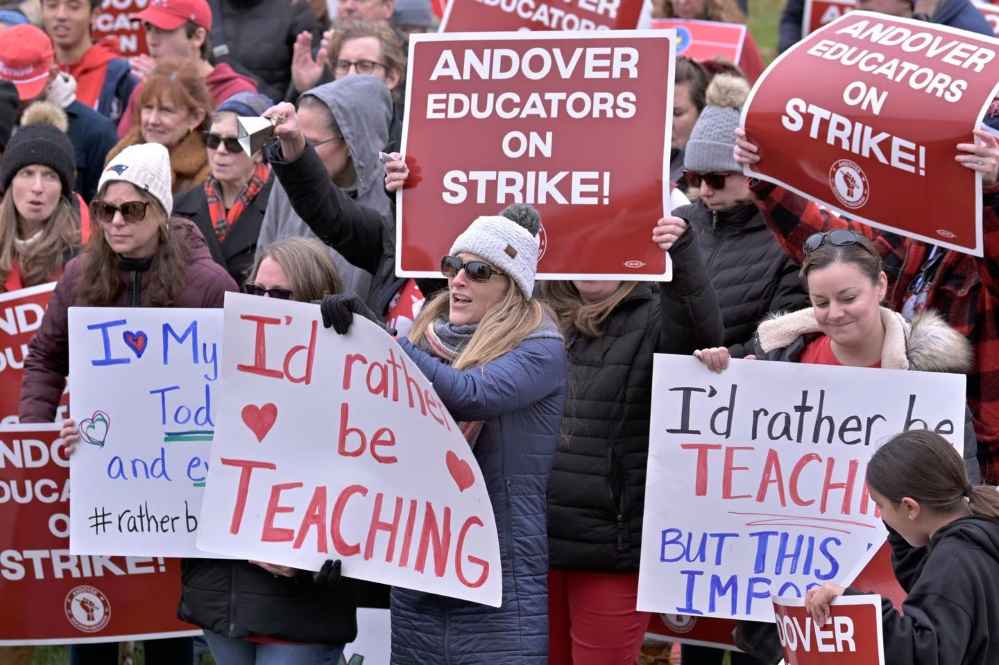

In today’s News and Commentary, teachers unions in Massachusetts and Oregon are bargaining new contracts, with educators on both coasts continuing strikes after failed negotiations this weekend.
The Andover Education Association (AEA) enter their fourth day of striking after negotiations this weekend failed. After more than nine months of contract negotiations, on Thursday night, union membership voted overwhelmingly to approve a strike action. Andover Public Schools closed Friday, the first day of the strike. The AEA and the Andover School Committee engaged in bargaining sessions over the weekend, but both sides point to the other for failure to reach an agreement. One sticking point in these negotiations is the union’s demand for a significant raise and improved benefits for instructional aides. These employees currently earn between $25,000 and $38,000, salaries the union says is “far below what is considered a living wage for the region.” The School Committee claims the union’s demands will “tie the hands of the district and the town for years to come” and would require “significant budget cuts that will negatively impact teachers, students, families, and other town residents.” Massachusetts public employees, including teachers, are not legally allowed to strike. The last time AEA engaged in this labor action, the labor relations board ruled the strike illegal.
Students on the other side of the country will also be held home from school again today, as the Portland Association of Teachers (PAT) enters the third week of their first-ever strike. Portland Public Schools’ (PPS) students have not had a single instructional day in the month of November due to holidays, planning days, and the PAT strike. The union’s 103-page proposal includes rules for teachers in early childhood programs and changes to how the district limits class sizes. Because the district’s administration chose not to open permissive subjects of bargaining, PPS’s proposal is substantially shorter, at only 58 pages. The two sides met over the weekend for mediated sessions, but remain millions of dollars apart on compensation alone. Negotiations will resume on Tuesday. Educators across the state of Oregon are facing similar labor strains, with over 70 districts engaging in contract negotiations this school year. The Portland negotiations will be instructive for the upcoming bargaining sessions across the state.





Daily News & Commentary
Start your day with our roundup of the latest labor developments. See all
March 13
Republican Senators urge changes on OSHA heat standard; OpenAI and building trades announce partnership on data center construction; forced labor investigations could lead to new tariffs
March 12
EPA terminates contract with second-largest union; Florida advances bill restricting public sector unions; Trump administration seeks Supreme Court assistance in TPS termination.
March 11
The partial government shutdown results in TSA agents losing their first full paycheck; the Fifth Circuit upholds the certification of a class of former United Airline workers who were placed on unpaid leave for declining to receive the COVID-19 vaccine for religious reasons during the pandemic; and an academic group files a lawsuit against the State Department over a policy that revokes and denies visas to noncitizens for their work in fact-checking and content moderation.
March 10
Court rules Kari Lake unlawfully led USAGM, voiding mass layoffs; Florida Senate passes bill tightening union recertification rules; Fifth Circuit revives whistleblower suit against Lockheed Martin.
March 9
6th Circuit rejects Cemex, Board may overrule precedents with two members.
March 8
In today’s news and commentary, a weak jobs report, the NIH decides it will no longer recognize a research fellows’ union, and WNBA contract talks continue to stall as season approaches. On Friday, the Labor Department reported that employers cut 92,000 jobs in February while the unemployment rate rose slightly to 4.4 percent. A loss […]