
Andrew Strom is a union lawyer based in New York City. He is also an adjunct professor at Brooklyn Law School.
The oral argument in Trump v. Slaughter removed any doubt that the six Republican appointees on the Supreme Court are eager to deliver a death blow to independent administrative agencies as they have existed for the past 135 years. And, two Trump appointees on the D.C. Circuit, anticipating the Supreme Court’s ruling, held, in Wilcox v. Trump, that the Constitution requires that the President have the authority to remove the members of the National Labor Relations Board (NLRB) at will.
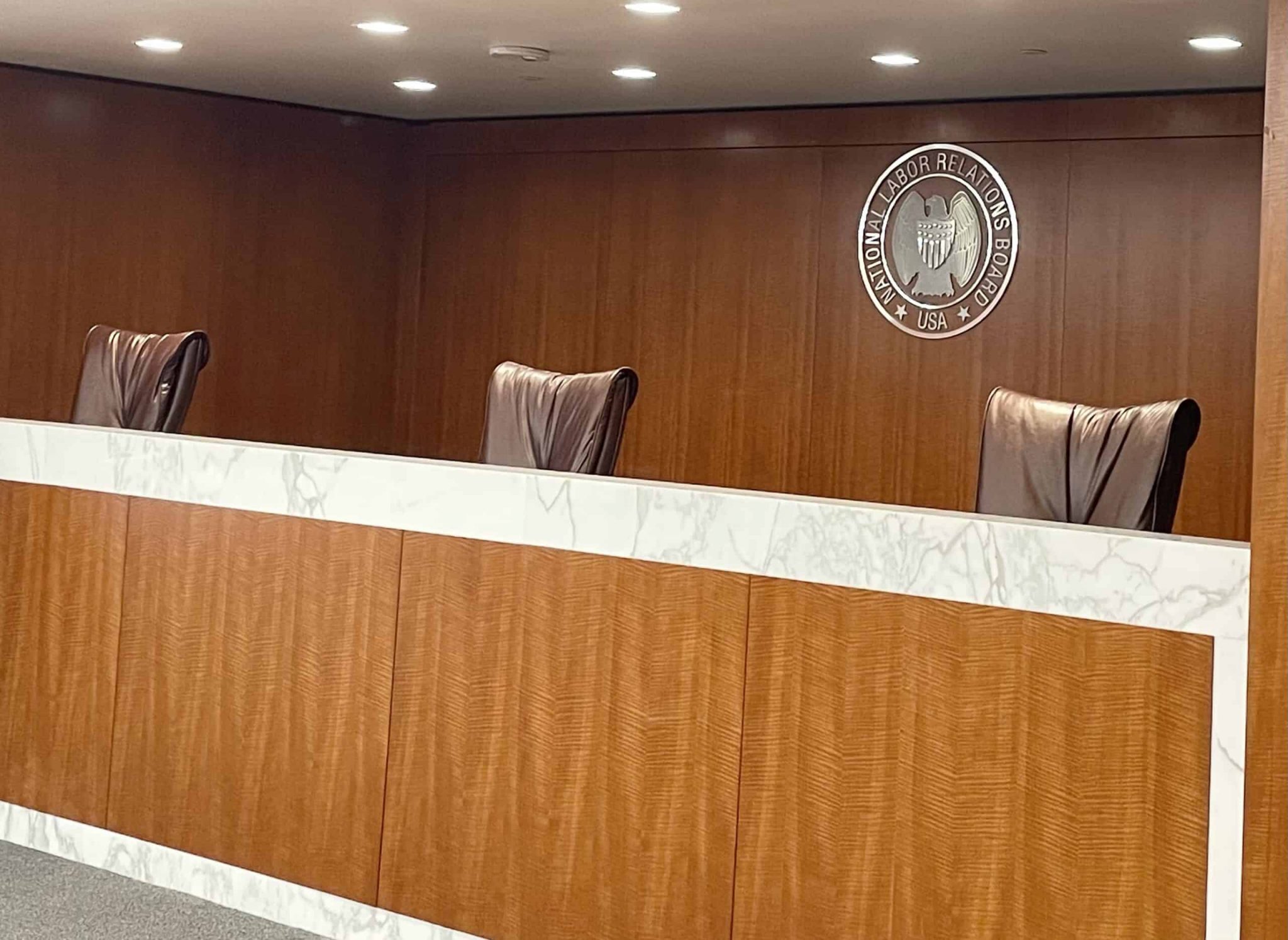
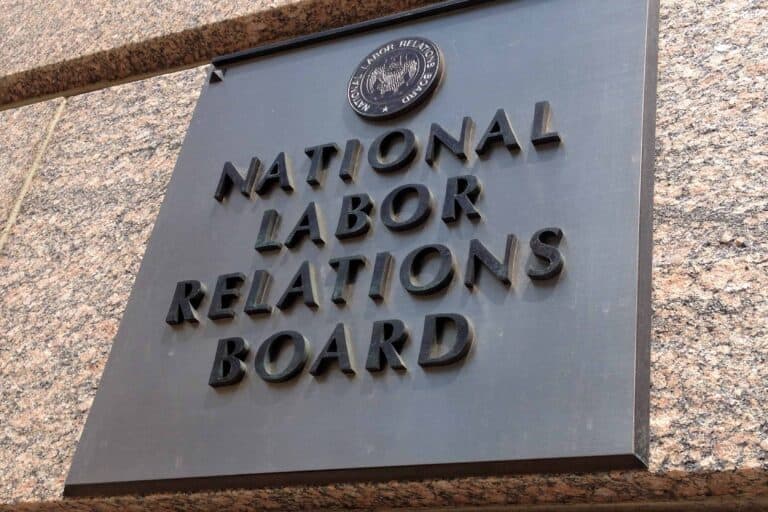
The job of the five members of the NLRB largely consists of adjudicating cases. The Board basically acts as an appellate court, reviewing the decisions of Administrative Law Judges. Throughout this country’s history, it has been widely accepted that judges need some form of tenure protection in order to perform their jobs. The Constitution quaintly provides that federal judges “hold their offices during good behavior,” and their compensation may not be decreased as long as they hold office. State court judges generally serve fixed terms, although in some cases they may be subject to recall votes. As far as I have been able to tell, whenever Congress has created offices with quasi-judicial authority, it has provided the individuals holding those offices with some form of tenure protection. And the Supreme Court has previously recognized the importance of those protections. In 1958, the Court held that when Congress created a commission to adjudicate claims of those who were injured by the enemy in World War II, the members of that commission needed protection from at-will removal to ensure that they would be “entirely free from the control or coercive influence, direct or indirect of either the Executive or Congress.” The language in the National Labor Relations Act is typical of the protections Congress has given to quasi-judicial officers, providing that Board Members “may be removed by the President, upon notice and hearing, for neglect of duty or malfeasance in office, but for no other cause.”
In Trump v. Slaughter, the Administration’s lawyers are arguing that because administrative agencies are part of the executive branch, the President must have the authority to supervise the heads of those agencies. And, if the heads of those agencies don’t follow the President’s orders, he must be able to fire them. Regardless of what you think of this theory in the abstract, it doesn’t fit well when imposed upon an agency that adjudicates cases. In the Wilcox case, the D.C. Circuit majority slid past this problem by mischaracterizing the bulk of the work the NLRB actually performs. The D.C. Circuit asserted that the NLRB does not act like a court because “courts would decide what constitutes … an ‘unfair labor practice,’ using familiar interpretive tools such as statutory text, structure, canons, history, and precedent,” but the NLRB uses adjudication to “prescribe law or policy.” This formulation is simply incorrect. First, the vast majority of Board decisions do not announce new policy; instead, they apply settled law to facts, reviewing ALJ decisions to see if the ALJ misapplied the law, or overlooked relevant facts. But, even when the NLRB invokes policy considerations to justify a decision or to overrule precedent, those policy considerations are grounded in the statute, and the Board’s invocation of policy is no different from the Supreme Court’s regular reliance on policy to justify its own decisions. In fact, in Trump v. Slaughter itself, while the Court’s opinion may nod to history and precedent, the text of the Constitution is silent about where the removal power lies, and the Court seems likely to justify its decision on the policy grounds that allowing the President to fire agency heads will make those agency heads more accountable to the people.
Recognizing that the Members of the NLRB are acting in a quasi-judicial capacity, the NLRB has enacted regulations prohibiting ex parte communications with Board Members about any pending matters. In other words, no one is allowed to call up one of the NLRB Members to lobby them to decide a case in a particular way. The D.C. Circuit judges didn’t address whether this prohibition is constitutional when applied to the President, but it appears to be inconsistent with the theory underlying the court’s opinion. If the President can fire Board Members if they are not doing what he wants them to do, it seems to follow that he can let them know in advance what they ought to be doing. And, even if the courts uphold the fig leaf that Board Members should not discuss pending cases with anyone but each other and their staffs, nothing would stop the President or his subordinates from using social media or press conferences to make sure that the Board Members understand what is expected of them.
In this new regime, any business with a case pending before the NLRB will now have an incentive to lobby the White House as part of its litigation strategy. Consider a case where the NLRB found that Elon Musk’s tweets amounted to illegal threats directed at Tesla employees. The remedy the Board ordered was for Musk to take down a tweet that was several years old. To me, the remedy was a day late and a dollar short. People barely even pay attention to yesterday’s tweets. Yet, Musk cared enough about the order to challenge it in court. If Musk could have asked Trump to intervene when the case was pending at the NLRB, don’t you think he would have?
Trump has made no secret that he views the law as a tool to reward his friends and punish his enemies. If Trump is willing to hand out pardons to convicted felons because they have been loyal to him, why wouldn’t he intervene on their behalf before administrative agencies? But, even with a less corrupt President, removing tenure protections for NLRB Members casts a cloud over every NLRB decision. Up until now, the Board Members and the NLRB General Counsel have operated independently of each other. The General Counsel may ask the Board to overrule a precedent, or issue a particular remedy, but Board Members often reject those arguments. Now, to the extent the General Counsel is putting forth the President’s views, the Board Members risk getting fired if they don’t go along. The unified executive becomes both prosecutor and judge.
You might think I’m overreacting because the NLRB has always been political, with Board Members reflecting the politics of the Presidents who appointed them. But, we’ve seen some of Trump’s life-tenured judicial appointees rule against him. And while Republican Board Members have long pushed the NLRA in a more pro-management direction, they generally enforced long-settled case law, and you never had to worry that they would rule against you because you insulted the President or brought a case against one of his friends.
While the NLRB may continue to exist on paper, it’s time for anyone who cares about workers’ rights to realize that it is effectively a dead letter, at least when it comes to adjudicating violations of the NLRA. In 2029, the new President and new Congress will have a long to-do list, but creating a set of labor courts should be near the top of that list.




Daily News & Commentary
Start your day with our roundup of the latest labor developments. See all
March 26
Supreme Court hears oral argument in an FAA case; NLRB rules that Cemex does not impose an enforceable deadline for requesting an election; DOL proposes raising wage standards for H-1B workers.
March 25
UPS rescinded its driver buyout program; California court dismissed a whistleblower retaliation suit against Meta; EEOC announced $15 million settlement to resolve vaccine-related religious discrimination case.
March 24
The WNBPA unanimously votes to ratify the league’s new CBA; NYU professors begin striking; and a district court judge denies the government’s motion to dismiss a case challenging the Trump administration’s mass revocation of international student visas.
March 23
MSPB finds immigration judges removal protections unconstitutional, ICE deployed to airports.
March 22
Resurgence in salting among young activists; Michigan nurses strike; states experiment with policies supporting workers experiencing menopause.
March 20
Appeal to 9th Cir. over law allowing suit for impersonating union reps; Mass. judge denies motion to arbitrate drivers' claims; furloughed workers return to factory building MBTA trains.