

Miriam Li is a student at Harvard Law School and a member of the Labor and Employment Lab.
In today’s news and commentary, UPS partially rescinded its driver buyout program, a California district court dismissed a whistleblower retaliation suit against Meta, and the EEOC announced a $15 million settlement to resolve a vaccine-related religious discrimination case.
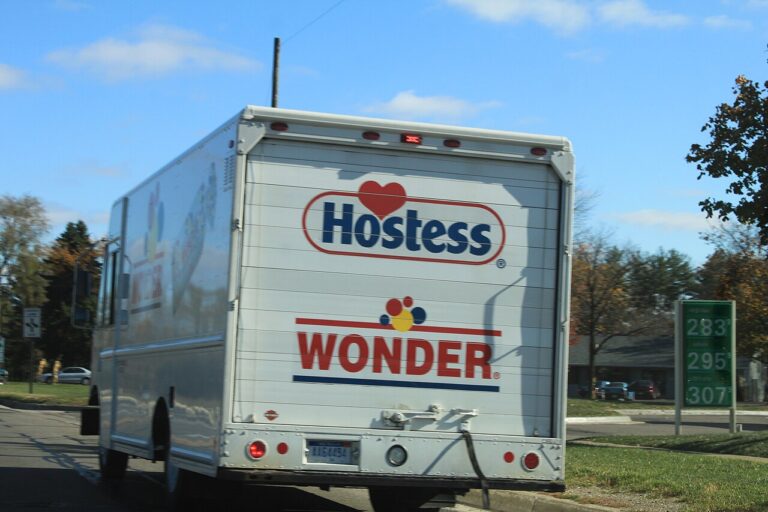
This week, UPS notified the International Brotherhood of Teamsters that it would withdraw its latest driver buyout program in central region states after months of pushback from the union. According to a Teamsters press release, the central region encompasses 13 states and includes more than 68,000 UPS workers represented by the union. The dispute began after UPS announced its new Driver Choice Program, which offers drivers a one-time payment to voluntarily resign. The program was announced as part of UPS’s broader effort to cut 30,000 jobs this year. In February, the Teamsters filed suit, alleging that UPS violated the parties’ National Master Agreement by implementing the program without first consulting the union. Teamsters General President Sean M. O’Brien urged UPS to “take the next right step and dismantle its Driver Choice Program across the country,” warning that the union would pursue further grievances nationwide. “We are prepared to do whatever it takes to protect our members’ rights,” O’Brien said.
Meanwhile, a federal judge in California dismissed a former WhatsApp cybersecurity official’s whistleblower retaliation suit against Meta without prejudice. The court held that the plaintiff failed to plausibly allege protected activity under the Sarbanes-Oxley Act, which prohibits publicly traded companies from retaliating against employees who report certain types of fraud to regulators. After joining WhatsApp in September 2021, Attaullah Baig said he discovered serious cybersecurity problems that he believed violated a 2020 Federal Trade Commission privacy order against Meta. He alleged, among other things, that roughly 1,500 engineers had unrestricted access to user data and could move or steal sensitive information without being detected by auditors. According to the complaint, Baig repeatedly raised concerns about the potential vulnerabilities with his supervisor. Baig also wrote to Mark Zuckerberg twice in 2024 and later filed an OSHA complaint in January 2025 before Meta fired him the following month. Although Baig submitted an SEC whistleblower referral regarding the vulnerabilities, Magistrate Judge Laurel Beeler of the Northern District of California concluded that Baig had not adequately alleged that he reasonably believed he was reporting violations of SEC rules. The court found that the referral lacked enough detail to qualify as protected activity and that Baig had not plausibly pleaded a reasonable belief that he had disclosed securities fraud because he failed to allege facts “approximating a misrepresentation by Meta.”
Finally, the Equal Employment Opportunity Commission (EEOC) announced a $15 million settlement with a global technology company to resolve claims that the company discriminated against employees seeking religious and disability-based exemptions to its COVID-19 vaccination policy. The unnamed electronics and computing company voluntarily resolved the charges, which were filed with the EEOC’s Phoenix office in December 2021. According to an EEOC press release, the agency found reasonable cause to believe that the company unlawfully denied vaccine exemption requests and terminated workers for refusing vaccination on religious grounds. Under the settlement, the company agreed to review its policies for compliance with Title VII of the Civil Rights Act of 1964 and the Americans with Disabilities Act and to provide annual training on religious and disability discrimination. The agreement is the latest in a series of EEOC enforcement actions alleging religious discrimination in connection with COVID-19 vaccine policies, including actions involving Illinois-based hospital system Advocate Aurora Health and North Carolina-based health care provider Rex Healthcare. In a statement, EEOC Chair Andrea Lucas praised the resolution, saying that “there was no pandemic exception to workers’ civil rights and liberties” and that the resolution “makes clear that America’s workplaces must remain open to employees of faith and to workers with disabilities.”


Daily News & Commentary
Start your day with our roundup of the latest labor developments. See all
March 25
UPS rescinded its driver buyout program; California court dismissed a whistleblower retaliation suit against Meta; EEOC announced $15 million settlement to resolve vaccine-related religious discrimination case.
March 24
The WNBPA unanimously votes to ratify the league’s new CBA; NYU professors begin striking; and a district court judge denies the government’s motion to dismiss a case challenging the Trump administration’s mass revocation of international student visas.
March 23
MSPB finds immigration judges removal protections unconstitutional, ICE deployed to airports.
March 22
Resurgence in salting among young activists; Michigan nurses strike; states experiment with policies supporting workers experiencing menopause.
March 20
Appeal to 9th Cir. over law allowing suit for impersonating union reps; Mass. judge denies motion to arbitrate drivers' claims; furloughed workers return to factory building MBTA trains.
March 19
WNBA and WNBPA reach verbal tentative agreement, United Teachers Los Angeles announce April 14 strike date, and the California Gig Workers Union file complaint against Waymo.