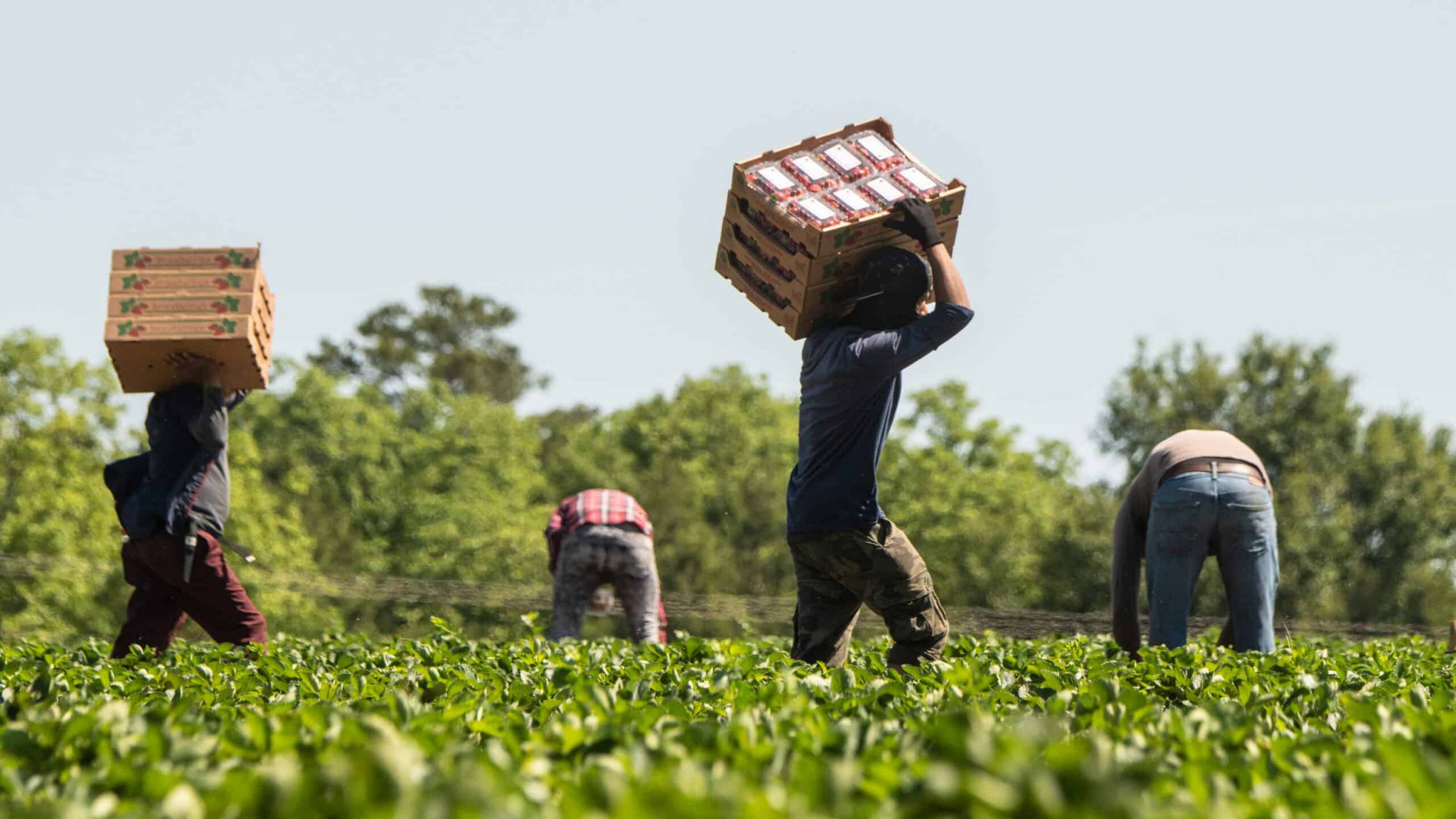

In today’s news and commentary, workers across the country face extreme heat exposure with minimal government protections, Utility Workers Union of America Local 1-2 reaches a tentative agreement with Con Edison narrowly avoiding a strike, and the Tenth Circuit grants a continuation of a freeze on a wage increase for some federal contractors.
A heat wave swept across the United States this past week, putting nearly 100 million Americans under dangerous weather advisories. The intense heat is dangerous for anyone exposed to it for too long, but most at risk are workers required to continue manual labor outdoors or in hot trucks and warehouses. According to a 2021 study out of the University of California and Stanford University, low-income workers experience heat-related injuries at five times the rate of the highest earners. The U.S. Bureau of Labor Statistics reports that in 2022, forty-three people died of extreme heat exposure while working. Despite the increased frequency of extreme heat and the heightened risk to workers, federal law does not specifically address worker protections from heat.
Individual states have failed to fill this regulatory gap. Five states have laws on the books guiding employers response to extreme heat for at least some outdoor laborers. A few others are considering heat protection legislation. Last Thursday, California joined the short list of states with rules protecting indoor workers from extreme heat – Oregon and Minnesota are the only others. California’s law requires employers to provide employees with cool places to take breaks once indoor temperatures reach 82 degrees. At 87 degrees, employers will be required to adjust ways of working, moving shifts earlier in the day or installing fans or air conditioning in workspaces. The law will not take effect until August at the earliest, meaning that workers will have to endure this summer of already record-breaking temperatures relying only on the kindness and forethought of their managers for protection from the heat. Cities around the country have also tried to address heat-related worker safety concerns. As Luke reported, this spring, Phoenix, Arizona’s city council unanimously passed an ordinance providing heat protection for outdoor workers. Meanwhile, the governors of Texas and Florida have explicitly blocked cities and counties from enacting these types of ordinances after local governments in their states attempted to pass their own heat rules. The US Department of Labor is developing heat related regulations but this process has been ongoing for years and any rules produced are unlikely to take effect this year.
Improved safety measures were among the list of demands from the Utility Workers Union of America Local 1-2 in their negotiations with Con Edison. Union membership authorized a strike if the parties could not reach agreement on a new contract by midnight Saturday night. Con Edison is the primary power provider for New York City and surrounding areas. The Union represents roughly 8,000 ConEd employees who were eager to avoid a strike during the heat wave. New Yorkers reliant on ConEd for energy can also breathe a sigh of relief, as just a few hours after the previous contract expired, the parties reached a tentative agreement which will be sent to membership for a ratification vote. The proposed agreement includes an enhanced medical plan, general wage increases, and heightened safety measures.
The Tenth Circuit granted a request to continue a wage increase freeze for federal contractors while their employers appeal to the Supreme Court. In 2021, President Biden issued an executive order increasing the minimum wage of federal contract workers to $15 an hour. Two outdoor recreations companies with operations in national parks are appealing that order, arguing that the President’s order was an illegal exercise of authority under the Federal Property and Administrative Services Act. This case is just one of several anti-labor suits brought by the libertarian, public-interest legal organization, Pacific Legal Foundation. The foundation is pushing several constitutional arguments against recent pro-labor legislation in an effort to entice Supreme Court review. The Tenth Circuit’s grant applies only to the two outdoor outfitters suing over the rule. The wage policy will be enforced against other businesses with a permit to operate on federal property.




Daily News & Commentary
Start your day with our roundup of the latest labor developments. See all
August 19
NLRB swears in third Trump-appointed Member; Teamster file complaint against Amazon in New York; unions and college students sue Trump admin for international student immigration restrictions
August 18
New Trump administration rules will remove the Merit Systems Protection Board's independence; a CFPB union leader suspended alleges retaliation; the National Treasury Employees Union requires its members to pay dues as it battles to stay financially afloat.
August 17
Tensions rise between New York City's teachers' union and City Hall; NLRB judge finds Brooklyn hospital violated labor law.
August 16
New documents show that federal surveillance operations targeted Minnesota labor unions during the ICE surge, and the Equal Employment Opportunity Commission denies halting federal class discrimination complaints.
August 14
Hollywood unions diverge in response to the Paramount-Warner merger saga; Tesla defeats a years-long strike in Sweden, and labor scholars advocate for state sectoral bargaining policy innovation.
August 13
EEOC complaint process expected to harm federal workers; former UAW leaders endorse Fain challenger; Xbox employees protest layoffs.