

Gurtaran Johal is a student at Harvard Law School.
In today’s news and commentary, over 15,000 New York City nurses continue to strike with support from Mayor Mamdani; a judge grants a preliminary injunction that prevents DHS from ending family reunification parole programs for thousands of family members of U.S. citizens and green-card holders; and decisions in SDNY address whether employees may receive accommodations for telework due to potential exposure to COVID-19 when essential functions cannot be completed at home.
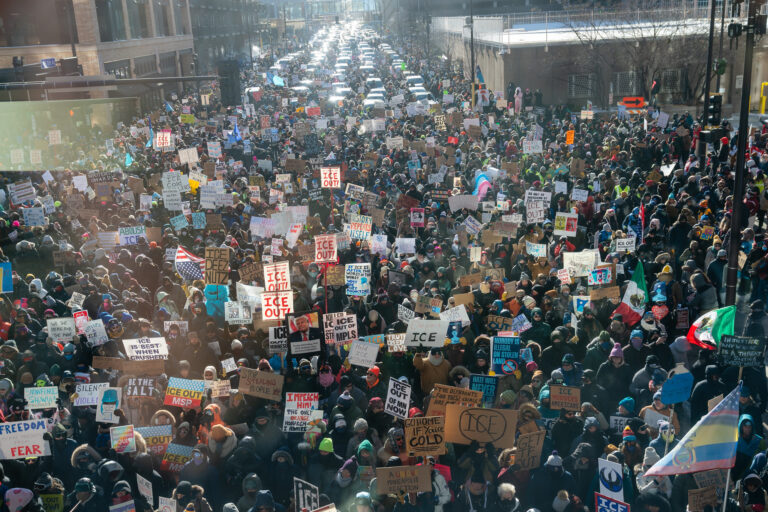
As Miriam Li reported on January 13, 2026, over 15,000 New York City nurses commenced a strike following the failure to reach a settlement agreement with hospital officials. The strike has now entered its second week, with Mayor Zohran Mamdani appearing at the picket line to support the nurses and promoting the administration’s message to make the city more affordable. The New York State Nurses Association resumed negotiations with New York-Presbyterian/Columbia, Mount Sinai, and Montefiore Medical Center this past Thursday, but the bargaining sessions have remained stagnant. The nurses are primarily concerned with achieving a salary raise from an average of $160,000 to over $200,000 by 2028; increasing security at hospital entrances and protecting workers from workplace violence; and fixing issues around insufficient staffing. According to the New York Times, hospital negotiators are offering an additional $4,500 per year to each nurse over the next three years, which the nurses argue is incredibly low.
Meanwhile, Judge Indira Talwani of the U.S. District Court for the District of Massachusetts granted a preliminary injunction halting the Trump administration from terminating family reunification parole programs that allow family members of U.S. citizens or green-card holders to stay in the United States. This preliminary injunction prevents the Department of Homeland Security (DHS) from ending parole programs for thousands of people from Cuba, Haiti, Colombia, Ecuador, El Salvador, Guatemala, and Honduras. Judge Talwani reasoned that DHS provided “arbitrary and capricious” reasoning for its actions, stating that the department failed to provide evidence for concerns regarding fraud.
Lastly, Judge Denise L. Cote and Judge Phillip M. Halpern of the U.S. District Court for the Southern District of New York ruled, in separate lawsuits, that two employees could not receive accommodations for telework due to potential exposure to COVID-19. The first employee, Neeresha Adams, wanted to perform her victim notification specialist job for the district attorney’s office remotely due to health conditions putting her at risk for COVID-19, while the second employee, Peter Bury, sought accommodations due to anxiety and panic attacks over the risk of contracting COVID-19. In both cases, the judges ruled that the employees could not perform their essential functions from home. This ruling is one among many addressing accommodations for remote work under the Americans with Disabilities Act where essential functions cannot be completed from the home.


Daily News & Commentary
Start your day with our roundup of the latest labor developments. See all
March 31
In today’s news and commentary, the Supreme Court hears a case about Federal Court jurisdiction over arbitration, a UPS heat inspection lawsuit against OSHA is dismissed, and federal worker unions and NGOs call on the EPA to cease laying off its environmental justice staffers. A majority of Supreme Court justices signaled support for allowing federal […]
March 30
Trump orders payment to TSA agents; NYC doormen look to authorize a strike; and KPMG positions for mass layoffs.
March 29
The Department of Veterans Affairs re-terminates its collective bargaining agreement despite a preliminary injunction, and the Federal Labor Relations Authority announces new rules increasing the influence of political appointees over federal labor relations.
March 27
“Cesar Chavez Day” renamed “Farmworkers Day” in California after investigation finds Chavez engaged in rampant sexual abuse.
March 26
Supreme Court hears oral argument in an FAA case; NLRB rules that Cemex does not impose an enforceable deadline for requesting an election; DOL proposes raising wage standards for H-1B workers.
March 25
UPS rescinded its driver buyout program; California court dismissed a whistleblower retaliation suit against Meta; EEOC announced $15 million settlement to resolve vaccine-related religious discrimination case.