

Miriam Li is a student at Harvard Law School and a member of the Labor and Employment Lab.
In today’s News and Commentary, 15,000 New York City nurses go on strike, the First Circuit rules against Martha’s Vineyard ferry employees challenging a COVID-19 vaccine mandate, and New York lawmakers propose amendments to the Trapped at Work Act.
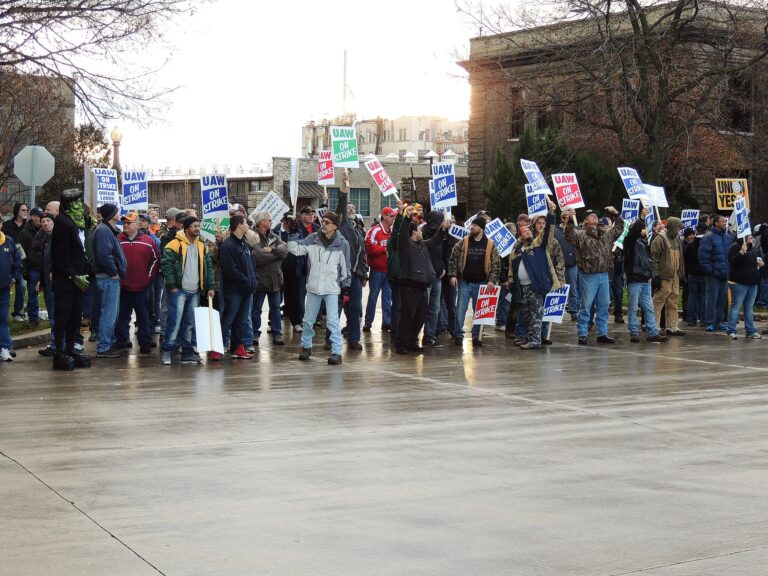
On Monday, 15,000 nurses at Montefiore, NewYork-Presbyterian, and several Mount Sinai hospitals began striking after the New York State Nurses Association (NYSNA) and hospital officials failed to reach a tentative settlement. According to NYSNA, nurses are pushing for safer staffing levels, wage increases, and stronger protections from workplace violence. According to the New York Times, NYSNA president Nancy Hagans warned that “wealthy hospitals are trying to undo the safe staffing standards we won for our patients when we went on strike three years ago,” referring to a 2023 strike that ended after hospitals agreed to address chronic understaffing through hiring commitments and minimum staffing ratios. Mount Sinai called the union’s economic demands “extreme,” but said that hospitals and emergency departments remain open and most appointments are scheduled as usual.
Meanwhile, the First Circuit rejected Martha’s Vineyard and Nantucket Island ferry employees’ bid for a preliminary injunction in a suit challenging the Steamship Authority’s Covid-19 vaccine mandate. In the suit, employees alleged that the Steamship Authority unlawfully denied their religious exemption requests in violation of the First Amendment’s Free Exercise Clause. On Friday, a unanimous three-judge panel affirmed the lower court’s decision to deny the employees’ request for injunctive relief. The panel concluded that the policy was “religiously neutral and generally applicable,” and thus triggered rational basis review rather than strict scrutiny under current First Amendment doctrine. The court emphasized that the Authority’s willingness to grant a single, time-limited medical exemption to the policy did not undermine its general applicability because, unlike religious exemptions, medical exemptions further (rather than hinder) the policy’s health-and-safety objective and are typically rare and time-limited. This is the second time the First Circuit has weighed in on this dispute: in 2023, it found that the district court failed to adequately support its denial of injunctive relief and remanded for reconsideration.
Finally, New York lawmakers introduced a bill to amend the state’s recently enacted Trapped at Work Act, which prohibits “stay-or-pay” promissory notes that force workers to repay money if they leave a job before a specified period. The proposed amendments aim to address Governor Hochul’s expressed concerns over the law’s ambiguous language and broad sweep. While the proposed amendments would preserve the ban on coercive employer-mandated promissory notes, they also include explicit carveouts, including exceptions for certain voluntary tuition repayment agreements. The proposal would also clarify that employers may seek repayment of non-educational incentives in some cases, such as bonuses or relocation assistance, except where an employee is terminated for reasons other than misconduct or where the employer misrepresented the job. This proposed amendment parallels California’s TRAPs/stay-or-pay law: under the California law, employers cannot enforce coercive repayment schemes, but can require tuition repayment for portable, industry-recognized credentials, subject to certain safeguards.



Daily News & Commentary
Start your day with our roundup of the latest labor developments. See all
March 20
Appeal to 9th Cir. over law allowing suit for impersonating union reps; Mass. judge denies motion to arbitrate drivers' claims; furloughed workers return to factory building MBTA trains.
March 19
WNBA and WNBPA reach verbal tentative agreement, United Teachers Los Angeles announce April 14 strike date, and the California Gig Workers Union file complaint against Waymo.
March 18
Meatpacking workers go on strike; SCOTUS grants cert on TPS cases; updates on litigation over DOL in-house agency adjudication
March 17
West Virginia passes a bill for gig drivers, the Tenth Circuit rejects an engineer's claims of race and age bias, and a discussion on the spread of judicial curtailment of NLRB authority.
March 16
Starbucks' union negotiations are resurrected; jobs data is released.
March 15
A U.S. District Court issues a preliminary injunction against the Department of Veterans Affairs for terminating its collective bargaining agreement, and SEIU files a lawsuit against DHS for effectively terminating immigrant workers at Boston Logan International Airport.