
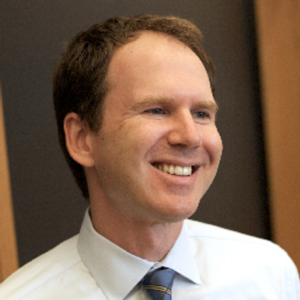
Benjamin Sachs is the Kestnbaum Professor of Labor and Industry at Harvard Law School and a leading expert in the field of labor law and labor relations. He is also faculty director of the Center for Labor and a Just Economy. Professor Sachs teaches courses in labor law, employment law, and law and social change, and his writing focuses on union organizing and unions in American politics. Prior to joining the Harvard faculty in 2008, Professor Sachs was the Joseph Goldstein Fellow at Yale Law School. From 2002-2006, he served as Assistant General Counsel of the Service Employees International Union (SEIU) in Washington, D.C. Professor Sachs graduated from Yale Law School in 1998, and served as a judicial law clerk to the Honorable Stephen Reinhardt of the United States Court of Appeals for the Ninth Circuit. His writing has appeared in the Harvard Law Review, the Yale Law Journal, the Columbia Law Review, the New York Times and elsewhere. Professor Sachs received the Yale Law School teaching award in 2007 and in 2013 received the Sacks-Freund Award for Teaching Excellence at Harvard Law School. He can be reached at [email protected].
Today on SCOTUSblog, Amy Howe predicted that Justice Alito will author Harris v. Quinn. As Howe put it:
[O]ur predictions are based on the idea that the Justices try to even out the workload not just over the course of the Term, but also from month to month. So the fact that Harris v. Quinn is the only decision left from January and Alito hasn’t written from January yet strongly suggests that he is writing in Harris.
Given Alito’s authorship of Knox v. SEIU, this would likely not be good news for fair share agreements in the public sector. But a reader writes in to OnLabor to report some interesting statistics. This reader:
[L]looked on the Scotusblog statistics archive to see how common it is for a Justice to not write an opinion for a given month. Recently it has happened once or twice per term:
- In 2012-13, it happened 1 month out of 7. Scalia didn’t write in January.
- In 2011-13, it happened 2 months out of 4. Sotomayor didn’t write in October, Thomas didn’t write in December. I didn’t count Feb-April b/c there were fewer than 9 opinions that month.
- In 2010-11, it happened 2 months out of 6. Alito and Sotomayor didn’t write in January, Breyer didn’t write in January, I didn’t count April b/c fewer than 9 opinions.
- In 2009-10, it happened 2 months out of 6. Stevens didn’t write in November, Kennedy didn’t write in December, I didn’t count April.
The reader thus concludes that “[i]f Alito writes Harris, then there won’t be any months this term in which a Justice didn’t write an opinion, except those months where there are fewer than 9 cases,” and that that would be somewhat unusual.
We will know Monday.


Daily News & Commentary
Start your day with our roundup of the latest labor developments. See all
April 3
NLRB says Amazon failed to bargain with union; Harvard graduate workers authorize strike, and states move to preempt local employment law.
April 2
Sheridan, Colorado educators go on strike; Maryland graduate student workers are one step closer to collective bargaining rights.
April 1
DOL proposes 401(k) rule; Starbucks investors reelect controversial board members; Washington passes workplace immigration warning requirement.
March 31
In today’s news and commentary, the Supreme Court hears a case about Federal Court jurisdiction over arbitration, a UPS heat inspection lawsuit against OSHA is dismissed, and federal worker unions and NGOs call on the EPA to cease laying off its environmental justice staffers. A majority of Supreme Court justices signaled support for allowing federal […]
March 30
Trump orders payment to TSA agents; NYC doormen look to authorize a strike; and KPMG positions for mass layoffs.
March 29
The Department of Veterans Affairs re-terminates its collective bargaining agreement despite a preliminary injunction, and the Federal Labor Relations Authority announces new rules increasing the influence of political appointees over federal labor relations.