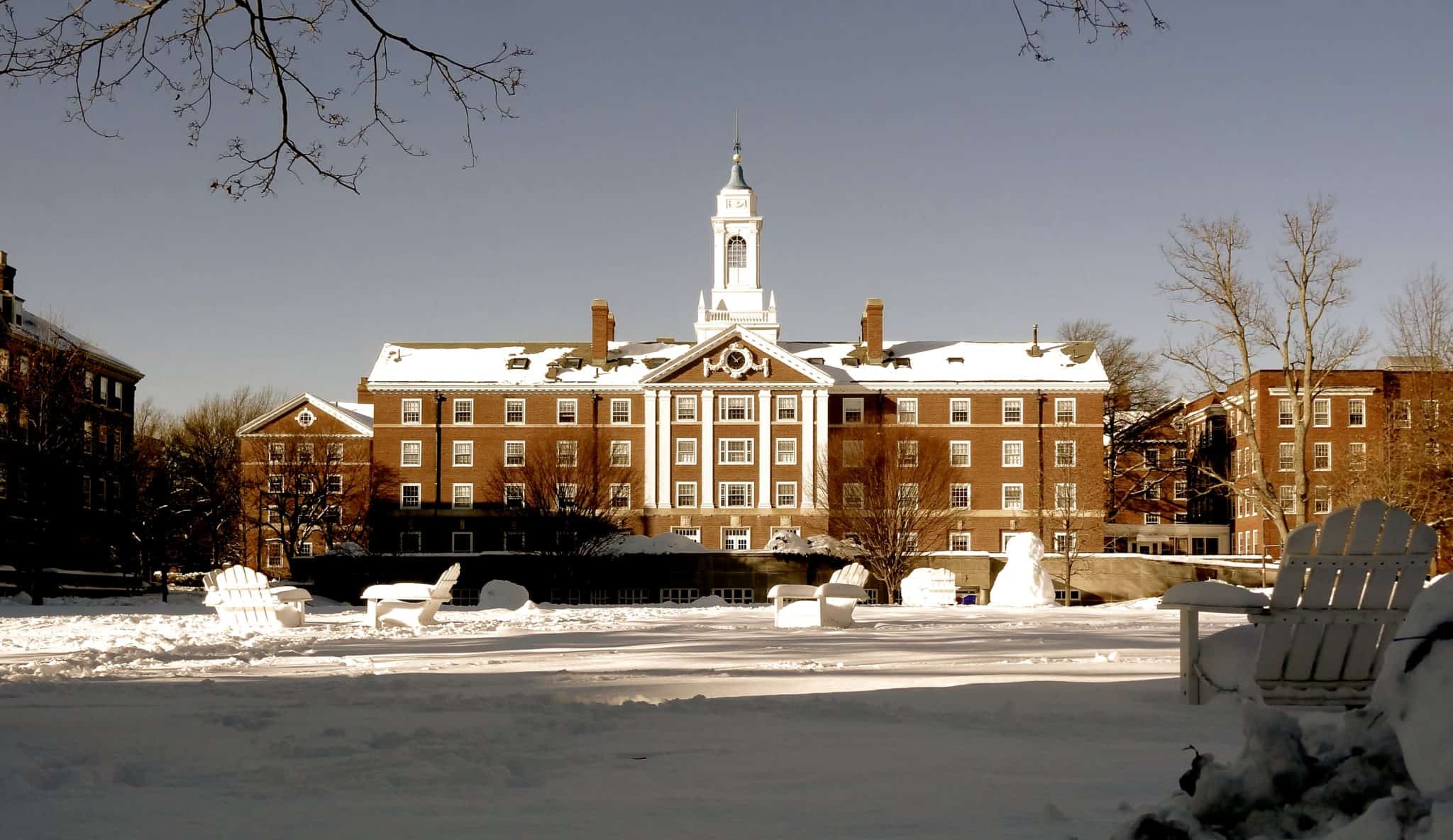

Annie Hollister is an Honors Attorney at the U.S. Department of Labor and an alumna of Harvard Law School.
During my first year at Harvard Law School, a professor of mine won a prestigious academic award. The prize, he told us, was a research grant so large he didn’t know what to do with it. Did we have any suggestions?
At the time, the law school was paying me $11.50 per hour to conduct research for him. My professor’s question provided a striking reminder of the gulf between the university’s wealth and power and its treatment of student workers. One week later, I joined thousands of other Harvard students in voting to form the Harvard Graduate Students Union-UAW. Now, almost 18 months after our union was certified, we are going on strike to demand a fair first contract.
The demands of Harvard student workers are reasonable: We are asking for fair pay that keeps pace with inflation, benefits on par with those offered by peer institutions, and a neutral third-party grievance procedure that allows student workers to pursue discrimination and harassment claims without fear of retaliation. These goals reflect agreements that are standard for universities — including the University of California at Berkeley, New York University, and Tufts — that already have a union contract for student workers.
Like many other workers, student workers at Harvard have suffered from wages that remain stagnant in the face of ever-rising living costs. Health care coverage doesn’t include dental insurance, and adding dependents is prohibitively expensive. For student workers with children, teaching and research salaries are far from enough to cover the costs of child care. These problems are particularly striking in the context of a university with a $41 billion endowment — more than the GDP of Paraguay — with an annual operating budget of over $5 billion. Student workers should not struggle to make ends meet while our labor powers one of the world’s wealthiest institutions.
These frustrations are not, of course, unique to Harvard; in the last two years, student workers at Columbia, Brown, and the University of Chicago have begun the process of forming a union. With this contract, Harvard therefore has the opportunity to once again be a national leader, setting a gold standard for how private universities treat student workers.
In more than a year of negotiations over our first contract, our union and the university have been able to make progress on some proposals, including increased protections for student workers who are not US citizens.
But the Harvard administration has been recalcitrant on other issues that are crucial to student workers. The university has refused to agree to fair pay for all student workers or to guarantee steady raises on total compensation that keep up with rising costs of living. Where the union has asked for affordable dental insurance, Harvard has offered a subsidy that works out to approximately $25 per student worker. In place of paid family leave, Harvard has offered a one-time cash payment to first-time parents who are PhD students.
The university has been particularly unshakeable in its opposition to a grievance procedure that would allow workers to bring discrimination and harassment claims to a neutral third party. Harvard — which has a history of covering up serial harassment by faculty members — insists that the only fair way to allow student workers to grieve discrimination and harassment claims is through a process that the university itself controls. This process has consistently failed to hold powerful perpetrators accountable for harmful behavior. It also does not include a process for handling claims of race-based discrimination — leaving racial discrimination claims, under the university’s proposal, ungrievable through either the union procedure or the university’s internal processes. A process similar to the one the union proposes works effectively in student-worker union contracts at universities across the country. A neutral grievance procedure for discrimination and harassment claims is also available to unionized nonstudent workers at Harvard. There is no reason why Harvard should deny these protections now.
As the child of a union member, I know firsthand that a strong union contract means stability, security, and power for workers and their families. As a Harvard graduate student, I know that this institution takes pride in its role as a national leader and that its leaders see Harvard as a beacon of truth and excellence in a complex world. It is time for Harvard to live up to that lofty image. Beginning Tuesday, we go on strike and cease the teaching, research, and grading on which the university relies until this institution chooses to exercise its remarkable power to do the right thing.
This piece originally appeared in the Boston Globe.





Daily News & Commentary
Start your day with our roundup of the latest labor developments. See all
March 24
The WNBPA unanimously votes to ratify the league’s new CBA; NYU professors begin striking; and a district court judge denies the government’s motion to dismiss a case challenging the Trump administration’s mass revocation of international student visas.
March 23
MSPB finds immigration judges removal protections unconstitutional, ICE deployed to airports.
March 22
Resurgence in salting among young activists; Michigan nurses strike; states experiment with policies supporting workers experiencing menopause.
March 20
Appeal to 9th Cir. over law allowing suit for impersonating union reps; Mass. judge denies motion to arbitrate drivers' claims; furloughed workers return to factory building MBTA trains.
March 19
WNBA and WNBPA reach verbal tentative agreement, United Teachers Los Angeles announce April 14 strike date, and the California Gig Workers Union file complaint against Waymo.
March 18
Meatpacking workers go on strike; SCOTUS grants cert on TPS cases; updates on litigation over DOL in-house agency adjudication