
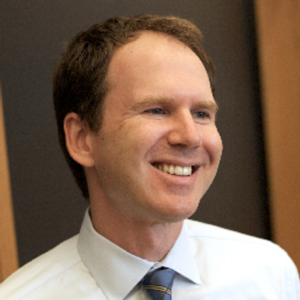
Benjamin Sachs is the Kestnbaum Professor of Labor and Industry at Harvard Law School and a leading expert in the field of labor law and labor relations. He is also faculty director of the Center for Labor and a Just Economy. Professor Sachs teaches courses in labor law, employment law, and law and social change, and his writing focuses on union organizing and unions in American politics. Prior to joining the Harvard faculty in 2008, Professor Sachs was the Joseph Goldstein Fellow at Yale Law School. From 2002-2006, he served as Assistant General Counsel of the Service Employees International Union (SEIU) in Washington, D.C. Professor Sachs graduated from Yale Law School in 1998, and served as a judicial law clerk to the Honorable Stephen Reinhardt of the United States Court of Appeals for the Ninth Circuit. His writing has appeared in the Harvard Law Review, the Yale Law Journal, the Columbia Law Review, the New York Times and elsewhere. Professor Sachs received the Yale Law School teaching award in 2007 and in 2013 received the Sacks-Freund Award for Teaching Excellence at Harvard Law School. He can be reached at [email protected].
To fill the time before 10:00 am, here is what I think are the best and worst case scenarios from the unions’ perspective.
From the unions’ perspective, the best case is a full-throated reaffirmation of the Abood principles and a clear statement about why unions – which have a statutory obligation to represent all employees in the bargaining unit – are different from other associations (like neighborhood associations and the PTA) that don’t have such legal obligations.
From the unions’ perspective, the worst case is an opinion, probably authored by Justice Alito, that overturns Abood and finds that fair share agreements in the public sector amount to compelled speech (or compelled subsidization of speech). But, as in Knox, this opinion would then go further. In dicta, it would call into question the constitutional permissibility of exclusive representation in the public sector and invite the next round of cases challenging exclusive rep, again on First Amendment grounds.
Maybe things could go better or worse than these scenarios, but this seems like the basic range of what we could get.




Daily News & Commentary
Start your day with our roundup of the latest labor developments. See all
October 22
SCOTUS declines Wilcox appeal; Penn State research assistants win bargaining rights; SEIU sued over military leave firing.
October 21
DOL withdraws tipped-worker rule; Instacart settles hiring-bias claims; Phillips 66 locks out New Jersey refinery workers.
October 20
Korean unions oppose labor exemption bill; Portland city workers prepare for strike; UPenn grad student union looks to dismiss university filing
October 19
FDA reverses course on policy prohibiting off-duty union activity; FAA and NATCA reach deal to secure pay increase for air traffic controllers.
October 18
Federal judge again halts cancellation of the Bureau of Prisons’ CBA; tabletop gaming workers face roadblocks in union recognition.
October 16
Department of Labor reduces wage-and-hour enforcement at unionized workplaces; Fain's victory poses question of federal monitor's extension.