

Jon Weinberg is a student at Harvard Law School.
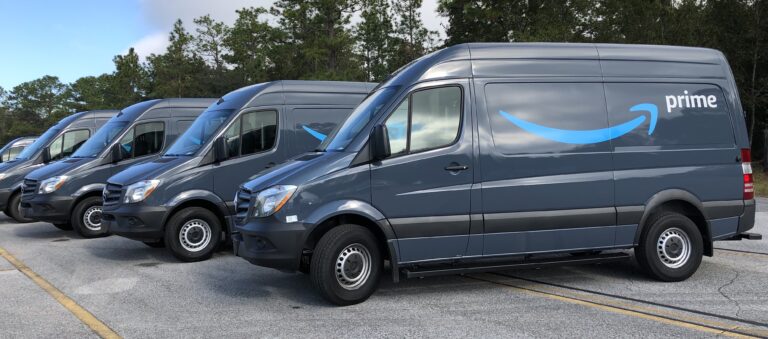
In a significant court filing with the Ninth Circuit Court of Appeals, the National Labor Relations Board has backed Uber drivers challenging the validity of driver arbitration clauses with class action waivers, and signaled that the legality of such clauses is an issue of “national significance.” The Ninth Circuit is currently considering in, O’Connor v. Uber, the enforceability of contract clauses requiring Uber drivers to arbitrate all disputes with Uber and waiving the right of drivers to participate in class actions. Similar clauses are widespread in the gig economy, and represent a significant barrier for gig economy workers seeking to challenge their classification as independent contractors and not employees.
According to Bloomberg, the NLRB “urged the court in a filing to find Uber’s contract provisions illegally block drivers from joining class-action lawsuits.” The NLRB further elaborated that the issue before the Ninth Circuit is one of “national significance” because it implicates many cases before courts nationally.
O’Connor represents the most notable lawsuit alleging the misclassification of Uber drivers. In September, Judge Edward M. Chen of the Northern District of California rejected a proposed settlement. The Ninth Circuit is considering whether drivers who did not opt-out of the arbitration and class action clauses of their contracts can participate in the class action, as Judge Chen found the clauses invalid. Notably, in September a Ninth Circuit panel held in a different case that Uber’s driver arbitration clauses and class action are in fact enforceable. A petition has been filed for en banc review of that decision.
The NLRB’s court filing is particularly important, as it indicates that the Board believes that mandatory arbitration clauses with class action waivers violate the National Labor Relations Act. The Board thus may be signalling that it is prepared to more actively police class action waivers as NLRA violations, in challenges brought by drivers and others. Furthermore, the legality of mandatory employee arbitration with class action waivers is significant in its own right.
Per Bloomberg, “if the court [in O’Connor] agrees [with the NLRB], that may swing the advantage back to the drivers as the case eventually heads toward trial.” Professor Charlotte Garden has more about the potential implications of the NLRB filing:
The NLRB has a “good shot” at convincing the court that including an opt-out provision in an arbitration agreement doesn’t allow a company to stop workers from pursuing class actions, said Charlotte Garden, a Seattle University associate law professor who has followed the Uber case.
Citing another case in which a court concluded workers could band together to argue employers violated the law, “it is not much of a further stretch to hold that employees can’t be asked to give up that right before a dispute arises,” she said.
While a court has yet to find that Uber drivers are employees, the intervention of the NLRB with respect to class action waivers may well help pave the road, eventually, to a trial on the merits and recognition of the right of gig economy workers to the protections and benefits afforded employees under American law.
Daily News & Commentary
Start your day with our roundup of the latest labor developments. See all
April 29
DOJ sues for discrimination against US citizens; Musk and DOJ pause litigation on AI discrimination bill; USTR hosts forced labor tariff hearings.
April 28
Supreme Court grants cert on Labor Department judges' authority; Apple store union files NLRB charge; cannabis workers win unionization rights
April 27
Nike announces layoffs; Tillis withdraws objection on Fed nominee; and consumer sentiment hits record low.
April 26
Screenwriters in the Writers Guild of America vote to ratify a four-year agreement with the Alliance of Motion Picture and Television Producers, and teachers in Los Angeles vote to ratify a two-year agreement with the Los Angeles Unified School District.
April 24
NYC unions urge Mamdani to veto anti-protest “buffer zones” bill; 40,000 unionized Samsung workers rally for higher pay; and Labubu Dolls found to contain cotton made by forced labor.
April 23
Trump administration wins in 11th Circuit defending a Biden-era project labor agreement rule; NABTU convenes its annual legislative conference; Meta reported to cut over 10% of its workforce this year.