
Andrew Strom is a union lawyer based in New York City. He is also an adjunct professor at Brooklyn Law School.
I am reasonably confident that if I stopped a random person on the street and asked if they had ever heard of the Supreme Court’s decision in NLRB v. Washington Aluminum, I would be met with a blank stare. On some level, that’s not surprising. Very few non-lawyers can name more than a handful of Supreme Court decisions. But even when people don’t know decisions by name, the holdings of significant cases often sink in. For instance, a lot more people know that the First Amendment protects profanity than can identify Cohen v. California. Working conditions throughout this country would be much better if workers knew their Washington Aluminum rights the same way that people who grew up watching television know their Miranda rights.
In brief, the right protected by Washington Aluminum is the right for any group of workers to walk off the job without notice to protest any aspect of their working conditions. The facts of the case were simple and largely uncontested. On a January morning in 1959 when the outside temperature was 15 degrees, eight machinists came to work at a metal fabricating company and found that the furnace was broken, and it was bitter cold inside the plant. As one of the workers later testified, “we had all got together and thought it would be a good idea to go home; maybe we could get some heat brought into the plant that way.” Seven of the eight machinists left, and when the company’s president arrived, he decided to fire each of the workers who walked out.
After the workers were fired, they reached out to a union, and they filed charges with the National Labor Relations Board challenging their terminations. At the NLRB, the case was easy. The National Labor Relations Act protects the rights of workers to engage in “concerted activities for the purpose of … mutual aid or protection,” and that seems like a reasonable description of the actions of the Washington Aluminum workers. After the NLRB ordered the employer to reinstate the workers, the company sought review in the Fourth Circuit Court of Appeals. A divided court denied enforcement of the Board’s order on the grounds that the workers’ action was not protected because they hadn’t made any demand on the company before walking off the job. A unanimous Supreme Court reversed the Court of Appeals.
The Supreme Court rejected the notion that before workers may engage in a strike, they must first make a demand upon their employer. Instead, the Court held that the language in the NLRA is “broad enough to protect concerted activities whether they take place before, after, or at the same time such a demand is made.” The Court also pointed out that without a union, the workers had no procedure in place to present a collective demand. Sure, individual workers could lodge complaints, but walking out together was the most direct way to signal the workers’ near unanimity.
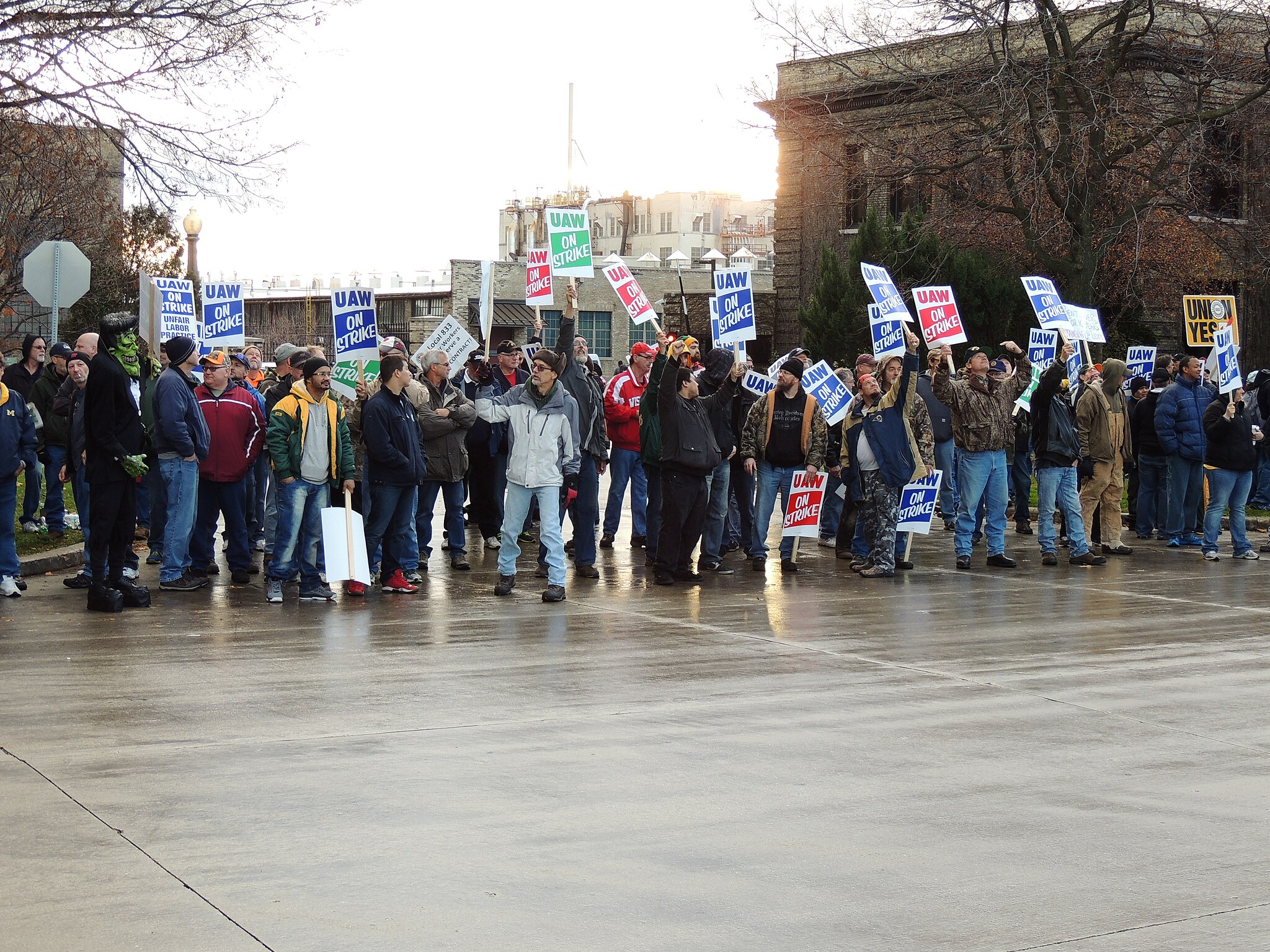
At the time the Court decided Washington Aluminum, almost one-third of private sector workers in the U.S. belonged to unions. Now, less than six percent are represented by unions. So, the Court’s ruling is more important than ever. Non-union workers generally don’t realize that they have a right to strike. And even fewer understand just how informal a strike can be. Except for the need to take “reasonable precautions” to protect the employer’s property from “foreseeable, aggravated, and imminent danger,” workers need not give any notice before striking, and they may walk off in mid-shift. Further, strikes do not need to be open-ended; workers may walk out on Tuesday morning, and return to their jobs on Wednesday. In addition, as long as a walkout is motivated by terms and conditions of employment, the strike can be over a single issue, and as long as each strike is motivated by a different issue, workers may strike repeatedly.
Unless workers are striking to protest an employer’s violation of the NLRA, they risk permanent replacement. But, even so, if non-union workers fully understood their right to strike, it would be a game changer. First of all, it’s not always easy to hire replacements, especially on short notice. Moreover, even if an employer can find replacements, it may be reluctant to lose the knowledge and experience that the striking workers possess. And, if the employer doesn’t address the concerns that led to the initial strike, those same factors may eventually lead the replacements to strike as well.
I don’t want to exaggerate the protection provided by Washington Aluminum. An aggressive employer that is willing to break the law could still fire workers for striking, and if that happens, workers would likely have to wait at least three years for a reinstatement order and even longer for backpay, with any backpay reduced by both interim earnings and any time when an individual was not actively looking for work. Luckily, management lawyers often charge so much money that even the statute’s remedial failures do not always make it worthwhile for an employer to engage in litigation.
If short strikes over workplace grievances were part of our culture, employer resistance to unionization might also diminish. The theory of a union contract is that an employer is buying labor peace — in return for a grievance procedure that ends with binding arbitration, unions typically give up the right to strike during the duration of a contract. But employers that have never experienced a strike by their non-union workforce have little to gain from a union’s promise of labor peace. A wave of strikes inspired by Washington Aluminum could change that calculus.
In my alternate universe, high school students would learn about Washington Aluminum when they learn about the civil rights sit-ins and boycotts that took place during the same era. Students would learn that one reason workers’ wages rose steadily during the 1950s and 1960s is that our laws protected the rights of workers to engage in strikes and other job actions to improve their terms and conditions of employment. And if, before heading off into the workforce, students had learned that the same law that protected the Washington Aluminum workers would protect them at their jobs, workers’ wages might have kept pace with productivity gains in recent decades. As the current Administration loves to look back with rose-colored glasses to some imagined past, it may be more important than ever to teach about the struggles for basic rights that have been waged throughout this country’s history. Several months after the Washington Aluminum workers staged their walkout, half a million steelworkers went out on a strike that lasted 116 days. That strike was the largest in U.S. history in terms of person-hours lost (length of strike multiplied by number of participants), yet today it has been wiped from our collective memory. Our history is full of inspiring stories of individuals who have banded together to stand up for their rights. Just as Rosa Parks and the Montgomery bus boycotters have inspired generations, the Washington Aluminum seven should still be inspiring workers today.



Daily News & Commentary
Start your day with our roundup of the latest labor developments. See all
March 27
“Cesar Chavez Day” renamed “Farmworkers Day” in California after investigation finds Chavez engaged in rampant sexual abuse.
March 26
Supreme Court hears oral argument in an FAA case; NLRB rules that Cemex does not impose an enforceable deadline for requesting an election; DOL proposes raising wage standards for H-1B workers.
March 25
UPS rescinded its driver buyout program; California court dismissed a whistleblower retaliation suit against Meta; EEOC announced $15 million settlement to resolve vaccine-related religious discrimination case.
March 24
The WNBPA unanimously votes to ratify the league’s new CBA; NYU professors begin striking; and a district court judge denies the government’s motion to dismiss a case challenging the Trump administration’s mass revocation of international student visas.
March 23
MSPB finds immigration judges removal protections unconstitutional, ICE deployed to airports.
March 22
Resurgence in salting among young activists; Michigan nurses strike; states experiment with policies supporting workers experiencing menopause.