
Mila Rostain is a student at Harvard Law School.
In today’s News and Commentary, the House forces a vote on the “Protect America’s Workforce Act,” Judge Friedman hears arguments on unions’ requests to enjoin Trump’s executive order nullifying collective bargaining rights, and faculty at Penn State file a petition to form a union.
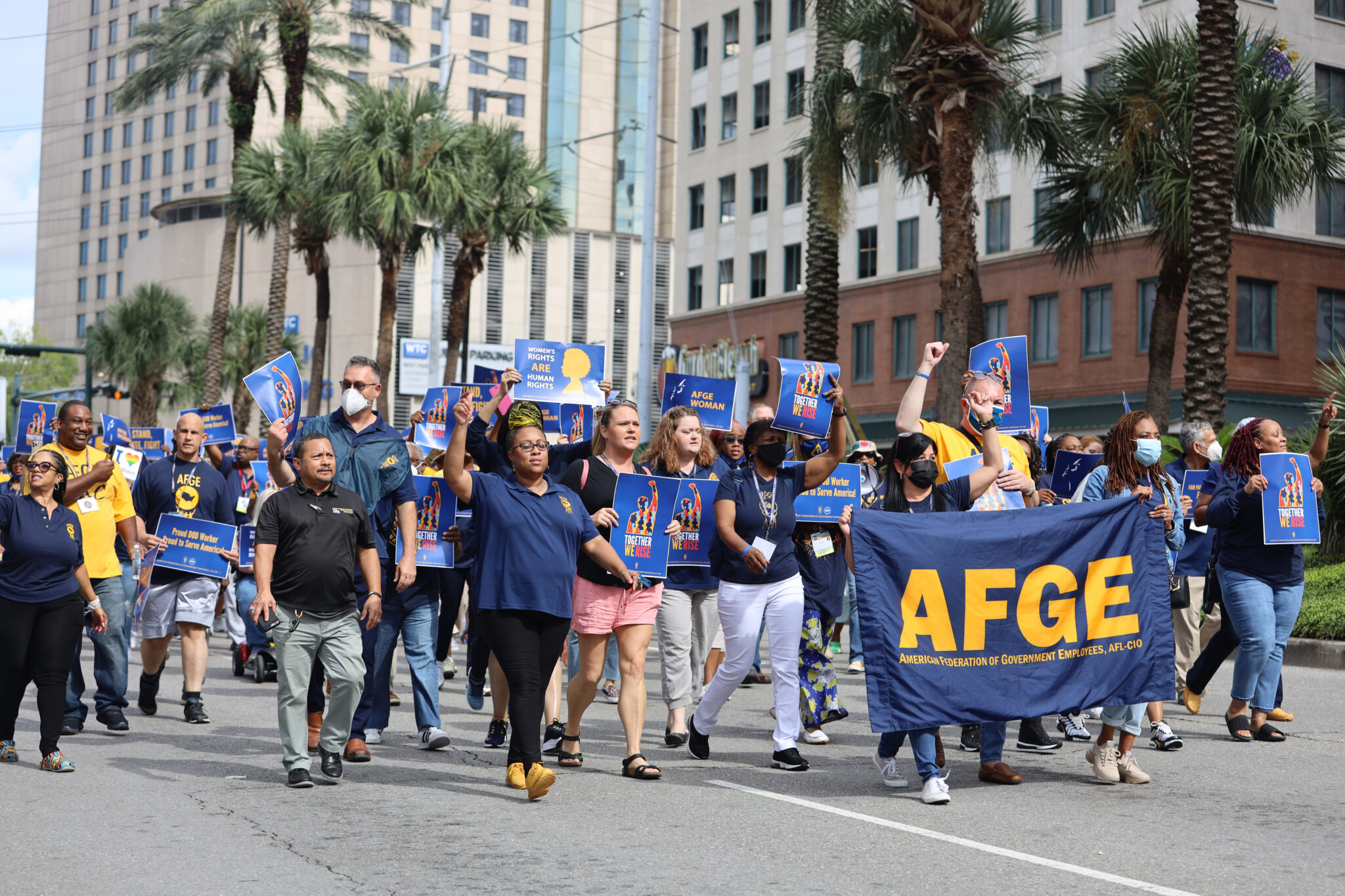
Yesterday, the House of Representatives voted 222 to 200 in an up-down vote to approve Rep. Jared Golden’s motion to discharge, requiring Speaker Mike Johnson to hold a vote on the bipartisan “Protect America’s Workforce Act.” The bill would repeal President Trump’s executive order stripping bargaining rights from federal workers. Rep. Golden had noticed his intent to force a floor vote on Tuesday night after initiating a discharge petition this summer. Golden stated that without collective bargaining rights, “federal workers are more vulnerable to unfair treatment and political interference.” A final vote on the bill is expected to take place today.
Also yesterday, Judge Friedman of the US District Court for the District of Columbia heard arguments on two federal unions’ request to enjoin President Trump’s executive order nullifying their collective bargaining agreements. According to Bloomberg, the Patent Office Professional Association and the National Weather Service Employees Organizations sued after the August executive targeting their agreements because according to the Trump Administration, both the Patent and Trademark Office and the National Weather Service are engaged in national security functions. The Department of Justice claims that the Invention Secrecy Act, a law which allows the government to bar certain patents because of national security concerns, demonstrates the office’s ties to national security. Judge Friedman has previously ruled in favor of unions in similar cases but found this request “more complicated” to decide.
On Tuesday, Penn State faculty filed a petition with the Pennsylvania Labor Relations Board to form a union. According to the faculty’s organizing committee, the effort is the largest public sector campaign in Pennsylvania in decades. Chemistry professor Julio Palma stated that “a faculty union will give us a real voice, a legally recognized voice to defend our jobs with dignity, to protect our profession, to protect academic freedom, to support our students.” The professors expect a vote in 2026.


Daily News & Commentary
Start your day with our roundup of the latest labor developments. See all
March 29
The Department of Veterans Affairs re-terminates its collective bargaining agreement despite a preliminary injunction, and the Federal Labor Relations Authority announces new rules increasing the influence of political appointees over federal labor relations.
March 27
“Cesar Chavez Day” renamed “Farmworkers Day” in California after investigation finds Chavez engaged in rampant sexual abuse.
March 26
Supreme Court hears oral argument in an FAA case; NLRB rules that Cemex does not impose an enforceable deadline for requesting an election; DOL proposes raising wage standards for H-1B workers.
March 25
UPS rescinded its driver buyout program; California court dismissed a whistleblower retaliation suit against Meta; EEOC announced $15 million settlement to resolve vaccine-related religious discrimination case.
March 24
The WNBPA unanimously votes to ratify the league’s new CBA; NYU professors begin striking; and a district court judge denies the government’s motion to dismiss a case challenging the Trump administration’s mass revocation of international student visas.
March 23
MSPB finds immigration judges removal protections unconstitutional, ICE deployed to airports.