
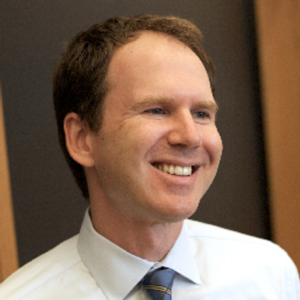
Benjamin Sachs is the Kestnbaum Professor of Labor and Industry at Harvard Law School and a leading expert in the field of labor law and labor relations. He is also faculty director of the Center for Labor and a Just Economy. Professor Sachs teaches courses in labor law, employment law, and law and social change, and his writing focuses on union organizing and unions in American politics. Prior to joining the Harvard faculty in 2008, Professor Sachs was the Joseph Goldstein Fellow at Yale Law School. From 2002-2006, he served as Assistant General Counsel of the Service Employees International Union (SEIU) in Washington, D.C. Professor Sachs graduated from Yale Law School in 1998, and served as a judicial law clerk to the Honorable Stephen Reinhardt of the United States Court of Appeals for the Ninth Circuit. His writing has appeared in the Harvard Law Review, the Yale Law Journal, the Columbia Law Review, the New York Times and elsewhere. Professor Sachs received the Yale Law School teaching award in 2007 and in 2013 received the Sacks-Freund Award for Teaching Excellence at Harvard Law School. He can be reached at [email protected].
Quite an interesting decision from NLRB Administrative Law Judge Paul Bogas last week. The case, Alma Products, involves the discipline of an employee for wearing a T-Shirt that said “slave” and depicted a ball and chain. The t-shirt also displayed the employee’s time clock number. The evidence was clear that the T-shirts had been printed as part of an earlier bargaining fight and were intended to criticize wages and working conditions at the company. Although the employer’s position before the ALJ was that the shirts were racially offensive, and a threat to the company’s ability to attract customers, the employer’s own representatives testified that they understood the shirt to be a “general wage and conditions protest.”
The ALJ, correctly in my view, found that wearing the shirt was protected activity here and thus that the discipline was an unfair labor practice. Equally important, though, the ALJ concludes that – in another context – the wearing of such a shirt could be unprotected. In particular, if there is evidence of racial animus, or if the word “slave” is “used in direct reference to an African-American employee and in a way demeaning to that employee” then the employer would be free to prohibit the shirt or discipline its wearer. A balanced, context sensitive, decision.





Daily News & Commentary
Start your day with our roundup of the latest labor developments. See all
October 14
Eleventh Circuit overturns ERISA exhaustion rule; DHS finalizes removal of automatic renewal for work permits; AFGE challenges SSA over flexible scheduling policy.
October 13
Chicago hotel workers remain on strike; a coalition of Democratic states sues the Labor Department over canceled unemployment insurance grants; the Federal Labor Relations Authority establishes a new mediation framework for federal worker disputes.
October 12
Workers at the Obama Foundation begin organizing; MLB submits its latest collective bargaining agreement proposal; Brigham & Women's nurses postpone strike.
October 11
UAW President Shawn Fain succeeds in his reelection bid, and Spanish unions call for a general strike.
October 9
DHS proposes a $100k fee for the foreign grad employment program; Trump suspends tech company access to green card program; and private equity perpetuates poor working conditions for home care workers.
October 8
NLRB judge finds UPS unlawfully restricted union insignia; Harvard graduate workers authorize second strike; OSHA orders Union Pacific to pay $300,000 in damages in whistleblower case.