
Kaitlin Knocke is a student at Harvard Law School.
In today’s news and commentary, the Trump administration wins in the 11th Circuit defending a Biden-era project labor agreement rule, North American Building Trades Unions (NABTU) convenes its annual legislative conference in Washington, D.C., and Meta is reported to cut more than 10% of its global workforce this year.
On Tuesday, a three judge panel of the U.S. Court of Appeals for the Eleventh Circuit affirmed the denial of a preliminary injunction sought by the Associated Builders and Contractors through its Florida-based operations. The association attempted to block a Biden-era executive order requiring contractors to enter into project labor agreements (PLAs) with labor unions on any federal construction project valued at or above $35 million. Chief Judge William Pryor concluded that the plaintiffs were unlikely to succeed on the merits of their claims, which were brought under the Competition Act, the First Amendment, the Administrative Procedure Act, the Office of Federal Procurement Policy Act, and the National Labor Relations Act.
The Trump administration’s decision to defend the PLA rule shocked many in the construction industry, given its positions on other wage and affirmative action requirements for federal contractors. Labor advocates in the industry have welcomed the development. NABTU President Sean McGarvey wrote in June 2025: “[PLAs] remain the most reliable tool to ensure that large-scale infrastructure projects are delivered on time, on budget, and to the highest standards of quality and safety… The decision to reinforce the PLA Executive Order will create more middle-class careers for both union and non-union workers.”
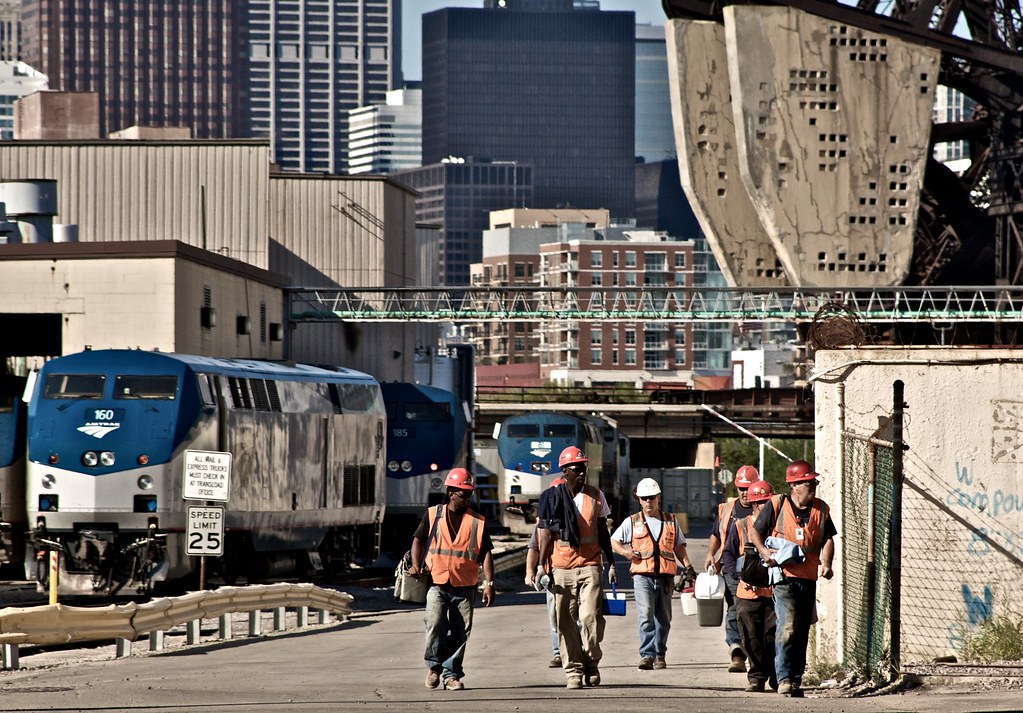
Also this week, NABTU held its 2026 Legislative Conference in Washington, D.C. The annual gathering brings together union members, leaders, advocates, and policymakers to address key legislative issues affecting the building trades. Notable speakers included Senate Minority Leader Chuck Schumer, AFL-CIO President Liz Shuler, and New Jersey Governor Mikie Sherrill, among others.
Ahead of the conference, NABTU President Sean McGarvey joined the America’s Work Force Union Podcast to preview their agenda. He indicated that the core priorities this year remain protecting prevailing wage laws, sustaining infrastructure investment, expanding apprenticeship programs, and defending project labor agreements in both private and public construction. He also noted that the legislative environment has grown more challenging, with Congress showing less engagement with building trades issues this session. McGarvey also emphasized his view that the building trades belong at the center of the AI economy, a theme that follows NABTU’s partnership announcement with OpenAI that Henry covered last month.
Finally, Reuters reported late last week that Meta plans to cut 10% of their global staff beginning in May. In addition to laying off about 8,000 employees, the company plans further reductions in the second half of the year. Meta, the parent company of Instagram, Facebook, and WhatsApp, has already eliminated more than 1,000 jobs this year from its hardware division, Reality Labs, as it pivots away from virtual reality headsets and metaverse products toward AI wearable technology. CEO Mark Zuckerberg has committed approximately $600 billion towards U.S. AI infrastructure before 2028, with several multibillion-dollar data centers already under construction across the country. Reuters suggests that the additional workforce reductions may help offset the costs of those investments.




Daily News & Commentary
Start your day with our roundup of the latest labor developments. See all
September 10
Amazon workers allege pregnancy discrimination; federal unions challenge USDA reorganization; NYC warns of silicosis risks.
September 9
Wynn Las Vegas employees allege anti-union retaliation; Amazon faces a class action over pregnancy accommodations; H-1B demand plunges following a six-figure visa fee.
September 8
In today’s News and Commentary, workers and unions across America celebrate Labor Day, California’s SEIU Local 1000 prepares for a strike authorization vote, and New York City creates the Office of Worker Power. On Monday, labor unions and workers gathered in cities across the United States in celebration of Labor Day. Parades and rallies took […]
September 7
Eighth Circuit finds DOL order violates Seventh Amendment; 1,300 workers at Encore Boston Harbor go on strike.
September 6
Encore casino workers strike; President Trump commutes sentence of former Philadelphia IBEW leader; Durham labor activist ends his hunger strike against Amazon.
September 4
NLRB advice memo narrows political protest protections; NLRB asks federal appeals court for deference.