
Miriam Li is a student at Harvard Law School and a member of the Labor and Employment Lab.
In today’s news and commentary, a federal judge ruled that Kari Lake unlawfully led the U.S. Agency for Global Media, voiding her mass layoffs at the agency, the Florida Senate sent a bill tightening union recertification rules to the House for a vote, and the Fifth Circuit revived a whistleblower suit against Lockheed Martin.
On Monday, a federal judge ruled that Kari Lake unlawfully served as acting head of the U.S. Agency for Global Media (USAGM), holding that her appointment violated both the Federal Vacancies Reform Act and the Appointments Clause. US District Judge Royce C. Lamberth declared Lake’s actions at the agency null and void, including the layoffs of hundreds of staffers and journalists at Voice of America—a government-funded media broadcaster that operates under the agency’s oversight. The court found that Lake was ineligible to serve as acting CEO because she was not a USAGM employee when former USAGM CEO Amanda Bennett resigned in January 2025, and because Lake had not been confirmed by the Senate to any other federal post. The ruling is the latest setback in the Trump administration’s attempt to eliminate USAGM, which was targeted in a March 2025 executive order that ordered USAGM and several other agencies to be eliminated “to the maximum extent consistent with applicable law.” It comes roughly a year after Lake attempted to terminate all full-time Voice of America staff and cut off federal funding for several other U.S.-backed international broadcasters, including Radio Free Asia and the Middle East Broadcasting Networks. In a statement to NPR, Lake said she plans to appeal the decision, framing her efforts at USAGM as part of Trump’s mandate to “cut bloated bureaucracy, eliminate waste, and restore accountability to government.”
Meanwhile, the Florida Senate passed a bill that would tighten recertification rules for unions representing teachers and other public-sector employees. Under a Florida law passed in 2023, certain unions must seek recertification when dues-paying membership falls below 60 percent of the bargaining unit. The new measure (SB 1296) would make it harder for unions to survive recertification votes: it requires at least 50 percent of eligible bargaining-unit members to participate in the vote, and a majority of those voting to approve the union. While the bill’s sponsor, Sen. Jonathan Martin, R-Fort Myers, characterized the measure as an effort to eliminate “bad unions that the class membership does not want,” Sen. Carlos Guillermo Smith called it “the next step in a yearslong campaign to eliminate public sector unions in Florida,” pointing to the 2023 recertification law and the wave of recertification elections that followed. The measure now moves to the House, where the companion bill, HB 995, has already advanced through committee.
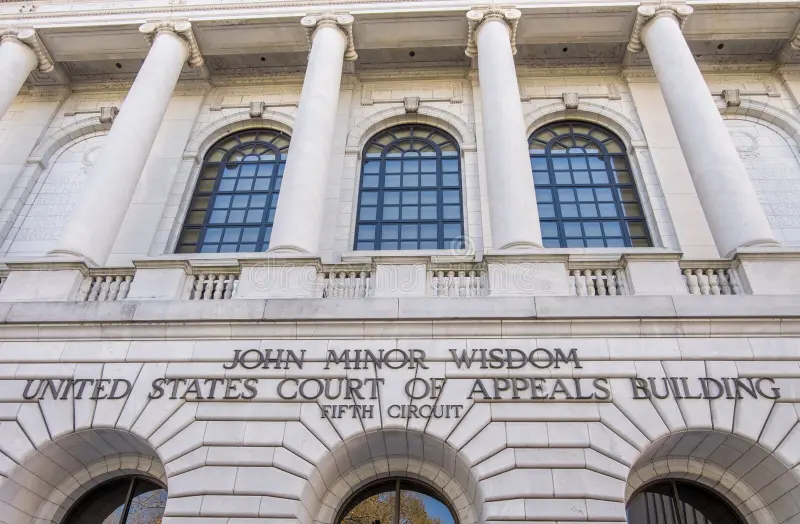
Finally, a divided three-judge panel of the Fifth Circuit revived a whistleblower suit against Lockheed Martin, reversing a district court decision that had dismissed the case under the False Claims Act’s first-to-file bar. Maria Del Carmen Gamboa Ferguson, a former Lockheed Martin internal auditor, alleged that the company knowingly incorporated fraudulently inflated subcontractor cost and pricing data into proposals for multiple military aircraft programs. Writing for the court, Judge James Graves explained that the first-to-file bar does not block every later-filed suit against the same defendant under the same statute. Rather, a later suit may proceed if it alleges a different fraudulent scheme or mechanism. The court concluded that Ferguson’s allegations about Lockheed’s willful and systematic disregard of inflated subcontractor cost and pricing data were sufficiently distinct from an earlier suit alleging a bulk-discount overbilling scheme. Judge Fernando Rodriguez Jr., sitting by designation, concurred in the judgment. Judge Edith Jones dissented, arguing that both complaints alleged the same essential fraud and that Ferguson’s claims were therefore barred under the first-to-file rule.





Daily News & Commentary
Start your day with our roundup of the latest labor developments. See all
September 2
Trump’s US Steel agreement impacts labor talks; Mamdani clashes with teachers’ union; Boeing plans to resume bargaining talks.
September 1
California legislature passes a bill banning AI workplace surveillance of workers' emotional states; Labor Department repeals decades-old farmworker protection rules; Sixth Circuit upholds a $1.4 million verdict for farmworkers.
August 31
Boston Symphony Orchestra musicians stave off first-ever strike; Cleveland Public Library workers ratify new contracts; New York State AFL-CIO makes endorsements
August 30
Seattle teachers vote to authorize a strike days before the school year begins; BNSF Railway’s AI dispatching system puts workers in danger; and a California court finds that the DOL’s pay cuts for non-citizen farmworkers are unlawful.
August 28
Calls for a “token tax” on AI consumption grow and the number of Amazon workers on federal aid explodes.
August 27
NLRB GC targets Biden-era precedent; Starbucks Workers United calls for boycott; Encore Boston Harbor workers authorize strike