
Hannah Finnie is a writer in Washington, D.C. interested in the intersections of work and culture. She is a graduate of Harvard Law School.
The Supreme Court will hear fast-tracked oral arguments today in a consolidated set of cases challenging the Biden administration’s OSHA Emergency Temporary Standard (ETS) protecting workers against contracting COVID-19 at work and challenging a similar mandate from the Department of Health and Human Services (HHS).
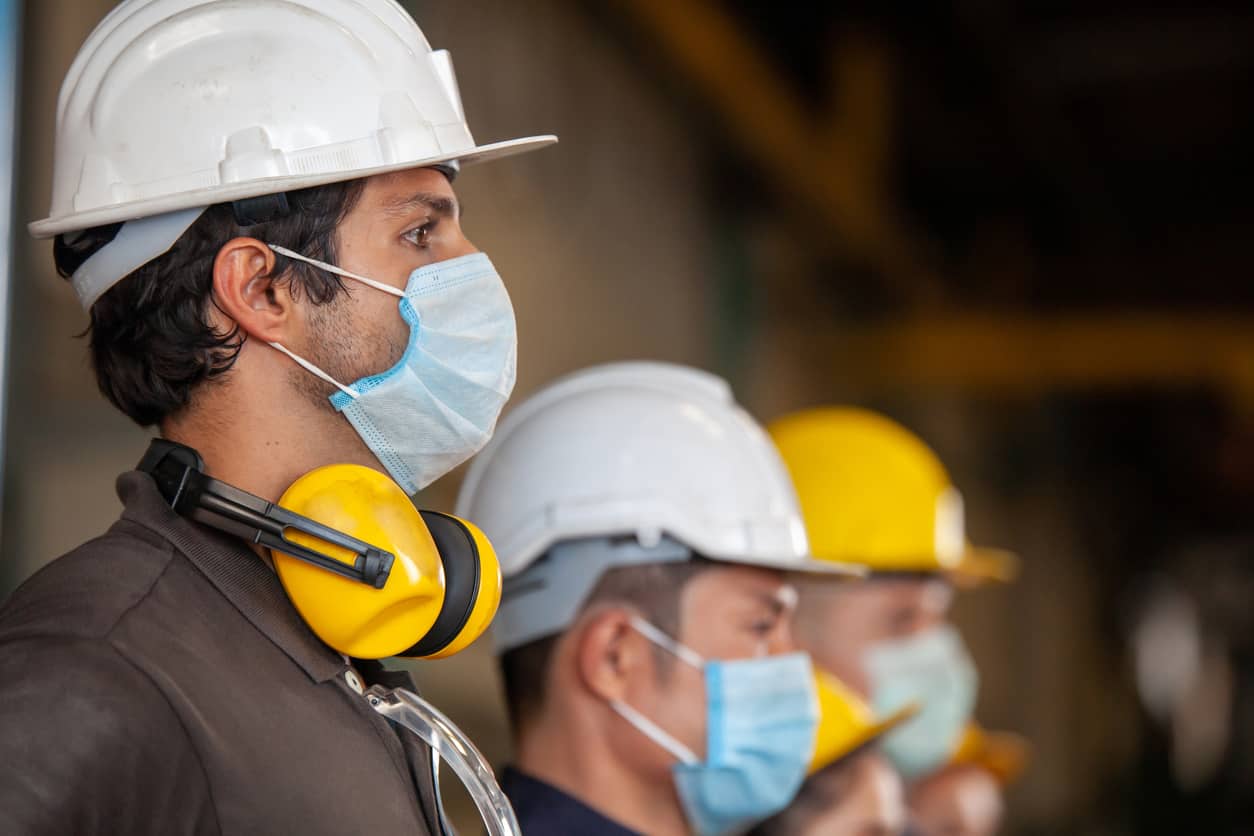
The OSHA ETS requires companies with 100 or more employees to have employees either get vaccinated against COVID-19 or be subject to testing once a week and wear a mask at work. OSHA is empowered to create emergency temporary standards that can function for six months without going through the usual notice and comment rulemaking process “when it determines that a rule is ‘necessary’ to protect employees from a ‘grave danger’ from exposure to ‘physically harmful’ ‘agents’ or ‘new hazard,’” according to SCOTUSblog. Applying this standard to COVID-19, OSHA determined that COVID-19 fit the bill of being both physically harmful and a new hazard, and posed grave danger to unvaccinated workers. This rule was challenged by 27 states (led by Ohio) and the National Federation of Independent Business, which also led a challenge to the ACA in National Federation of Independent Business v. Sebelius.
The second Biden administration COVID-19 rule the Supreme Court will hear a challenge to is an HHS rule requiring health care workers at facilities participating in federal Medicare or Medicaid programs to get vaccinated, with the possibility of a medical or religious exemption.
Taken together, these two rules have the possibility of affecting the conditions of millions of workers. The OSHA ETS covers around two-thirds of the private sector and the HHS rule covers approximately 10 million workers (though some workers could be covered by both rules). The Supreme Court will be deciding whether the rules can stay in place while challenges make their way up through the courts. As a Washington Post article noted, the Supreme Court itself has stricter COVID-19 protocols than the OSHA rule requirements.
In other news, Student Workers of Columbia, a union of instructors, researchers, and teaching assistants at Columbia University, announced late last night it had reached a tentative agreement for its first contract with the school. The union and the school had been bargaining for three years, and the union went on a 10-week strike in the process of reaching this agreement.
In addition, Comic Book Workers United declared victory in its union election last night, which it says makes it the first unionized comic book publisher in the U.S.





Daily News & Commentary
Start your day with our roundup of the latest labor developments. See all
October 21
DOL withdraws tipped-worker rule; Instacart settles hiring-bias claims; Phillips 66 locks out New Jersey refinery workers.
October 20
Korean unions oppose labor exemption bill; Portland city workers prepare for strike; UPenn grad student union looks to dismiss university filing
October 19
FDA reverses course on policy prohibiting off-duty union activity; FAA and NATCA reach deal to secure pay increase for air traffic controllers.
October 18
Federal judge again halts cancellation of the Bureau of Prisons’ CBA; tabletop gaming workers face roadblocks in union recognition.
October 16
Department of Labor reduces wage-and-hour enforcement at unionized workplaces; Fain's victory poses question of federal monitor's extension.
October 15
New reporting examines the rollback of child labor protections; California tries to block a strike; NLRB charges Wisconsin mental health provider with firing workers during union drive.