
Jason Vazquez is a staff attorney at the International Brotherhood of Teamsters. He graduated from Harvard Law School in 2023. His writing on this blog reflects his personal views and should not be attributed to the Teamsters.
Recent months have witnessed a staggering scale of dislocation, as the pandemic has killed thousands and plunged millions more into economic turmoil. Yet the misery has not been indiscriminate. In a dramatic display of capitalism’s contradictions, corporate executives have leveraged the precarity and upheaval to rake in soaring profits. As a deadly pathogen devastates our society, many corporate employers have defied government orders to shutter and impelled millions of frontline workers — those who pick crops, pack meat, stock shelves, treat the sick, sort packages, and cook meals, among many other essential activities — to continue toiling in grueling conditions, even performing mandatory overtime, with inadequate access to protective equipment, sick leave, hazard pay, and other important safety measures.
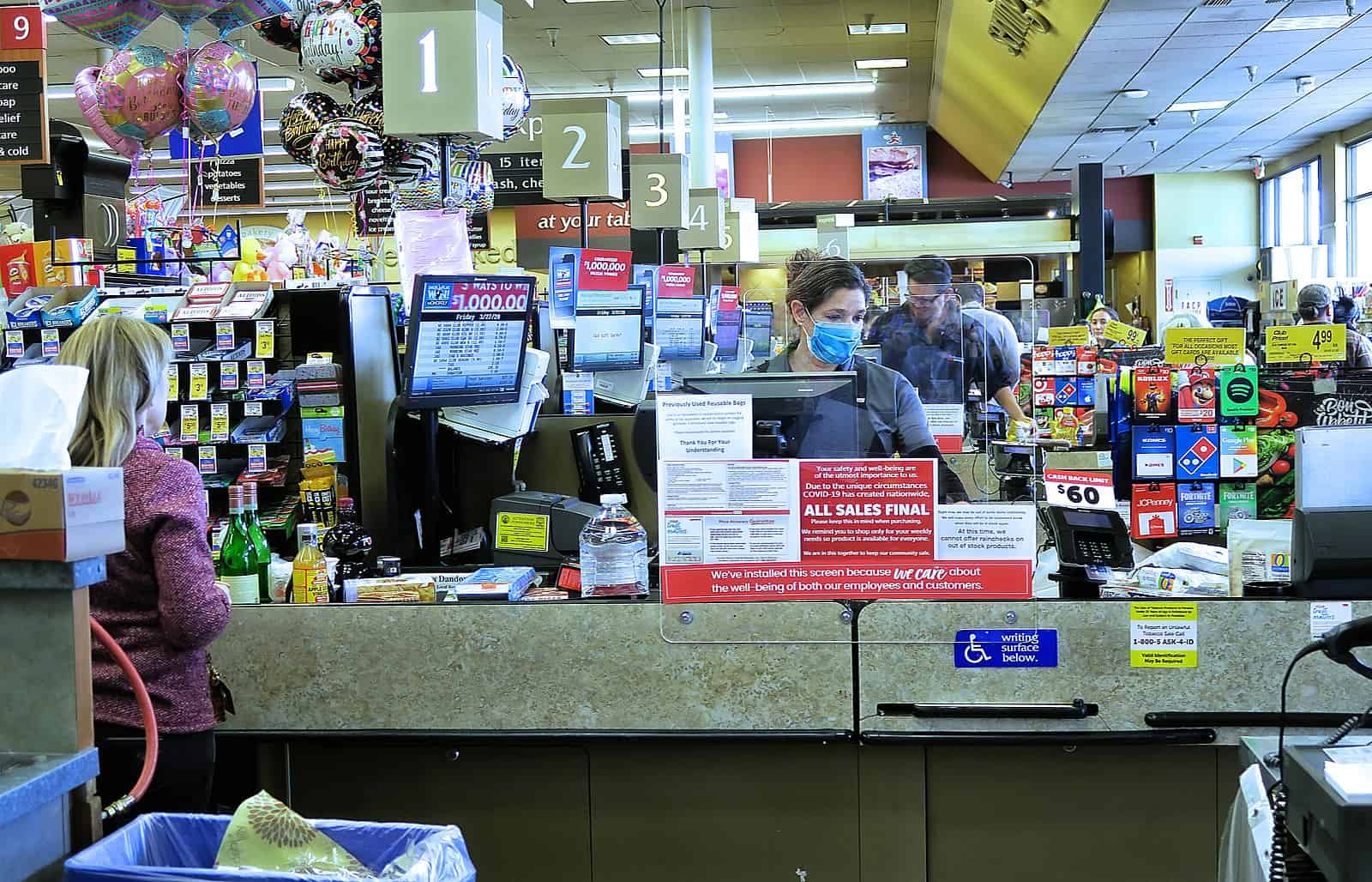
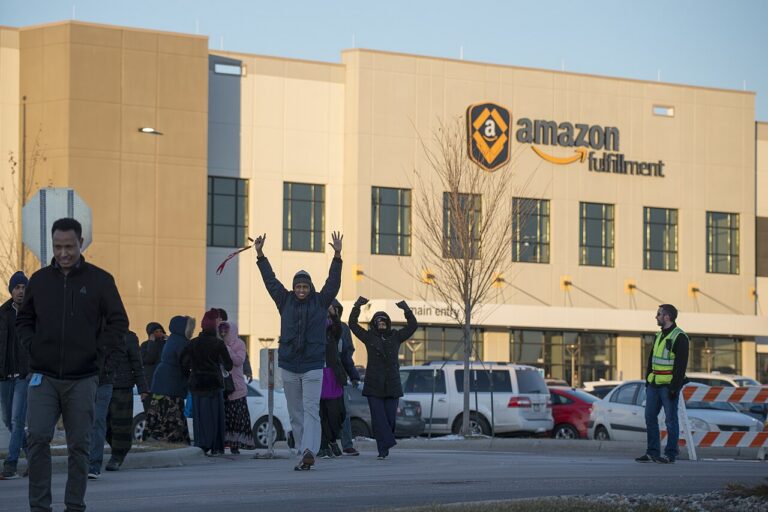
The last year has featured no shortage of disturbing examples of predatory corporate conduct. In the early months of the pandemic, barely ten percent of workers at retail superstores had access to masks. Studies suggest a striking 20 percent of grocery workers have contracted the virus. As Amazon enjoys record profits, thousands of workers in its sprawling warehouses have tested positive for covid, figures the company has suppressed while discharging those who protest or challenge the unsafe conditions. In McDonald’s restaurants, management has widely neglected to enforce masking and social distancing policies, refused to provide personal protective gear, failed to notify the workforce of positive tests, and pressured infected employees to continue showing up to work. Home Depot has instructed employees not to wear masks; Whole Foods has kept stores open with infected workers; and Kroger unexpectedly discontinued its emergency hazard pay. In a stunning showcase of managerial cruelty, supervisors at a Tyson meatpacking facility reportedly placed bets on how many production workers — closely packed together without masks or safety equipment — would contract the virus. The answer: thousands.
Unsurprisingly, workplace safety complaints have skyrocketed in recent months. Today, most essential workers express deep trepidation about going to work. Yet perversely, as they agonize over the risk of exposure to a deadly pathogen, many of these workers consider themselves fortunate they continue to earn a paycheck, as corporate employers — even some receiving injections of federal cash to preserve payrolls — have not hesitated to furlough millions of employees, plunging their families into economic precarity.
Given the pervasive abuse, turmoil, and dislocation, it is unsurprising that support for organized labor has surged. As Jared Odessky observed last year, while very few working people have managed to entirely escape pandemic-induced upheaval, union workers generally find themselves in a far stronger position to weather any crisis, given the higher wages, greater access to health insurance and sick leave, and amplified voice they enjoy. While barely ten percent of frontline workers are represented by a union, mounting evidence reveals this narrow slice has managed not only to resist dislocation — strikingly, the rate of union density ticked upward in 2020 — but to affirmatively improve their working conditions during the pandemic, securing raises, bonuses, and various protective measures.
UFCW, for instance, has secured raises and bonus payments for hundreds of thousands of workers in meatpacking plants across the country. The UAW has forced GM and Ford to halt production and to supply masks and other protective equipment at plants where the virus is proliferating. CWW has negotiated paid sick leave for thousands of workers; furloughed dining staff at prestigious universities have received pay and benefit guarantees; the Screen Actors Guild forced major studios to provide protective gear and testing to movie crews; and the Chicago Teachers Union has blocked the city’s public school system from restoring teachers to the classroom until positivity rates dip and administrators upgrade air filtration systems and provide protective equipment.
Organized labor’s protective ambit has extended beyond the bargaining table. Unions have filed lawsuits to compel the government to provide respirators, masks, and gloves, orchestrated vaccination drives for their members, and even established food banks and support funds to provide relief not only to the workers they represent but to countless individuals in their communities whose lives the pandemic has upended.
In just a few days, thousands of workers at Amazon’s warehouse in Bessemer, Ala. are poised to cast ballots in the company’s first union election in the United States. While some appeared stunned by the development, the organizing activity in Bessemer is not an anomaly. It is nothing more than a highly visible reflection of the surge of labor activity reverberating across the U.S. economy. The pandemic has exposed the sweeping authority employers exercise over the lives of working people and underscored the contradiction that those providing the most socially essential labor tend to be the most vulnerable and abused. These indignities, intensified by the pandemic, have driven waves of workers to assert their dignity, protesting, striking, and attempting to organize and join unions in escalating numbers. Many employers have responded viciously to the emerging labor unrest, discharging workers who protest or attempt to organize and exploiting the pandemic not only to suppress budding union efforts but to uproot existing unions.
All told, unions have offered a critical layer of protection to their members during these disorienting months, an exhibition of collective bargaining’s capacity to protect workers and more generally recalibrate the balance of economic power. Yet the reality remains that even unions have a limited ability to insulate their members from the dislocation inevitable in a capitalist system, which the pandemic has only accelerated. After all, union members have not entirely escaped dismissals, furloughs, and pay cuts, and, tragically, many have been infected and died. Comprehensively emancipating “essential workers” — and all working people — from economic despotism would require more than collectively bargaining; it would require transitioning to a democratic economic order.




Daily News & Commentary
Start your day with our roundup of the latest labor developments. See all
October 16
Department of Labor reduces wage-and-hour enforcement at unionized workplaces; Fain's victory poses question of federal monitor's extension.
October 15
New reporting examines the rollback of child labor protections; California tries to block a strike; NLRB charges Wisconsin mental health provider with firing workers during union drive.
October 14
Eleventh Circuit overturns ERISA exhaustion rule; DHS finalizes removal of automatic renewal for work permits; AFGE challenges SSA over flexible scheduling policy.
October 13
Chicago hotel workers remain on strike; a coalition of Democratic states sues the Labor Department over canceled unemployment insurance grants; the Federal Labor Relations Authority establishes a new mediation framework for federal worker disputes.
October 12
Workers at the Obama Foundation begin organizing; MLB submits its latest collective bargaining agreement proposal; Brigham & Women's nurses postpone strike.
October 11
UAW President Shawn Fain succeeds in his reelection bid, and Spanish unions call for a general strike.