Benjamin Sachs is the Kestnbaum Professor of Labor and Industry at Harvard Law School and a leading expert in the field of labor law and labor relations. He is also faculty director of the Center for Labor and a Just Economy. Professor Sachs teaches courses in labor law, employment law, and law and social change, and his writing focuses on union organizing and unions in American politics. Prior to joining the Harvard faculty in 2008, Professor Sachs was the Joseph Goldstein Fellow at Yale Law School. From 2002-2006, he served as Assistant General Counsel of the Service Employees International Union (SEIU) in Washington, D.C. Professor Sachs graduated from Yale Law School in 1998, and served as a judicial law clerk to the Honorable Stephen Reinhardt of the United States Court of Appeals for the Ninth Circuit. His writing has appeared in the Harvard Law Review, the Yale Law Journal, the Columbia Law Review, the New York Times and elsewhere. Professor Sachs received the Yale Law School teaching award in 2007 and in 2013 received the Sacks-Freund Award for Teaching Excellence at Harvard Law School. He can be reached at [email protected].
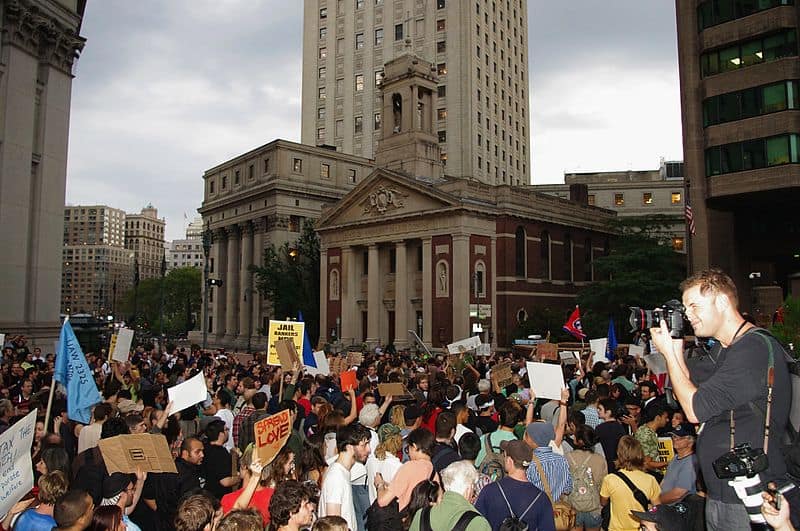
Kate Andrias and I have a new law review article out today showing how legal systems can be designed to fuel political organizing by the poor and working class. The article, Constructing Countervailing Power: Law and Organizing in an Era of Political Inequality is available here. The abstract is below:
This Article proposes an innovative approach to remedying the crisis of political inequality: using law to facilitate organizing by the poor and working class, not only as workers, but also as tenants, debtors, welfare beneficiaries, and others. The piece draws on the social-movements literature, and the successes and failures of labor law, to show how law can supplement the deficient regimes of campaign finance and lobbying reform and enable lower-income groups to build organizations capable of countervailing the political power of the wealthy. As such, the Article offers a new direction forward for the public-law literature on political power and political inequality. It also offers critical lessons for government officials, organizers, and advocates seeking to respond to the inequalities made painfully evident by the COVID-19 pandemic.






Daily News & Commentary
Start your day with our roundup of the latest labor developments. See all
August 14
Hollywood unions diverge in response to the Paramount-Warner merger saga; Tesla defeats a years-long strike in Sweden, and labor scholars advocate for state sectoral bargaining policy innovation.
August 13
EEOC complaint process expected to harm federal workers; former UAW leaders endorse Fain challenger; Xbox employees protest layoffs.
August 12
Third Circuit affirms dismissal of driver’s bias and retaliation claims against CBS and Teamsters; employment litigation surges in Washington state; MIT Sloan professor argues the rise of “disposable workers” is transforming American employment.
August 11
Rideshare drivers nearing union certification in California; UFCW campaigns against electronic shelf labels; Teamsters support NYC delivery driver bill.
August 10
Employee sues for a fossil-fuel-free 401(k) plan as a religious accommodation; DHS submits a proposed rule eliminating 60-day grace period for H-1B workers; Eighth Circuit dismisses constitutional challenge to the FMSHRC.
August 7
Starbucks beats claims it denied shifts to union workers; Center for State Labor Innovation aims to address labor law shortcomings.