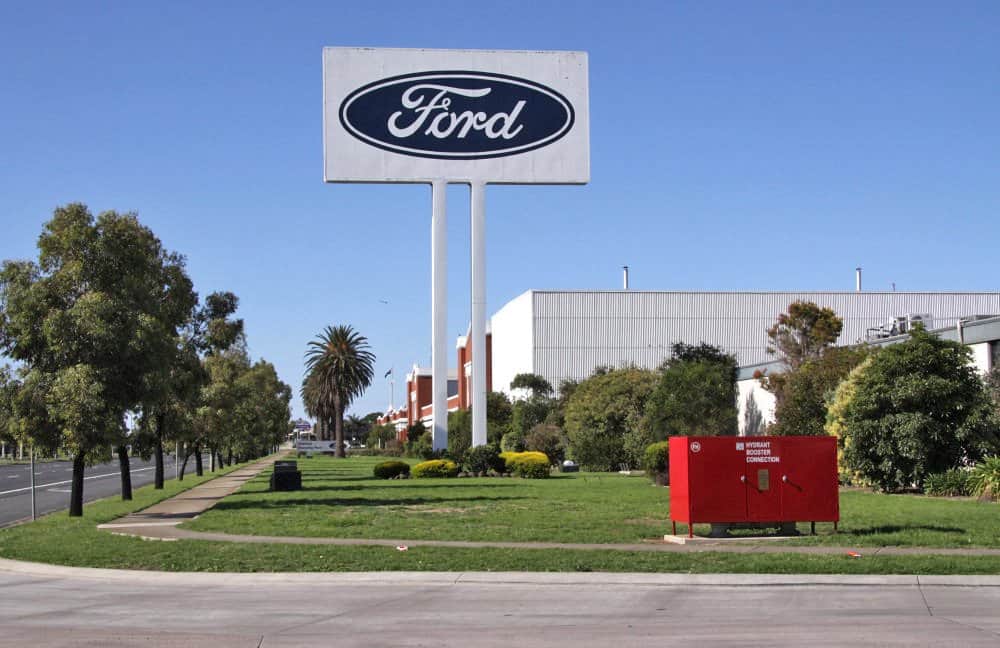

On Friday, UAW leadership voted to recommend ratification of a proposed contract agreement with Ford. The proposed agreement, finalized on Wednesday, would provide union workers with pay increases and lump-sum payouts, hold employee health-care contributions at 3%, allow new hires to reach the top of the pay tier more quickly, and require Ford to limit its employment of temporary workers. Ford would be required to invest $6 billion in U.S. factories—less than the amount pledged by GM in its new contract with the UAW—and would be allowed to close an engine plant in Romeo, Michigan. UAW members will begin voting on the proposed agreement on Monday. Voting will end on November 15. Art Wheaton, a labor studies professor at Cornell, expects that the vote will be close, but that the required majority of UAW members will vote to ratify.
On Saturday, the UAW announced that its president, Gary Jones, will be taking a leave of absence. Mr. Jones, who led the union through its recent strike at GM, has lately been the target of federal investigators; in August, FBI agents raided Mr. Jones’ home in Canton, Michigan, as part of an ongoing investigation into corruption at the union. Mr. Jones has not been formally charged. UAW Vice President Rory Gamble will serve as interim president.
According to the Wall Street Journal’s business columnist, GM may have gotten the upper hand in its recent contract negotiations with the UAW by successfully resisting the union’s demand for more say in where GM builds its products. Under the new contract, GM retains flexibility to close plants. While the union has already agreed to not block GM’s plans to close four U.S. facilities, the Journal predicts that more closures will follow.
The Los Angeles Times reports on a campaign to improve working conditions for Hollywood assistants. A job as a Hollywood assistant is a traditional step toward becoming an agent, writer, producer, or director. It is also underpaid, and increasingly insecure. According to a 2017 survey, assistants make an average of $3,759 per month, over a third of assistants work more than 50 hours per week, and 32.4% of assistants are not paid overtime. The vast majority of the approximately 4,000 assistants in Hollywood are not unionized. According to the Times, that may change. A recent episode of the podcast “Scriptnotes,” devoted to the plight of Hollywood assistants, has sparked a conversation on how to empower assistants and improve their working conditions. Liz Alper, a TV writer and former assistant, has launched a #PayUpHollywood hashtag on twitter and created a link where assistants can share stories anonymously. Alper is also working with Dierdre Mangan, another writer and former assistant, to collect data on salaries and working conditions for assistants in order to advocate for legislative reform.





Daily News & Commentary
Start your day with our roundup of the latest labor developments. See all
October 12
Workers at the Obama Foundation begin organizing; MLB submits its latest collective bargaining agreement proposal; Brigham & Women's nurses postpone strike.
October 11
UAW President Shawn Fain succeeds in his reelection bid, and Spanish unions call for a general strike.
October 9
DHS proposes a $100k fee for the foreign grad employment program; Trump suspends tech company access to green card program; and private equity perpetuates poor working conditions for home care workers.
October 8
NLRB judge finds UPS unlawfully restricted union insignia; Harvard graduate workers authorize second strike; OSHA orders Union Pacific to pay $300,000 in damages in whistleblower case.
October 7
DOL scraps plan to remove decades-old wage-and-hour guidance from federal regulations; New York enacts personnel records access law; Starbucks loses bid to dismiss Workers United trademark suit.
October 6
Protect College Sports Act dampens athlete unionization outlook; Stanford RA union decides to withdraw petition