

Airports and major-city transit authorities warn that the planned strike by Uber and Lyft drivers tomorrow may create significant travel chaos. The strike, which arose out of a dispute between Uber and its Los Angeles drivers over a rate decrease there, is expected to affect several major American cities, including New York, Washington, and Boston, as well as several international cities where drivers are striking in solidarity. The strike will be an important test of the ability of so-called “gig economy” workers to organize collectively.
In the Wall Street Journal, a former Bush economic advisor suggests that stagnant wages for workers can be traced to stalled productivity growth. He argues that blaming the highest earners in America is misguided, and says that the real solution to this problem is to provide better vocational training for non-knowledge workers. He points to Germany as an example, where vocational training is common and the wage ratio between rich and poor is much more egalitarian than in the United States.
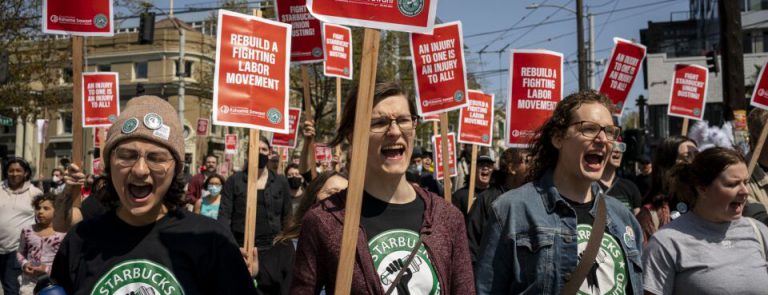
Jacobin has an interesting interview with Alex McIntyre, a union organizer in the United Kingdom who helped low-paid bartenders form a union and eventually go on strike to get better wages and benefits. The effort is one of many burgeoning organizing drives among the worst-paid and least-organized service workers across the Western world, like McDonald’s and Starbucks.

Daily News & Commentary
Start your day with our roundup of the latest labor developments. See all
September 25
Healthcare workers rally to restore legal status for TPS holders; nurses at a Maine hospital overwhelmingly vote to form their union despite alleged aggressive union busting tactics.
September 24
NLRB abandons rule for offensive conduct during protected activity; New York home care workers seek a union election; maritime deck officers endure long fight for first contracts.
September 23
DoorDash settles delivery-worker pay claims; Philadelphia school workers win new contract; stock gains spur retirements.
September 22
Judge blocks ICE raids in Alabama; Chicago hotel workers vote to strike; AutoZone workers look to create first union
September 21
In today’s News and Commentary, the Seventh Circuit raises the bar for the NLRB to obtain preliminary injunctions, the California Primary Care Association sues SEIU-UHW for racketeering, and the Seventh Circuit finds that an employer group and think tank do not have standing to challenge an Illinois law banning captive audience meetings. On Friday, the […]
September 20
Culinary Workers Union members protests union leadership; lawsuit against OpenAI and Microsoft reveal internal concerns about the threat of AI training to human labor.