
Rachel Sandalow-Ash is a student at Harvard Law School and a member of the Labor and Employment Lab.
Teachers’ union leaders in Oklahoma have ended their nine-day teachers’ strike which began on April 2nd. In anticipation of the strike, state lawmakers had passed a $6,000 pay raise for Oklahoma teachers, the largest in the state’s history. In addition to pay raises, the teachers also called for increased funding for their classrooms, and over the course of the strike, thousands of teachers and students rallied at the Oklahoma state Senate to call for increased education funding. In the midst of the strike, the Republican-dominated Oklahoma state Senate passed two measures to increase education funding by around $40 million.
Late last week, after Arizona teachers held walk-ins at over 1,000 schools and threatened to strike, Republican Governor Doug Ducey agreed to a 20% wage hike for teachers, which will be implemented gradually through 2020. While many teachers are excited about these proposed gains, other teachers and school employees are skeptical that the government’s plan did not include pay raises for school support professionals.
In response to teacher strikes and protests in Kentucky, the Republican state legislature overrode Republican Governor Matt Bevin’s veto to pass a spending plan that includes new education funding. Last Friday, Governor Bevin accused striking teachers of leaving children vulnerable to sexual assault, drugs, and other harms. He apologized for these remarks on Sunday.
Following teachers’ strikes and protests in West Virginia, Oklahoma, Arizona, and Kentucky, teachers in Colorado are walking out of school today (Monday) to demand higher wages, increased investment in school funding, and the protection of retirement benefits. At least one Colorado school district is closing today because so many teachers will be protesting at the state capitol.
The union representing actors, SAG-AFTRA, has called for an end to the practice of holding auditions in private hotel rooms or residences. This call builds on the union’s Code of Conduct on Sexual Harassment and was issued in response to the #MeToo movement and a series of sexual harassment and assault allegations against prominent figures in Hollywood. The Producers’ Guild of America claims to welcome the union’s guidance, though it is not clear how it will be enforced.
The Connecticut state legislature is currently debating a bill, passed through the Judiciary Committee, that would allow both public and private-sector workers to refuse to participate in captive audience meetings. Workers and union leaders support the bill, while business interests oppose it. This debate is occurring against the backdrop of a union organizing drive at Foxwoods Resort Casino, where workers will vote on whether to join UNITE HERE this Friday. The legal issues surrounding this legislation are unclear; when Connecticut lawmakers debated similar legislation in 2011, state Attorney General George Jepsen said that the National Labor Relations Act would likely preempt the state bill. However, he has not yet weighed in on this session’s legislation. To learn more about captive audience meetings, you can read this helpful primer from OnLabor.
The Maryland State Educators’ Association, the state’s largest teachers’ union, has endorsed Democratic candidate and former NAACP President Ben Jealous for Governor. As the Washington Post reported, Jealous has called for increasing teacher salaries, a living wage for all school staff, and eliminating the $2.9 million state education funding shortage.
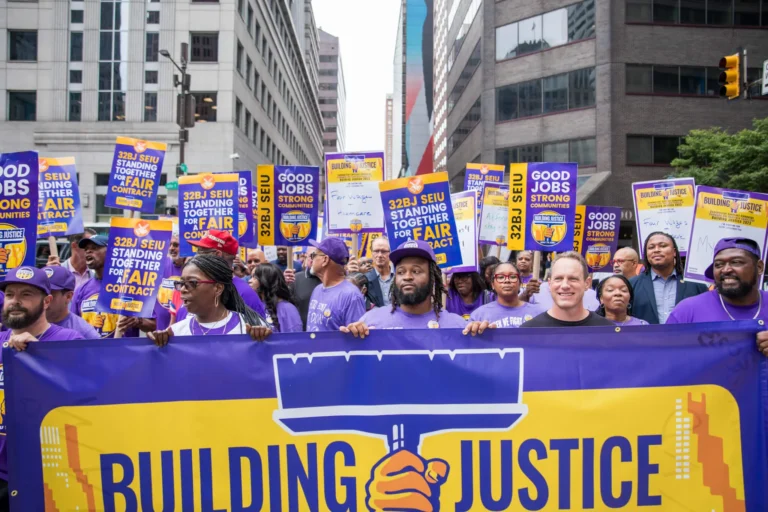
30,000 janitors, porters, handymen and doormen represented by SEIU 32BJ have reached an agreement with the Realty Advisory Board in New York City. The union secured an 11.3% pay increase over the next four years, brining average wages up to $55,000. Their previous contract was set to expire on August 20th, and workers had been preparing for a strike before the agreement was reached.




Daily News & Commentary
Start your day with our roundup of the latest labor developments. See all
September 25
Healthcare workers rally to restore legal status for TPS holders; nurses at a Maine hospital overwhelmingly vote to form their union despite alleged aggressive union busting tactics.
September 24
NLRB abandons rule for offensive conduct during protected activity; New York home care workers seek a union election; maritime deck officers endure long fight for first contracts.
September 23
DoorDash settles delivery-worker pay claims; Philadelphia school workers win new contract; stock gains spur retirements.
September 22
Judge blocks ICE raids in Alabama; Chicago hotel workers vote to strike; AutoZone workers look to create first union
September 21
In today’s News and Commentary, the Seventh Circuit raises the bar for the NLRB to obtain preliminary injunctions, the California Primary Care Association sues SEIU-UHW for racketeering, and the Seventh Circuit finds that an employer group and think tank do not have standing to challenge an Illinois law banning captive audience meetings. On Friday, the […]
September 20
Culinary Workers Union members protests union leadership; lawsuit against OpenAI and Microsoft reveal internal concerns about the threat of AI training to human labor.