
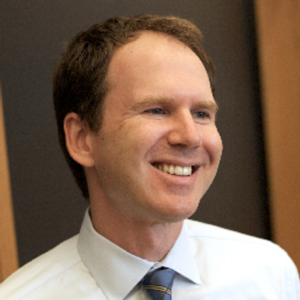
Benjamin Sachs is the Kestnbaum Professor of Labor and Industry at Harvard Law School and a leading expert in the field of labor law and labor relations. He is also faculty director of the Center for Labor and a Just Economy. Professor Sachs teaches courses in labor law, employment law, and law and social change, and his writing focuses on union organizing and unions in American politics. Prior to joining the Harvard faculty in 2008, Professor Sachs was the Joseph Goldstein Fellow at Yale Law School. From 2002-2006, he served as Assistant General Counsel of the Service Employees International Union (SEIU) in Washington, D.C. Professor Sachs graduated from Yale Law School in 1998, and served as a judicial law clerk to the Honorable Stephen Reinhardt of the United States Court of Appeals for the Ninth Circuit. His writing has appeared in the Harvard Law Review, the Yale Law Journal, the Columbia Law Review, the New York Times and elsewhere. Professor Sachs received the Yale Law School teaching award in 2007 and in 2013 received the Sacks-Freund Award for Teaching Excellence at Harvard Law School. He can be reached at [email protected].
We’ll have more complete analysis in the days ahead, but, as Ross reports, the California Supreme Court has issued a decision with major implications for Uber, the gig economy, and the question of worker classification more broadly. In Dynamex Operations West, Inc., the court holds – for purposes of California wage orders (which govern minimum wages, maximum hours, and meal and rest breaks) – that the appropriate test for determining whether a worker is an independent contractor is the so-called ABC test. Under that test, a hiring entity that wants to classify workers as independent contractors has the burden of establishing each of the following three things:
(A) that the worker is free from control and direction of the hirer in connection with the performance of the work, both under the contract for the performance of such work and in fact;
(B) that the worker performs work that is outside the usual course of the hiring entity’s business; and
(C) that the worker is customarily engaged in an independently established trade, occupation, or business of the same nature as the work performed for the hiring entity.
All three factors are difficult for a firm like Uber to establish (my view is that they lose on all three), but the second prong ought to be impossible for Uber to satisfy. Meeting prong (B) requires Uber to prove that its drivers are performing work outside the usual course of Uber’s business. Since Uber’s business is all about providing transportation services to passengers, driving people is in the usual course of Uber’s business. Indeed, the only way Uber can win on prong (B) is to convince a judge that it is not in the transportation business, but is instead a technology company. Uber has been making this argument, but the appropriate response to it has already been offered. The U.K Uber tribunal, for example, called the idea “faintly ridiculous.” Judge Chen deemed it “fatally flawed.” As Chen put it:
Uber is no more a “technology company” than Yellow Cab is a “technology company” because it uses CB radios to dispatch taxi cabs, John Deere is a “technology company” because it uses computers and robots to manufacture lawn mowers, or Domino Sugar is a “technology company” because it uses modern irrigation techniques to grow its sugar cane. Indeed, very few (if any) firms are not technology companies if one focuses solely on how they create or distribute their products. If, however, the focus is on the substance of what the firm actually does (e.g., sells cab rides, lawn mowers, or sugar), it is clear that Uber is most certainly a transportation company[.]
Being a transportation company, Uber will fail to satisfy prong (B). That means under the California Supreme Court’s test, Uber drivers are employees.

Daily News & Commentary
Start your day with our roundup of the latest labor developments. See all
September 10
Amazon workers allege pregnancy discrimination; federal unions challenge USDA reorganization; NYC warns of silicosis risks.
September 9
Wynn Las Vegas employees allege anti-union retaliation; Amazon faces a class action over pregnancy accommodations; H-1B demand plunges following a six-figure visa fee.
September 8
In today’s News and Commentary, workers and unions across America celebrate Labor Day, California’s SEIU Local 1000 prepares for a strike authorization vote, and New York City creates the Office of Worker Power. On Monday, labor unions and workers gathered in cities across the United States in celebration of Labor Day. Parades and rallies took […]
September 7
Eighth Circuit finds DOL order violates Seventh Amendment; 1,300 workers at Encore Boston Harbor go on strike.
September 6
Encore casino workers strike; President Trump commutes sentence of former Philadelphia IBEW leader; Durham labor activist ends his hunger strike against Amazon.
September 4
NLRB advice memo narrows political protest protections; NLRB asks federal appeals court for deference.