

Hannah Belitz is a student at Harvard Law School.
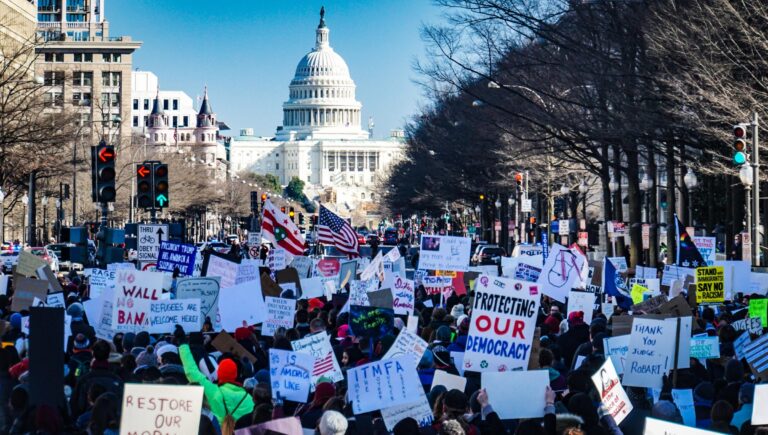
Yesterday, in dozens of cities across the U.S., tens of thousands of protestors took to the streets to demand that Trump release his tax returns. Reuters explains that organizers of the “Tax March” wanted to draw attention to Trump’s refusal to release his tax returns. The marches were planned for April 15 because it is the traditional filing deadline for U.S. federal tax returns (this year the filing date was pushed back two days).
Politico reports that the “clock is ticking” for expanding the number of available H-2B visas. The H-2B visa program permits business to hire temporary, non-agricultural foreign workers, with a cap of 66,000 visas per year. The 2015 spending bill exempted returning workers from the cap, and business leaders are pushing for Congress to do the same in 2017. Although a House appropriations bill for the fiscal year 2017 already includes the exemption, business leaders are lobbying the Senate to do the same by April 28, the date by which Congress needs to pass a spending bill to keep the government functioning.
On Thursday, U.S. District Judge for the District of Massachusetts Leo T. Sorokin presided over a two-hour hearing regarding two City Hall aides charged with extortion for “allegedly threatening to withhold permits for the Boston Calling festival in September 2014 unless organizers hired union workers.” According to the Boston Globe, a prosecutor in the U.S. Attorney’s Office asserted that the aides thought they were advancing Mayor Walsh’s agenda. Attorneys for the defense countered that the aides acted as city workers seeking jobs for constituents, that they had the right to negotiate the use of City Hall Plaza, and that the prosecutors “have failed to show that the defendants received anything of value for allegedly urging the labor union jobs.” As Attorney Thomas Kiley argued, “A violation of the National Labor Relations Act is not the same as [extortion].”

Daily News & Commentary
Start your day with our roundup of the latest labor developments. See all
October 6
Protect College Sports Act dampens athlete unionization outlook; Stanford RA union decides to withdraw petition
October 5
Delaware bans captive audience meetings; EEOC settles remote work national origin discrimination claim; First Circuit stays enforcement order in VA's dispute with AFGE.
October 4
Boston nurses announce open-ended strike; federal judge restores federal prison workers' union protections; St. Louis workers form the first movie theater union in Missouri.
October 2
Gov. Newsom signs bill regulating AI in workplace; federal judge blocks Trump's $100,000 H-1B visa fee.
October 1
Senate confirms Keith Sonderling as Labor Secretary; Amazon warehouse workers launch an unfair labor practice strike.
September 30
Harvard grad union wins in First Circuit; AI data trainers initiate misclassification suits; Trader Joe’s found liable under ERISA.