
Tascha Shahriari-Parsa is a government lawyer enforcing workers’ rights laws. He clerked on the Supreme Court of California after graduating from Harvard Law School in 2024. His writing on this blog reflects his personal views only.
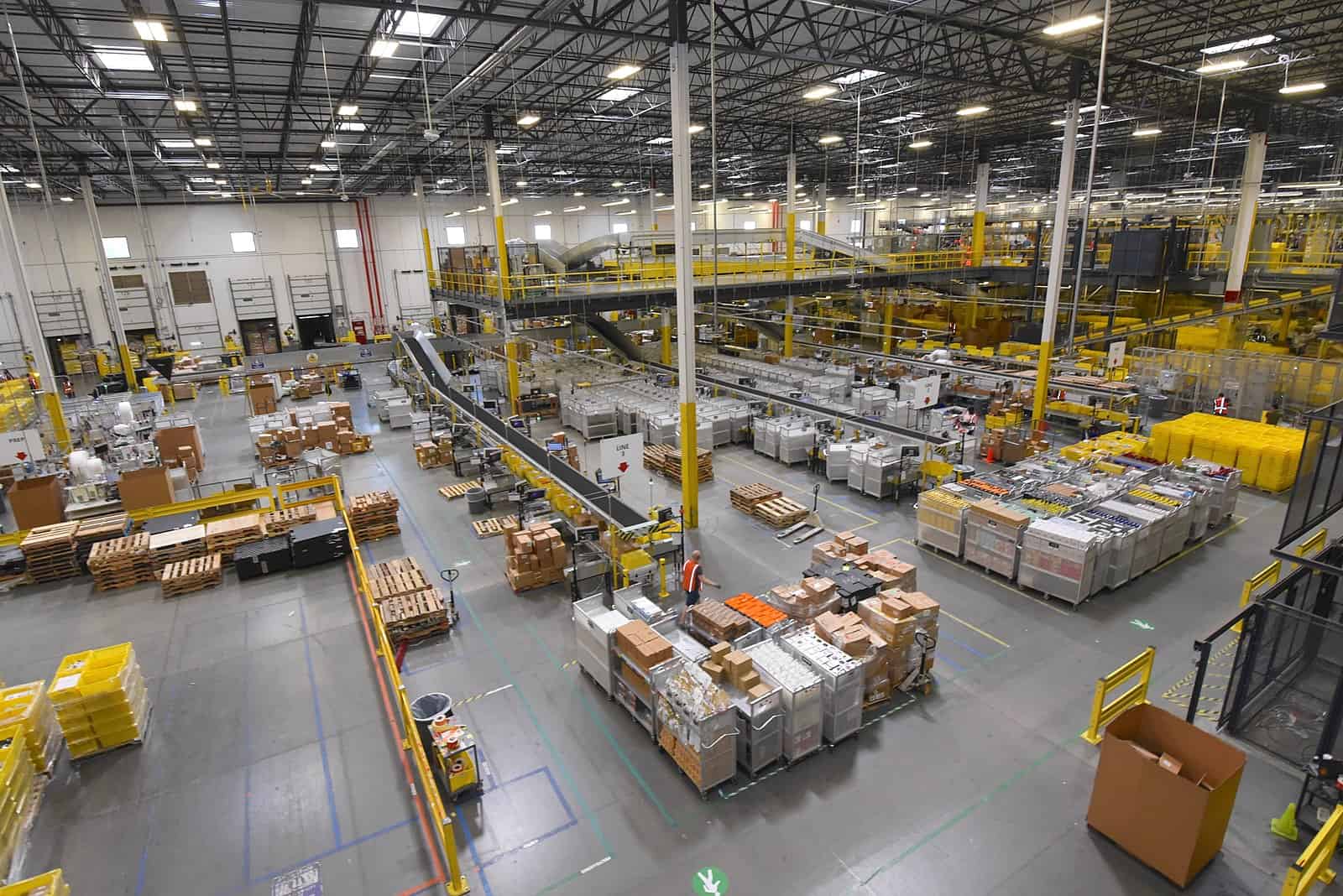
On Wednesday, California Governor Gavin Newsom signed into law A.B. 701, a bill which outlaws employer-mandated production quotas for employees that prevent workers from using the bathroom, taking state-mandated breaks, or staying safe at warehouse distribution centers like Amazon. It also requires companies to be transparent about production quotas with employees, and employees cannot be fired for meeting undisclosed quotas. The bill came through as a compromise, negotiated down from the original bill pushed forward by the International Brotherhood of Teamsters, which would have more directly regulated how companies are able to set production quotas—possibly modelled after similar bills in other industries like the Santa Monica Housekeeper Bill of Rights—and involved Cal/OSHA as a partner and enforcer of the bill. AB 701 was strongly opposed by a coalition of corporations that own or rely on warehouse distribution centers, who waged a campaign and lobbied against the bill. The final version of the bill signed by Governor Newsom does not mention or include any role for Cal/OSHA.
In other news, after workers at three Starbucks stores in Buffalo, NY announced that they have formed a union—Starbucks Workers United—Starbucks argued to the NLRB yesterday that the bargaining unit should encompass all 20 of its stores in the Buffalo region. While the three organized stores employ a total of about 70 workers that would be part of the bargaining unit under the union’s proposition, if Starbucks wins on its argument, that bargaining unit would be increased to about 450. Starbucks’ key argument for including all regional stores in one bargaining unit was that their decisions about store operations take place at the regional level, and employees routinely transfer from one store to another in carrying out their job duties. For the union, an expansion of the bargaining unit could lead to a defeat, similar to the result at the Bessemer unionizing drive in Bessemer, Alabama earlier this year where Amazon similarly “gerrymandered” the bargaining unit.
In addition to potentially forcing the inclusion of entirely unorganized shops, requesting a hearing on the voting block of the bargaining unit results in a delay in any potential vote, during which Starbucks is able to hold captive audience meetings to pressure workers into voting against the union. As Starbucks Workers United member Brian Murray put it, “The longer these elections drag on, the more workers get afraid or disillusioned.” Starbucks is doing everything it can to prevent the unionization effort from succeeding, evidenced by the fact that even the Starbucks President has been going to the Buffalo store, “trying to identify supporters and which workers are wearing union pins” and “calling out union workers on the floor,” Murray stated in an interview with Strikewave.
Harvard dining workers with Unite Here Local 26 ratified a new five-year contract yesterday that guarantees no lay-offs or decreases in paid hours for employees over the next five years as well as 15% in raises and increases to summer stipends. The contract ratification comes just two days after five unions at Harvard came together for a historic joint-rally demonstrating the collective power of all five unions uniting together. “That sense of solidarity, that sense of worker organizing at Harvard — that’s a beacon of hope for workers all over the country,” said Cambridge City Counsellor Jivan Sobrinho-Wheeler. The other unions include the Harvard Graduate Students Union (HGSU), SEIU 32BJ, the Harvard Union of Clerical and Technical Workers (HUCTW), and the Harvard University Security, Parking and Museum Guards Union (HUSPMGU). The unions represent a total of about 12,000 workers at Harvard.




Daily News & Commentary
Start your day with our roundup of the latest labor developments. See all
October 23
Employers increasingly shift health care costs onto workers and NYC proposes placing restrictions on fully automated customer service.
October 22
SCOTUS declines Wilcox appeal; Penn State research assistants win bargaining rights; SEIU sued over military leave firing.
October 21
DOL withdraws tipped-worker rule; Instacart settles hiring-bias claims; Phillips 66 locks out New Jersey refinery workers.
October 20
Korean unions oppose labor exemption bill; Portland city workers prepare for strike; UPenn grad student union looks to dismiss university filing
October 19
FDA reverses course on policy prohibiting off-duty union activity; FAA and NATCA reach deal to secure pay increase for air traffic controllers.
October 18
Federal judge again halts cancellation of the Bureau of Prisons’ CBA; tabletop gaming workers face roadblocks in union recognition.