

Melissa Greenberg is a student at Harvard Law School.
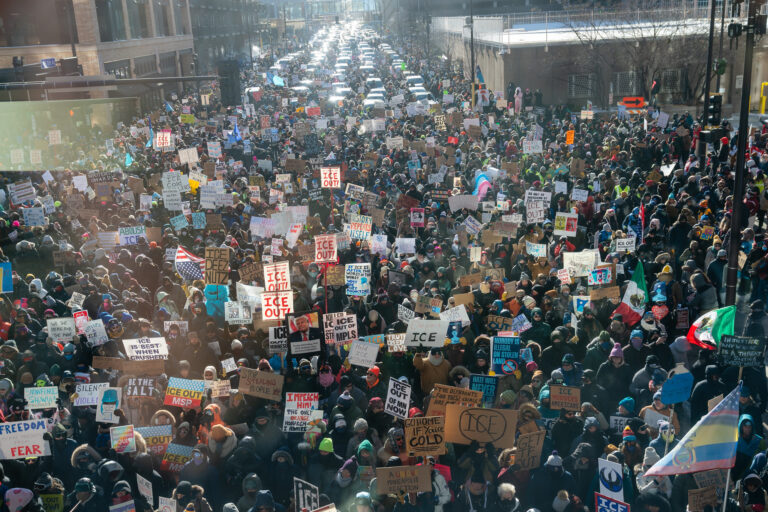
Yesterday, street protests erupted in numerous cities in France, including Lyon, Nantes, and Toulouse, in response to President Emmanuel Macron’s plans to reform French labor law. The proposed reforms aim to ease rules for small businesses, loosen hiring and firing restrictions, and allow individual businesses to bargain over some issues at the company level rather than follow sector-wide rules. The unions reported that 60,000 people took to the streets, but the Paris police prefecture put the number of protesters near 24,000. French unions have had mixed responses to Macron’s plans for reform, and the General Confederation of Labor was the only union which asked its members to protest yesterday. Some demonstrators used this protest to criticize President Macron’s handling of other issues.
HuffPost reported on labor unions’ efforts to protect their immigrant members from deportation. Across the country, unions have hosted “know your rights trainings,” given immigrant workers legal help, assisted with demonstrations, and made a coordinated effort to include workplace protections for immigrants in collective bargaining agreements. These efforts demonstrate how unions have evolved on immigration issues and in some cases become “de facto immigrant rights groups.” Read more here.
Bloomberg reports that the International Association of Machinists (IAM) and the United Steelworkers (USW) have ended their long-time partnership with Harley-Davidson Inc. citing concerns that the company is attempting to “‘systematically dismantle’ its hourly workforce.'” In a letter to the company, Robert Martinez Jr., the president of IAM, argued that Harley-Davidson has replaced full-time workers with temporary ones, outsourced production, and contributed to the reduction of American manufacturing jobs by building factories overseas. The unions reported that Matt Levatich, Harley-Davidson’s chief executive, said that he will continue to work with the unions on staffing matters.


Daily News & Commentary
Start your day with our roundup of the latest labor developments. See all
March 31
In today’s news and commentary, the Supreme Court hears a case about Federal Court jurisdiction over arbitration, a UPS heat inspection lawsuit against OSHA is dismissed, and federal worker unions and NGOs call on the EPA to cease laying off its environmental justice staffers. A majority of Supreme Court justices signaled support for allowing federal […]
March 30
Trump orders payment to TSA agents; NYC doormen look to authorize a strike; and KPMG positions for mass layoffs.
March 29
The Department of Veterans Affairs re-terminates its collective bargaining agreement despite a preliminary injunction, and the Federal Labor Relations Authority announces new rules increasing the influence of political appointees over federal labor relations.
March 27
“Cesar Chavez Day” renamed “Farmworkers Day” in California after investigation finds Chavez engaged in rampant sexual abuse.
March 26
Supreme Court hears oral argument in an FAA case; NLRB rules that Cemex does not impose an enforceable deadline for requesting an election; DOL proposes raising wage standards for H-1B workers.
March 25
UPS rescinded its driver buyout program; California court dismissed a whistleblower retaliation suit against Meta; EEOC announced $15 million settlement to resolve vaccine-related religious discrimination case.