
Maxwell Ulin is a student at Harvard Law School.
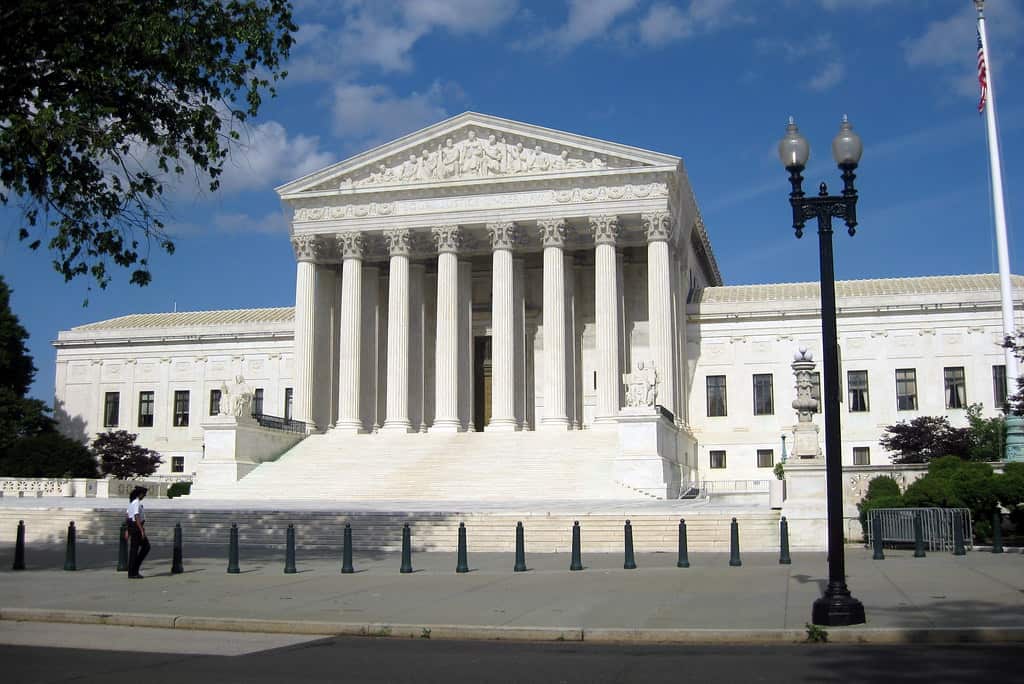
Yesterday’s headlines were dominated by the ongoing confirmation battle over Supreme Court nominee Amy Coney Barrett. At Wednesday’s hearing, Sen. Sheldon Whitehouse (D-RI) grilled Barrett on, among other things, the Supreme Court’s controversial 2018 decision regarding public-sector union dues in the case Janus v. AFSCME. Noting Judge Barrett’s own emphasis on the conventional litigation process, Whitehouse highlighted several abnormalities leading up to the Janus decision that made the case a particularly striking example of judicial activism. As Andrew Strom wrote recently, Coney Barrett’s judicial record suggests that her confirmation would pull the Court even further to the right on workers’ rights issues than had been the Janus court.
With just 18 days before the election, the fight over the future of gig work in California is reaching a fever pitch. Already, Uber, Lyft, DoorDash, and other rideshare companies have spent more than $191 million in support of Proposition 22, an effort to eviscerate California’s new, more expansive definition of employee status under Assembly Bill 5 (“A.B. 5”), which requires these companies to provide drivers with ordinary employee benefits. Prop. 22 aims to reduce driver benefits by establishing a new “independent worker” category that would guarantee drivers certain employment-like benefits while retain many of the unregulated elements of independent contractor status. Max Moran notes in the American Prospect that the idea behind Prop. 22 actually traces back to a 2015 paper by the late Alan Krueger and Seth Harris, a key Labor Department official poised to play a major role shaping labor policy in a future Biden administration. Yet as Ben noted at the time, Harris’s and Krueger’s “independent worker” category was based on an unrealistic notion of how FLSA wages might be calculated. The proposal’s justifications remains little clearer today.
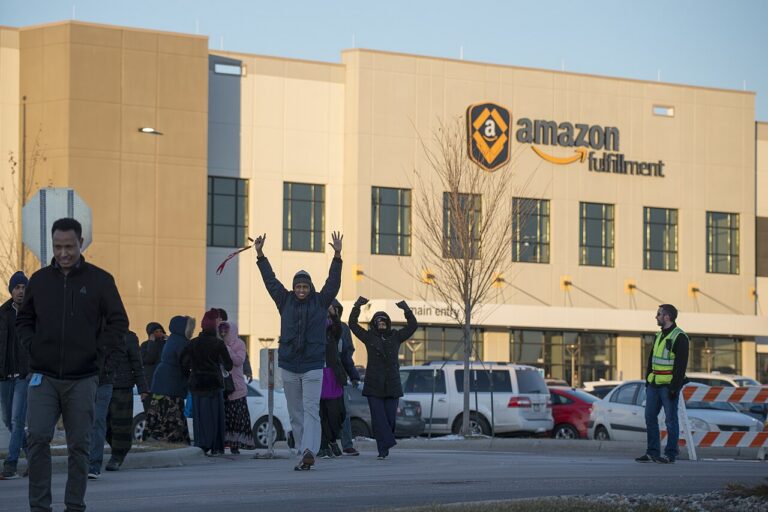
Other notable tech giants have made news recently for their anti-worker policies. During Prime Day, a 48-hour members-only shopping extravaganza hosted by Amazon this week, workers reported numerous violations of COVID health and safety regulations as the company rushed employee to keep up with Prime Day consumer demand. The infractions come after reporting earlier this month that over 20,000 Amazon workers in the U.S. alone had contracted COVID-19. Already, Amazon has been under substantial pressure from state leaders to assure the public that the firm complies with pandemic health and safety protocols.
Yesterday, the United Farmworkers (UFW) filed a complaint against U.S. Department of Agriculture Secretary Sonny Perdue and other administration officials over the USDA’s recent decision to halt data collection for the Administration’s Farm Labor Survey. The survey, published each year, is used to calculate farm labor’s adverse effect wage rate (AEWR) in each state, which is in turn utilized to set H-2A visa workers’ hourly minimum wage in an effort to deter employers from using cheap overseas labor over the local workforce. USDA’s decision, UFW argues, threatens not only to reduce wages for H-2A worker but to depress wages among local workers by extension.

Daily News & Commentary
Start your day with our roundup of the latest labor developments. See all
June 9
SoFi Stadium workers authorize a strike ahead of the World Cup; the NLRB finds Starbucks violated labor law; Trump’s $100,000 H-1B visa fee is struck down.
June 8
BLS releases May jobs reports; US Trade Representative proposes new tariffs.
June 7
SAG-AFTRA members ratify a four-year CBA and the International Trade Union Confederation releases its 2026 Global Rights Index.
June 4
Third Circuit tosses DOL’s $35.8 million healthcare wage award; Trump’s Republican NLRB nominee gets Senate hearing; Harvard graduate students end strike.
June 3
JOLTS data shows mixed labor market as personal income declines; New York Fed research links remote work to rising youth unemployment; Virginia Governor Spanberger signs sweeping employment reform package.
June 2
Illinois passes rideshare driver unionization bill; DOL issues new union financial reporting rule; unions push back against AI data center regulations.