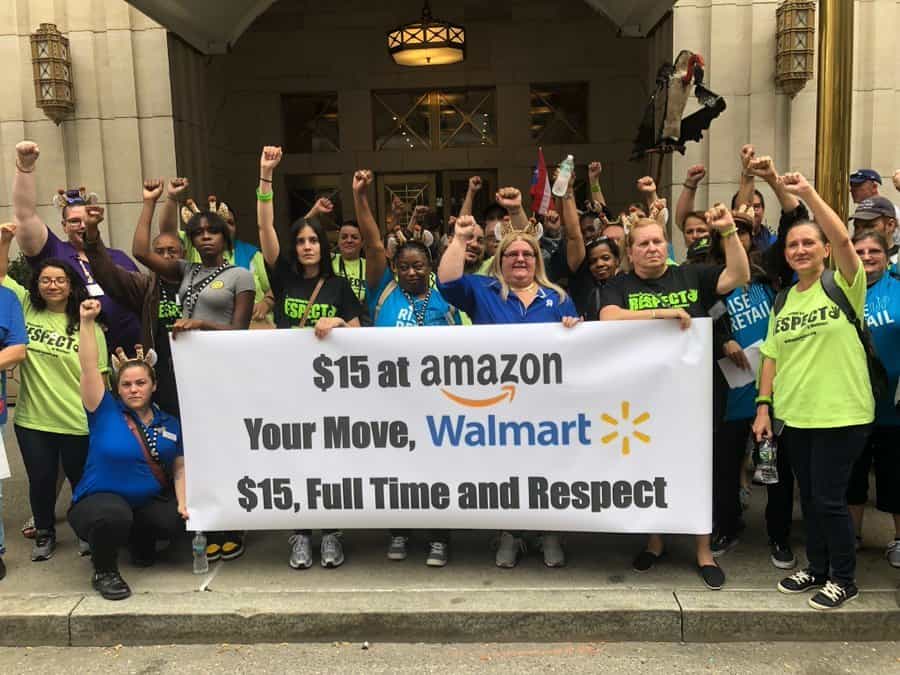

This Black Friday, retail workers are organizing for dignity in the workplace. In the American Prospect, David Dayen profiles United for Respect, an alt-labor coalition and organizing powerhouse that’s fighting low pay and indecent working conditions in a retail industry that employs almost 16 million people. United for Respect grew out of OUR Walmart, a worker voice campaign at Walmart that resembled a union drive and, after years of organizing, forced the company to raise its wages, provide family leave to all employees, and improve pregnancy accommodations. United for Respect is now taking the model to the entire retail industry, taking on private equity, fighting for better pregnancy non-discrimination policies, and leading campaigns for local fair workweek legislation. UFR organizers are also fighting to demand severance pay for retail workers who are laid off. After the Toys ‘R’ Us bankruptcy, UFR demanded a severance package for workers from the private equity firms that laid off 33,000 workers after saddling the company with debt—and won an unprecedented $20 million severance fund. This Black Friday, United for Respect will be highlighting workers who faced retaliation for organizing to improve workplace conditions.
Walmart opened its Black Friday sale at 6 p.m. on Thanksgiving, forcing workers to leave their families and work during the holiday. But Walmart isn’t offering workers holiday pay, the Guardian revealed on Wednesday. Instead, Walmart is offering workers a measly 15% discount to people who work shifts over the holiday — which they can only redeem during once, during just two dates in December. Walmart’s minimum wage is just $11 an hour, but the company also “rolled out a $20 billion stock buyback program after the wage increase was announced” in 2018.
More than 2,000 Amazon workers across six Amazon distribution centers are going on strike this Black Friday to demand higher wages. The walkouts are part of a long-run dispute between Amazon and workers organized with the German union Verdi and part of a pattern of strikes the union has called during peak business periods for Amazon. Most recently, German workers walked out during Amazon Prime Day this July. Verdi and striking workers are demanding that Amazon raise warehouse workers’ pay to match the collective-bargaining agreements reached for the mail order and retail industry in Germany’s sectoral bargaining system.
Read OnLabor’s own Charlotte Garden’s explainer on the PRO Act’s proposals to fight the fissured workplace.


Daily News & Commentary
Start your day with our roundup of the latest labor developments. See all
July 29
NYC public defender strikes spread to the Bronx; NLRB drops challenge to New York labor law after Amazon wins its case; new data shows appointments of women and minorities to S&P 500 boards at lowest level in a decade.
July 28
DOJ drops charges against SEIU California president; Massachusetts nurses file ULP against hospital; Democratic lawmakers look to remove damage caps in employment discrimination cases
July 27
NY Port Authority proceeds to trial on PUMP Act case; First Circuit denies stay in order vacating H-1B visa fee; DC Circuit panel denies First Amendment claim over disclosure of confidential emails in allegation of prison's COVID-19 mismanagement.
July 24
EEOC drops request for UPenn's Jewish staff; Starbucks defeats mail-in ballots; and Mamdani appoints Lina Khan.
July 23
Ninth Circuit affirms ban of transphobic books in school; leading demographer warns of impending labor shortage.
July 22
EDNY strikes down state labor board law; D.C. Circuit applies Loper Bright to NLRB; Joint employer bill reaches the House floor.