

Adi Kamdar is a student at Harvard Law School.
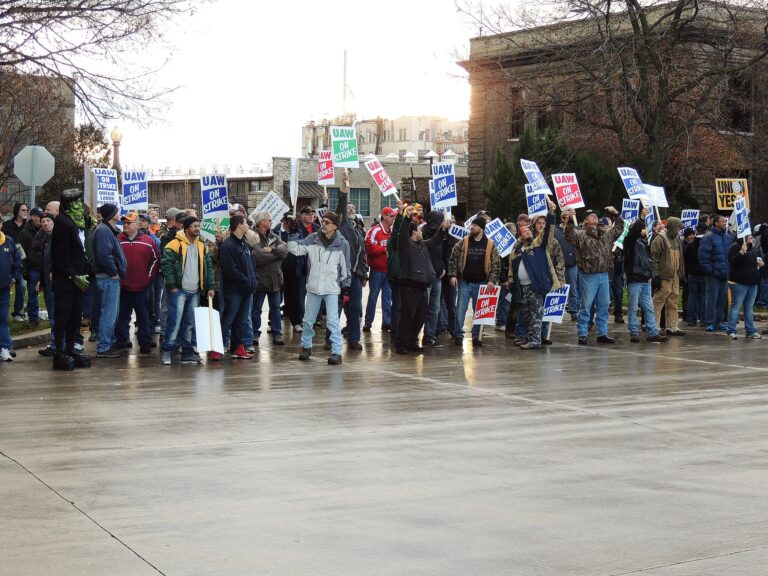
While it has been covered many times in the past week, Marketplace further explores why labor had weakened support for the Democrats this election. While Trump did not win a majority of union households, “he did cut into President Barack Obama’s margin.” Various union members weigh in on why the ground game was not as effective as it was in past elections, and why various union members flipped from Clinton to Trump. For example, autoworkers, whose jobs the Obama administration restored, found themselves with lower pay and fewer benefits—a fact that Trump promised to fix.
Veterans made up 44% of all full-time federal government job hires, according to the Washington Post. Just over two-fifths of these hires were disabled veterans. This news isn’t all positive: former servicemembers do not stay in government in jobs as long as non-veterans. Furthermore, the preferred hiring of veterans has “fueled culture clashes in some federal offices” and “resentment from job candidates who did not serve and see their prospects for getting hired diminish.” Several federal agencies—including the Pentagon—have complained that they cannot hire the skilled candidates they want because of the veteran-hiring constraints.
As the Guardian and Bloomberg BNA note, Trump’s administration poses threats to union rights: erasing Obama’s overtime pay regulations, promoting right-to-work laws (perhaps even on a federal level), and filling the Supreme Court with an anti-union justice, threatening to tip the balance in the next Friedrichs-like case.
Oh, and Donald Trump is now hiring. The New York Times weighs in on his plans and choices for top spots.




Daily News & Commentary
Start your day with our roundup of the latest labor developments. See all
February 19
Union membership increases slightly; Washington farmworker bill fails to make it out of committee; and unions in Argentina are on strike protesting President Milei’s labor reform bill.
February 18
A ruling against forced labor in CO prisons; business coalition lacks standing to challenge captive audience ban; labor unions to participate in rent strike in MN
February 17
San Francisco teachers’ strike ends; EEOC releases new guidance on telework; NFL must litigate discrimination and retaliation claims.
February 16
BLS releases jobs data; ILO hosts conference on child labor.
February 15
The Office of Personnel Management directs federal agencies to terminate their collective bargaining agreements, and Indian farmworkers engage in a one-day strike to protest a trade deal with the United States.
February 13
Sex workers in Nevada fight to become the nation’s first to unionize; industry groups push NLRB to establish a more business-friendly test for independent contractor status; and UFCW launches an anti-AI price setting in grocery store campaign.