
Jason Vazquez is a staff attorney at the International Brotherhood of Teamsters. He graduated from Harvard Law School in 2023. His writing on this blog reflects his personal views and should not be attributed to the Teamsters.
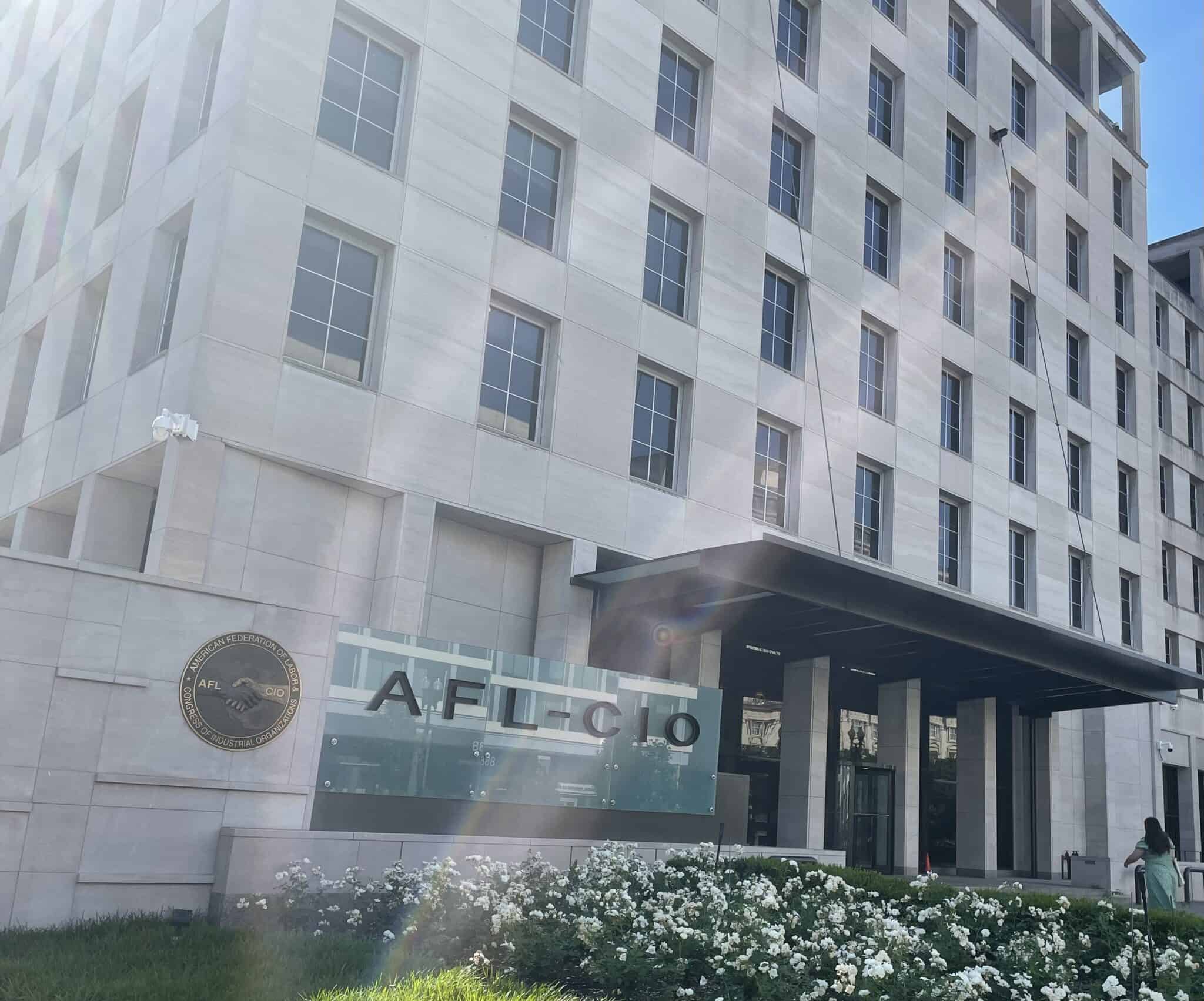
The AFL-CIO, the county’s largest labor organization, held its 29th Constitutional Convention in Philadelphia this week. The quadrennial gathering offers a democratic forum in which delegates from the Federation’s dozens of affiliated unions, which collectively represent nearly fifteen million working people, select leaders, adopt constitutional amendments, craft resolutions and policies, and broadly chart the trajectory of the labor movement.
During the proceedings yesterday, Liz Shuler was elected president of the Federation. Her elevation was unsurprising; she has served in the role in an acting capacity since former president Richard Trumka’s sudden death last summer. Shuler delivered a rousing speech as the results were revealed, casting the labor movement as “the single most powerful and hopeful movement for progress in this country” and insisting this moment is a “defining” one in which “working people are rising” and “turning to unions as a solution to their problems” and the labor movement is “on the brink of something big.”
President Joe Biden also delivered remarks yesterday, attempting to galvanize the labor leaders in attendance by renewing his pledge to be “the most pro-union president in history,” denouncing the greed of the billionaire class, and urging Congress to pass the PRO Act. “We’re not going back to the false promises of trickle-down economics,” the President assured the audience. “We’re going forward” — and “unions are going to play a critical role in that future.”
In litigation news, the Supreme Judicial Court of Massachusetts dramatically blocked a high-profile and expensive ballot initiative that would have cemented app-based workers’ status as independent contractors, thereby stripping them of the foundational legal protections to which employees are entitled. The proposed ballot measure — essentially the Massachusetts version of California’s notorious Prop. 22 — was, predictably, funded by the major gig companies. But the court determined it ran afoul of the provision in the commonwealth’s constitution requiring that ballot measures present a single discrete issue. In the court’s view, the initiative would have asked voters to make “two substantively distinct policy decisions,” namely: (1) whether to classify gig drivers as independent contractors, and (2) whether to limit tech companies’ liability for any torts these drivers commit.
In ALU news, an NLRB hearing on Amazon’s efforts to undo the union’s stunning Staten Island election victory started on Monday. Amazon filed dozens of objections alleging that the ALU (and Region 29, which administered the election) impermissibly undermined laboratory conditions with a series of unlawful practices, such as intimidating employees and distributing marijuana in exchange for support. The hearing will continue for several days, perhaps weeks. It will be streamed here.



Daily News & Commentary
Start your day with our roundup of the latest labor developments. See all
October 12
Workers at the Obama Foundation begin organizing; MLB submits its latest collective bargaining agreement proposal; Brigham & Women's nurses postpone strike.
October 11
UAW President Shawn Fain succeeds in his reelection bid, and Spanish unions call for a general strike.
October 9
DHS proposes a $100k fee for the foreign grad employment program; Trump suspends tech company access to green card program; and private equity perpetuates poor working conditions for home care workers.
October 8
NLRB judge finds UPS unlawfully restricted union insignia; Harvard graduate workers authorize second strike; OSHA orders Union Pacific to pay $300,000 in damages in whistleblower case.
October 7
DOL scraps plan to remove decades-old wage-and-hour guidance from federal regulations; New York enacts personnel records access law; Starbucks loses bid to dismiss Workers United trademark suit.
October 6
Protect College Sports Act dampens athlete unionization outlook; Stanford RA union decides to withdraw petition