
Hannah Finnie is a writer in Washington, D.C. interested in the intersections of work and culture. She is a graduate of Harvard Law School.
A new survey conducted for the New York Times by the research company Equilar researched trends among C.E.O. pay and found that in 2020, amidst the pandemic, the ratio of C.E.O. pay to median employee pay grew even larger. In 2019, according to the survey, C.E.O.s surveyed received 245 times the pay of the median employee at their respective companies. In 2020, that ratio grew to 274 times the median employee pay. The survey also found that C.E.O. pay (again, only among surveyed companies) rose 14.1% while the median worker’s pay at those companies increased by just 1.9%. Finally, the survey reported that eight of the highest-earning executives surveyed received compensation greater than $100 million in 2020. The largest was Palantir’s C.E.O., who received $1.1 billion in compensation last year.
In New York, Dianne Morales’ campaign to win the Democratic nomination for the New York City mayoral race has doubled down on its union-busting tactics by firing 40 additional staff members. As previously mentioned on this blog, campaign staff sought to unionize in response to what it called a toxic workplace, citing instances of sexual harassment and racial bias left unaddressed, as well as pay issues. While Morales, who has positioned herself as the leftist candidate in the race, originally appeared to welcome the union, her campaign then immediately retaliated by firing four the union’s leaders. The union has been on a work stoppage ever since. Morales also locked campaign staff out of the campaign headquarters, denying them access to their personal belongings. The staff and Morales’ leadership have been going back and forth ever since, with the union demanding the reinstatement of the four terminated union leaders, improvements to pay and benefits (include getting paid through the end of June, when the primary takes place), and addressing the instances of sexual harassment and racial bias that took place. However, Morales’ leadership team recently escalated its union-busting tactics, firing 40 members of its staff. The primary election, from which Morales has not withdrawn, is on June 22 and early voting begins tomorrow.
As OnLabor previously noted, some labor and labor-affiliated groups had endorsed Morales prior to the staff unionizing and subsequent union busting. The Working Families Party, which had endorsed Morales, then shifted to co-endorsing Morales and another candidate (Maya Wiley) when news first broke of the union busting. However, the Working Families Party has since suspended their support of Morales and is now solely endorsing Wiley. The Morales campaign website still lists the Working Families Party’s endorsement on its website.
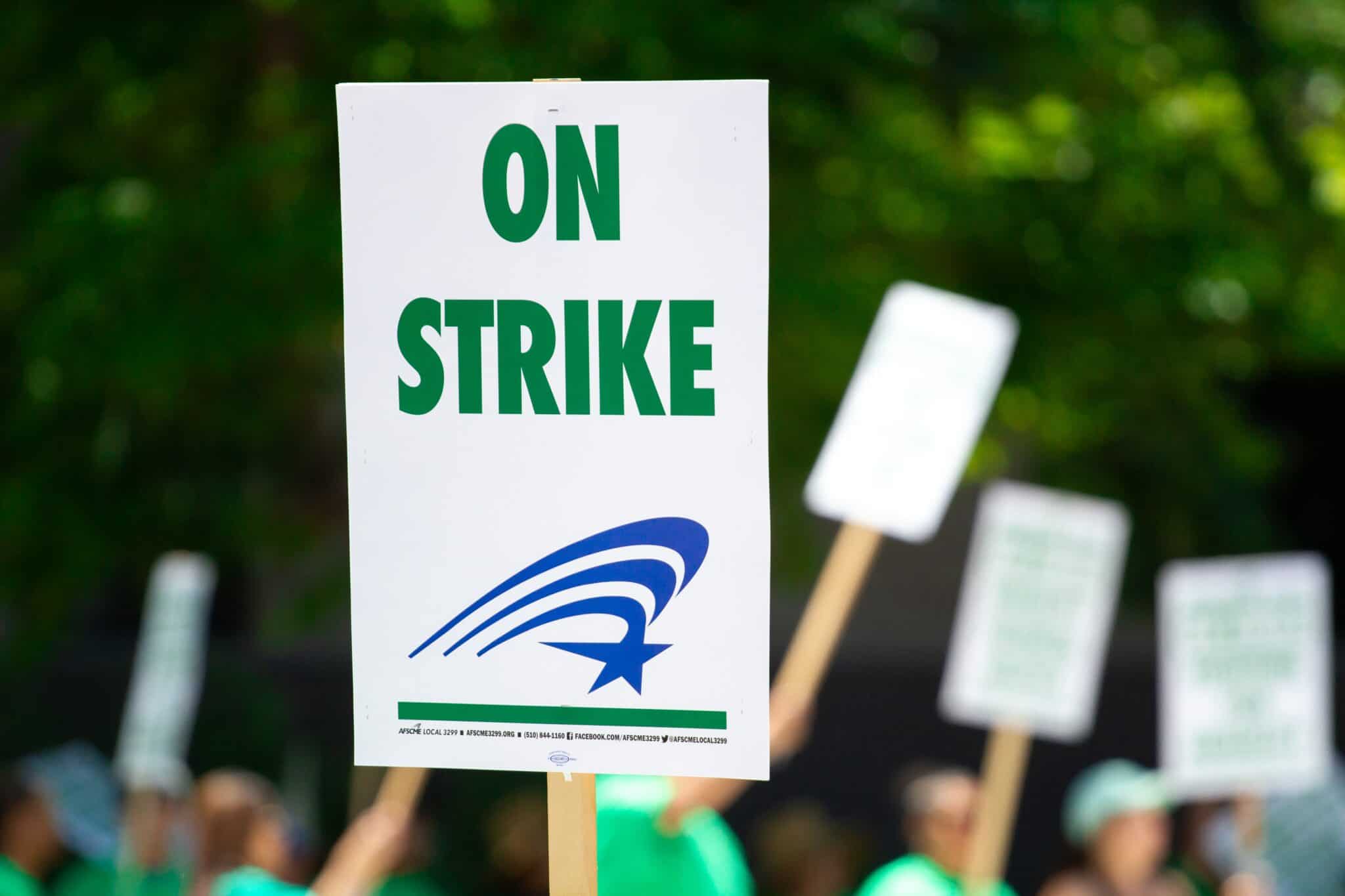
The union activity in New York City doesn’t stop there: Workers with The New Yorker Union are threatening to go on strike, saying that Conde Nast (The New Yorker’s parent company, though the union represents workers at The New Yorker as well as Conde Nast’s other publications) has dragged its feet in negotiations over its first contract. The union began three years ago, and is still hashing out its first contract with Conde Nast. The union says that if it does go on strike and refuse to do the work necessary in putting out the next issue of The New Yorker, it will instead produce a strike issue. Around 100 union members from the union also staged a protest outside of Anna Wintour’s home. Wintour is the chief content officer for Conde Nast.





Daily News & Commentary
Start your day with our roundup of the latest labor developments. See all
October 9
DHS proposes a $100k fee for the foreign grad employment program; Trump suspends tech company access to green card program; and private equity perpetuates poor working conditions for home care workers.
October 8
NLRB judge finds UPS unlawfully restricted union insignia; Harvard graduate workers authorize second strike; OSHA orders Union Pacific to pay $300,000 in damages in whistleblower case.
October 7
DOL scraps plan to remove decades-old wage-and-hour guidance from federal regulations; New York enacts personnel records access law; Starbucks loses bid to dismiss Workers United trademark suit.
October 6
Protect College Sports Act dampens athlete unionization outlook; Stanford RA union decides to withdraw petition
October 5
Delaware bans captive audience meetings; EEOC settles remote work national origin discrimination claim; First Circuit stays enforcement order in VA's dispute with AFGE.
October 4
Boston nurses announce open-ended strike; federal judge restores federal prison workers' union protections; St. Louis workers form the first movie theater union in Missouri.