

Travis Lavenski is a student at Harvard Law School.
In today’s news & commentary, Southern states enact new laws to protect gig companies, the UK rail strike may not be over yet, and Starbucks Workers United creates a national newsletter.
State legislatures in Alabama and Georgia have weighed in on the gig economy debate, siding with companies such as Uber and Lyft, Bloomberg reports. In Alabama and Georgia, new laws went into effect this month stating that app-based gig economy workers are independent contractors, not employees. Florida also has a new law that went into effect earlier this month, allowing companies to deliver assistance and benefits during state of emergencies without misclassifying their workers. Gig companies have aggressively lobbied States to allow them to classify their workers as independent contractors, thus denying them basic minimum wage and other employment law protections. Gig companies have sought to influence national politics as well, forming the Flex lobbying group earlier this year to push back against the PRO Act.
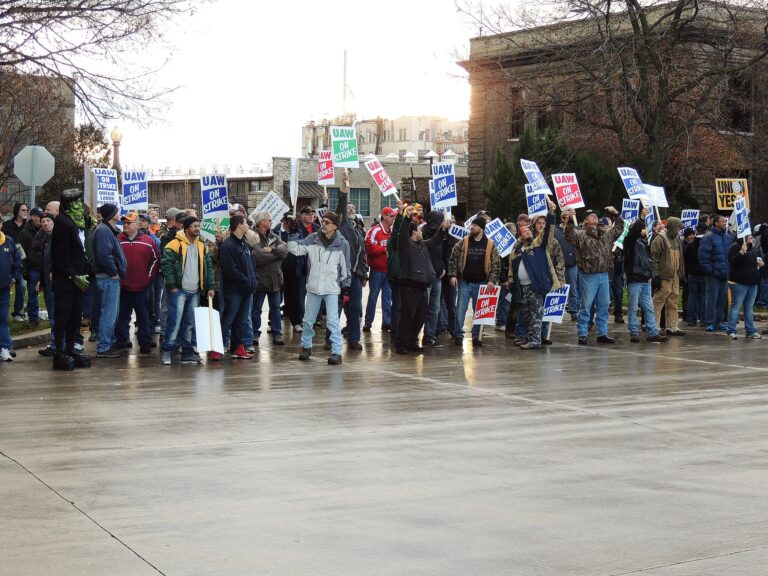
Across the pond, the largest rail strike in 30 years in the United Kingdom is on pause, but further action could be coming. On June 21st of this year, nearly 40,000 rail staff staged a walkout over stagnant wages, worsening job conditions, and proposed job cuts by the public rail operators. Similar walkouts, also led by the RMT Union, occurred on June 23rd and June 25th, and resulted in a nearly $121 million blow to the UK’s economy. Strike actions are currently on pause as the RMT Union is negotiating and considering its options, but further escalation could occur if no agreement is made. RMT General Secretary Mick Lynch has made headlines during this dispute for his clear and powerful articulation of the working class struggle, calling the strike the “fight of our lifetime and of our generation.” Despite ardent opposition from the Conservative Government, public opinion polls demonstrate increasing public support for the rail workers.
Starbucks Workers United announced on Twitter the release of a new national newsletter. The union, who has organized over 5,000 Starbucks workers at nearly 190 stores since last December, is slated to drop the first issue today, with new issues coming out on a biweekly basis. The newsletter is created by Starbucks workers and will discuss topics such as campaign updates, store spotlights, and more. The link to sign up for the newsletter is here.



Daily News & Commentary
Start your day with our roundup of the latest labor developments. See all
March 15
A U.S. District Court issues a preliminary injunction against the Department of Veterans Affairs for terminating its collective bargaining agreement, and SEIU files a lawsuit against DHS for effectively terminating immigrant workers at Boston Logan International Airport.
March 13
Republican Senators urge changes on OSHA heat standard; OpenAI and building trades announce partnership on data center construction; forced labor investigations could lead to new tariffs
March 12
EPA terminates contract with second-largest union; Florida advances bill restricting public sector unions; Trump administration seeks Supreme Court assistance in TPS termination.
March 11
The partial government shutdown results in TSA agents losing their first full paycheck; the Fifth Circuit upholds the certification of a class of former United Airline workers who were placed on unpaid leave for declining to receive the COVID-19 vaccine for religious reasons during the pandemic; and an academic group files a lawsuit against the State Department over a policy that revokes and denies visas to noncitizens for their work in fact-checking and content moderation.
March 10
Court rules Kari Lake unlawfully led USAGM, voiding mass layoffs; Florida Senate passes bill tightening union recertification rules; Fifth Circuit revives whistleblower suit against Lockheed Martin.
March 9
6th Circuit rejects Cemex, Board may overrule precedents with two members.