
Iman Masmoudi is a student at Harvard Law School.
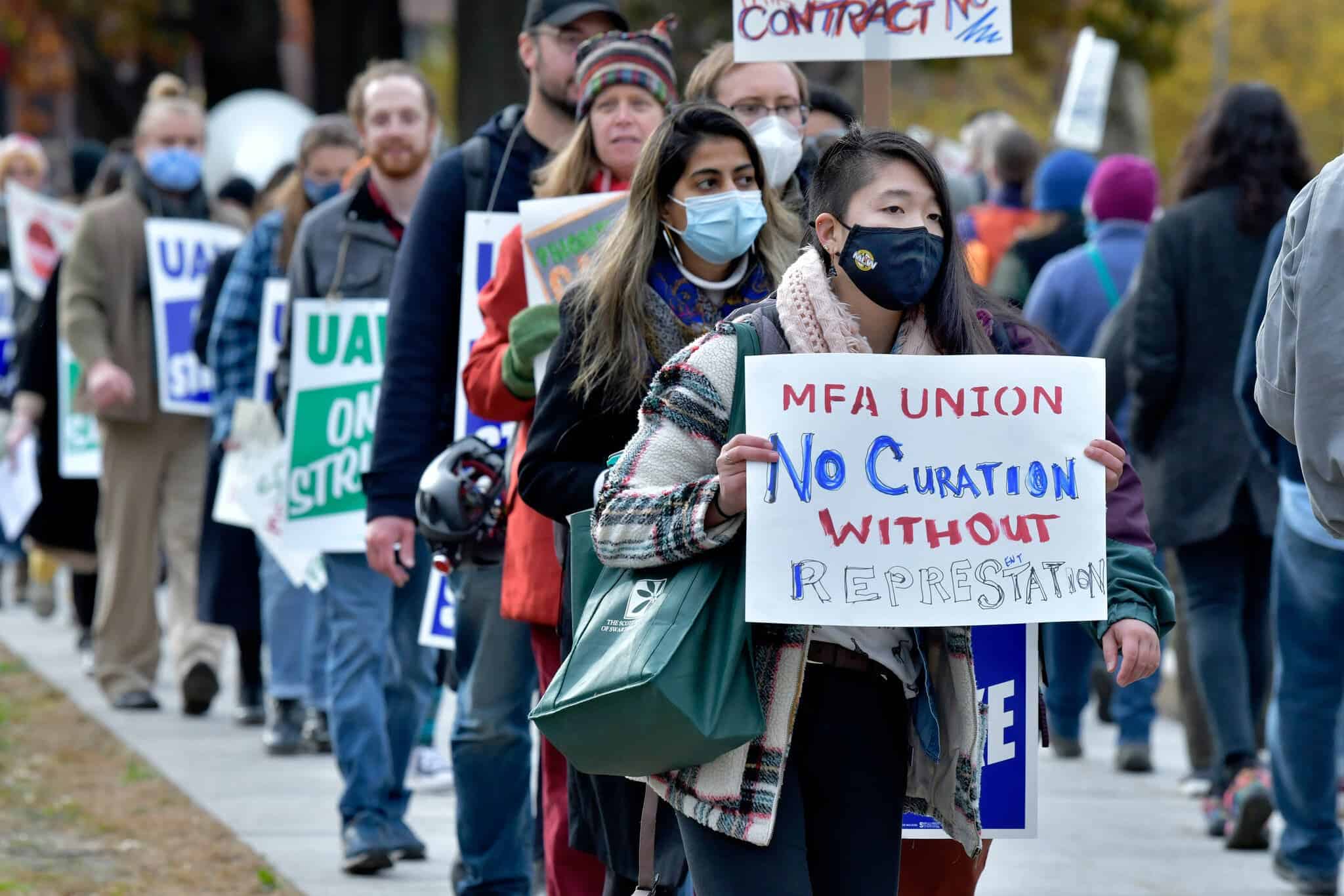
Yesterday, Zachary Small at the New York Times covered the rise in collective bargaining movements at Museums across America, touching most major cities and Museums. Many of the workers joining these unions work in “curatorial, administrative, and education” positions, a shift in union membership from the days when only security guards and janitorial staff held union membership. Many point to a moment in 2019 when over 3,000 Museum workers across the United States began sharing their salaries in an online spreadsheet. Workers at the New Museum began organizing shortly after that, noting the gap between their salaries and those of the executives at the Museum. Even after organizing dozens of unions, members note that challenges remain in negotiations and management: “I naïvely thought that you win an election and most of the work gets done,” said Adam Rizzo, the president of the Philadelphia museum’s union, “But the work gets harder as you negotiate with management and continue to do the weekly outreach.” The movement has resulted in the creation of a podcast “Art and Labor” which advocates fair labor practices for Museum staff. Sheila Majumdar, an organizer at the Art Institute of Chicago notes that younger workers are part of this movement, because they believe in the value of their labor: “We are the ones who make museums.”
Union Workers in Davenport, Iowa at the Eaton Corporation went on strike this week after they were unable to reach an agreement on cost of living adjustments, healthcare, and retirement plans. “Several employees specifically noted that the rejected contract would have impacted 401k matches in a way they felt was unfair.” Eaton Corporation released a statement expressing surprise at the strike and claiming union reps and the company were “only marginally apart” on wages “at the time the Union went on strike.” Workers began picketing the day after the strike vote, which saw ninety-eight percent of union members vote to strike. Many attribute the strike to a change in management, which recently acquired the company. Commentators note the Eaton Corporation is regularly bought and sold, every few years, while local union workers remain the same. In the West Davenport location in particular, workers perform highly-skilled labor, requiring months and years of training, which makes them difficult to replace. “We’re not asking for anything outlandish. We just want what’s fair,” said Paris Dothard, an Air Separation Technician from Rock Island.

Daily News & Commentary
Start your day with our roundup of the latest labor developments. See all
April 10
Maryland passes a state ban on captive audience meetings and Elon Musk’s AI company sues to block Colorado's algorithmic bias law.
April 9
California labor backs state antitrust reform; USMCA Panel finds labor rights violations in Mexican Mine, and UPS agrees to cap driver buyout offers in settlement with Teamsters.
April 8
The Writers Guild of America reaches a tentative deal with the Alliance of Motion Picture and Television Producers; the EEOC recovers almost $660 million in compensation for employment discrimination in 2025; and highly-skilled foreign workers consider leaving the United States in light of changes to the H-1B visa program.
April 7
WGA reaches deal with studios; meatpacking strike brings employer back to table; union leaders take on AI.
April 6
Trump to shrink but not eliminate CFPB, 9th Circuit nixes use of issue preclusion to invalidate arbitration agreements.
April 5
Trump proposes DOL budget cuts; NLRB rules in favor of cannabis employees; Florida warehouse workers unanimously authorize strike.