
Adrienne Spiegel is a student at Harvard Law School.
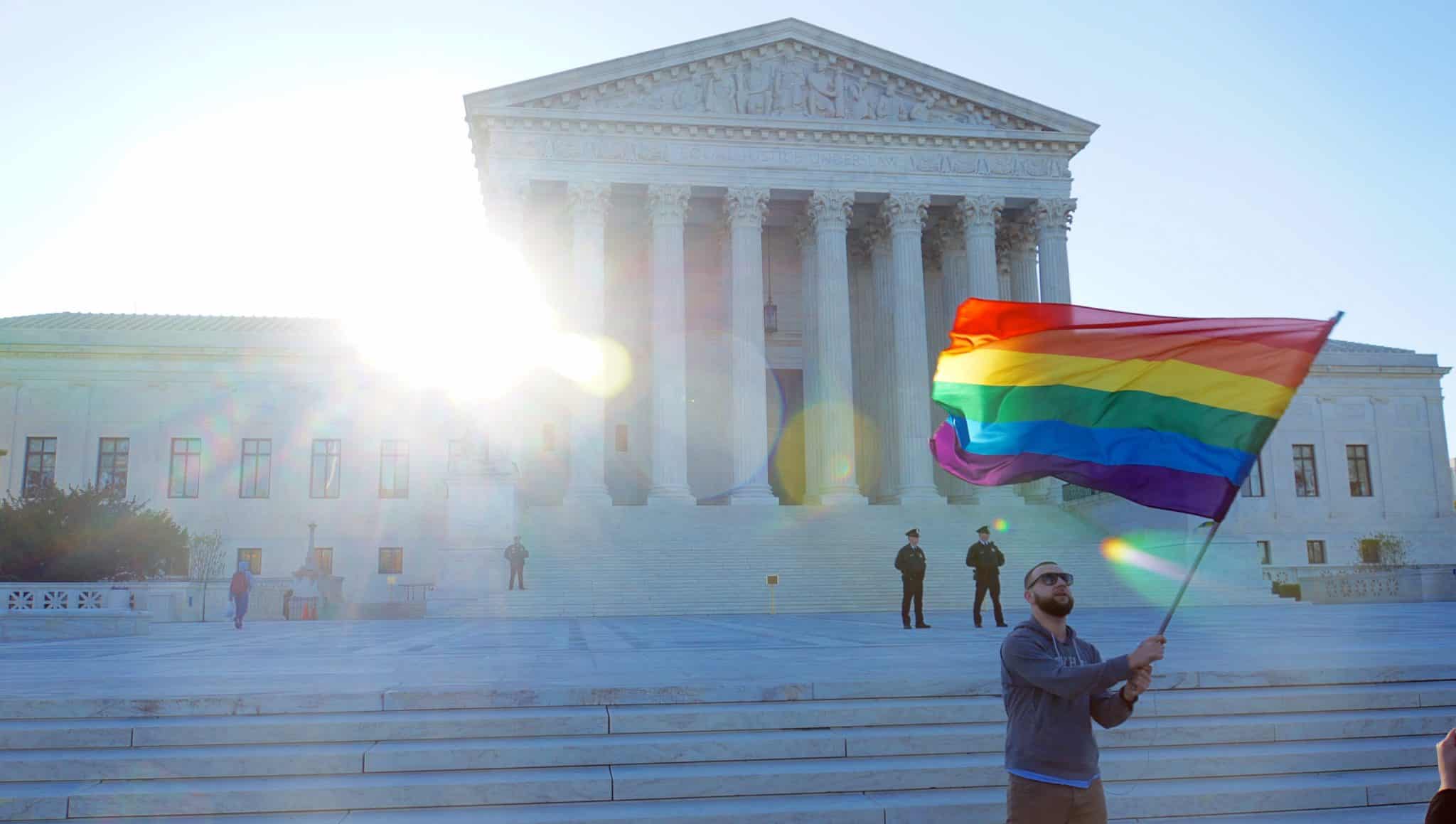
This morning the Supreme Court granted certiorari in three cases: Bostock v. Clayton County; Altitude Express, Inc. v. Zarda; and R.G. & G.R. Harris Funeral Homes v. EEOC. Bostock and Zarda are consolidated and present the question whether Title VII’s prohibition on discrimination “because of sex” covers discrimination because of sexual orientation. Harris Funeral Homes asks whether the prohibition covers discrimination because of gender identity.
The Court’s rulings in these cases will determine whether lesbian, gay, bisexual, and transgender people are protected by federal statute from discrimination in the workplace. Although twenty-one states have state laws that explicitly prohibit discrimination based on both sexual orientation and gender identity, for workers in the remaining 29 states, Title VII offers the only protection against such discrimination.
The Court has likely stepped in to resolve a circuit split by providing a definitive interpretation of Title VII. In the past four years, the Seventh Circuit, the Second Circuit, and the EEOC have held that Title VII protects sexual orientation, while the Eleventh Circuit held that it does not. The split on the gender identity question is less dramatic. The Sixth, Seventh, Ninth, and Eleventh Circuits have found Title VII protects discrimination because of transgender status, and only the Tenth Circuit has found it does not. Moreover, as Aimee Stephens, the female employee who was fired in Harris Funeral Homes for being transgender, explained in her brief opposing certiorari, every circuit and district court to consider whether a transgender person can bring a Title VII claim on a sex-stereotyping theory under Price Waterhouse has held that they can. Still, the Court granted cert in Harris Funeral Homes to answer both questions: 1) whether Title VII covers transgender status, and 2) whether a transgender person can make out a claim under a sex-stereotyping theory. This opens the door to a narrowing of Price Waterhouse, which could be devastating for all employees who experience discrimination because they fail to conform to sex-based stereotypes.
Court watchers are apprehensive. Since Obergefell, the Court has already tacked right on LGBT issues. And the impact of Justice Kavanaugh’s replacement of Justice Kennedy – who was widely celebrated for his holdings on LGBT rights – may be particularly acute in cases like these. The Court has also recently endorsed an original public meaning theory of statutory interpretation, which it could use here to interpret Title VII as frozen in time. As Ben and I have explained, however, that would likely be a misapplication of the theory even on its own terms, and would contravene Oncale v. Sundowner Offshore Servs. Despite this, there may be reason to be optimistic. Americans across party lines increasingly support non-discrimination protections for LGBT people. And, to borrow from the Seventh Circuit, the Court ought to be reluctant to enshrine “a paradoxical legal landscape in which a person can be married on Saturday and then fired on Monday for just that act.” The stakes for LGBT people, and for everyone who supports safety and self-determination in the workplace, are high.





Daily News & Commentary
Start your day with our roundup of the latest labor developments. See all
October 18
Federal judge again halts cancellation of the Bureau of Prisons’ CBA; tabletop gaming workers face roadblocks in union recognition.
October 16
Department of Labor reduces wage-and-hour enforcement at unionized workplaces; Fain's victory poses question of federal monitor's extension.
October 15
New reporting examines the rollback of child labor protections; California tries to block a strike; NLRB charges Wisconsin mental health provider with firing workers during union drive.
October 14
Eleventh Circuit overturns ERISA exhaustion rule; DHS finalizes removal of automatic renewal for work permits; AFGE challenges SSA over flexible scheduling policy.
October 13
Chicago hotel workers remain on strike; a coalition of Democratic states sues the Labor Department over canceled unemployment insurance grants; the Federal Labor Relations Authority establishes a new mediation framework for federal worker disputes.
October 12
Workers at the Obama Foundation begin organizing; MLB submits its latest collective bargaining agreement proposal; Brigham & Women's nurses postpone strike.