
Sunah Chang is a student at Harvard Law School.
In today’s news and commentary: UAW reaches a tentative deal with General Motors, pharmacy workers plan a nationwide walkout, and President Biden issues an executive order on artificial intelligence.
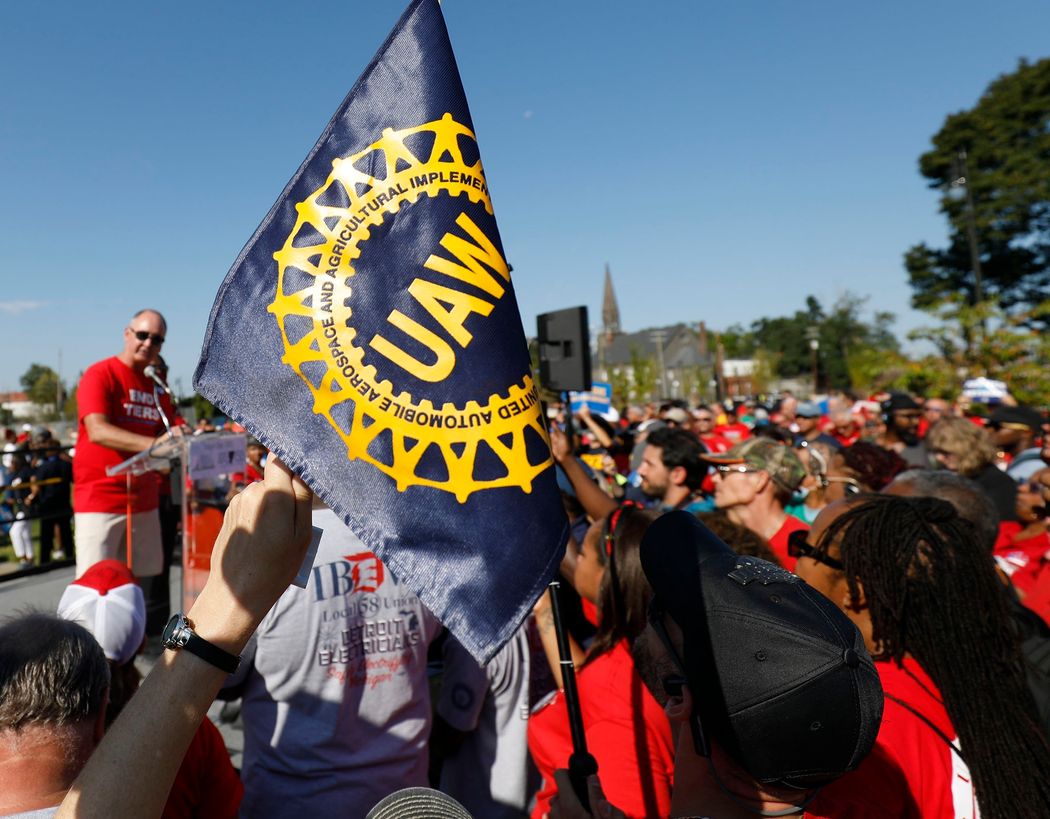
Yesterday, UAW announced a tentative deal with General Motors, putting an end to the historic, six-week strike campaign coordinated by the union. “Like the agreements with Ford and Stellantis, the GM agreement has turned record profits into a record contract,” stated the union.
GM is the last of the Big Three companies to strike a tentative deal with the union, and much of its deal echoes the union’s agreements reached with Ford and Stellantis over the past few days. GM’s deal includes a 25% wage increase across a four-and-a-half year deal with cost of living adjustments and removes two-tier wage systems. The deal also expands the workers who are covered by the UAW contract, bringing in workers at a GM subsidiary called GM Subsystem as well as workers at Ultium Cells, an EV battery joint venture between GM and LG Energy Solution. Because the deals with the Big Three companies are tentative, all three deals will need to be ratified by rank-and-file members before going into effect. Commending UAW’s tentative deal with GM, President Biden issued an official statement, noting, “[t]his historic contract is a testament to the power of unions and collective bargaining to build strong middle-class jobs while helping our most iconic American companies thrive.”
As the UAW celebrates recent victories, pharmacy workers across the nation have just begun to escalate their fight for workplace rights. Employees at chain pharmacies, including Walgreens, CVS, and Rite Aid, have launched a nationwide walkout to protest unsafe working conditions this week. The walkout, dubbed the “Pharmageddon” by organizers, builds upon pharmacy walkouts that occurred last month. The participating pharmacy workers, who have received official support from the American Pharmacists Association, are hopeful that the walkouts will push companies to address chronic and long-standing problems of understaffing and burnout in the industry. At large pharmacy chains, workers, who are already short-staffed, are forced to complete tasks according to strict time-based metrics, which have threatened patient safety and exacerbated pressures for pharmacy workers. These issues reached a tipping point during the COVID-19 pandemic, when frontline pharmacy workers faced added workplace demands and dangers due to amplified healthcare needs. The walkout, which will shed light on the deteriorating workplace conditions at pharmacies across the country, is planned to continue through Wednesday.
At the White House, President Biden unveiled a new executive order that establishes safeguards and guidance around artificial intelligence. Among the wide range of issues that the executive order covers, the executive order addresses the need to support workers who may be harmed by AI due to increased workplace surveillance, bias, and job displacement. In particular, the executive order calls for more studies on the labor-market effects of AI and orders the Secretary of Labor to promulgate principles and best practices to protect employees’ well-being. While the executive order signals a noteworthy push by the White House to address emerging AI-related issues, President Biden emphasized that Congress must also act to pass AI legislation.





Daily News & Commentary
Start your day with our roundup of the latest labor developments. See all
October 19
FDA reverses course on policy prohibiting off-duty union activity; FAA and NATCA reach deal to secure pay increase for air traffic controllers.
October 18
Federal judge again halts cancellation of the Bureau of Prisons’ CBA; tabletop gaming workers face roadblocks in union recognition.
October 16
Department of Labor reduces wage-and-hour enforcement at unionized workplaces; Fain's victory poses question of federal monitor's extension.
October 15
New reporting examines the rollback of child labor protections; California tries to block a strike; NLRB charges Wisconsin mental health provider with firing workers during union drive.
October 14
Eleventh Circuit overturns ERISA exhaustion rule; DHS finalizes removal of automatic renewal for work permits; AFGE challenges SSA over flexible scheduling policy.
October 13
Chicago hotel workers remain on strike; a coalition of Democratic states sues the Labor Department over canceled unemployment insurance grants; the Federal Labor Relations Authority establishes a new mediation framework for federal worker disputes.