
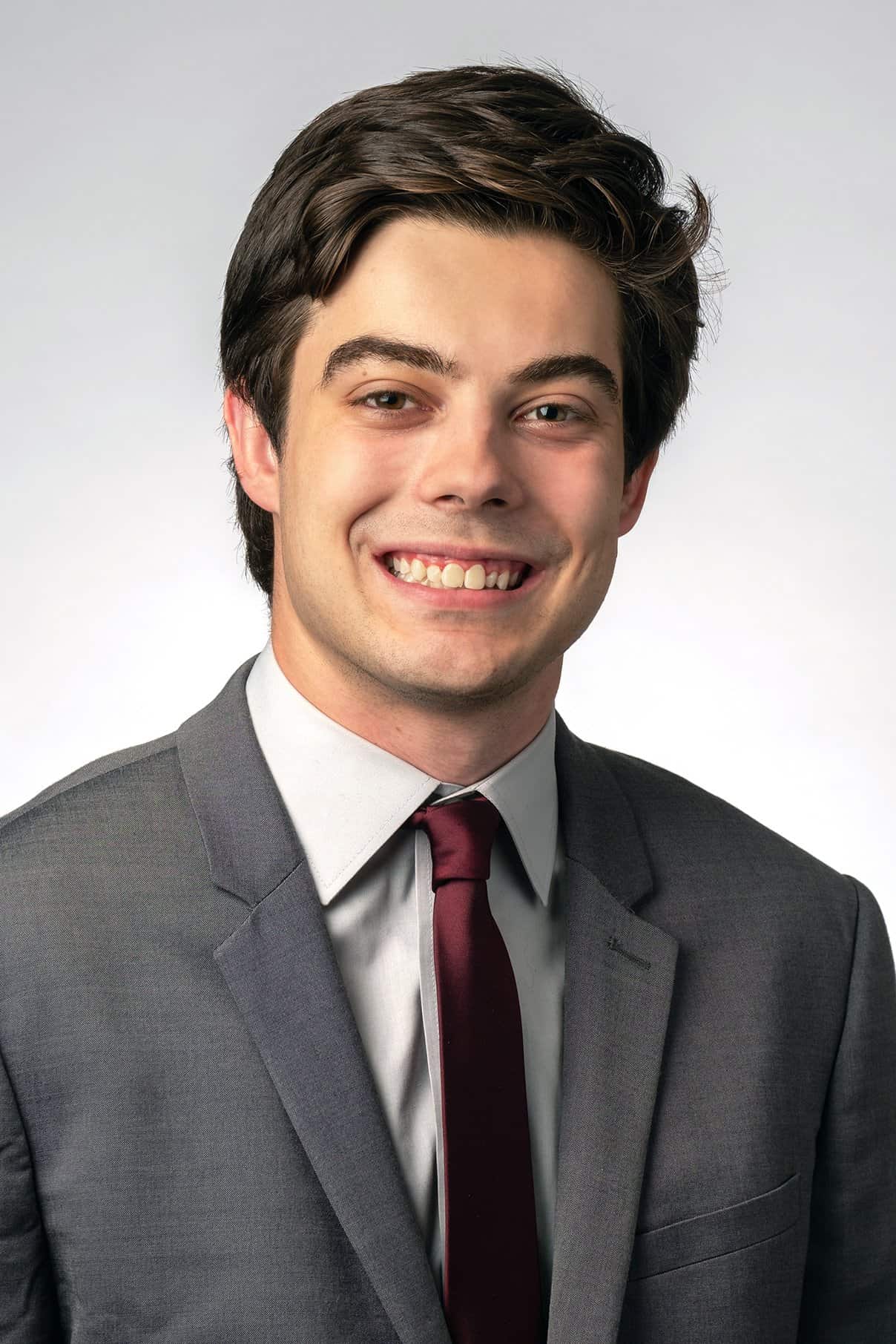
Zachary Boullt is a student at Harvard Law School.
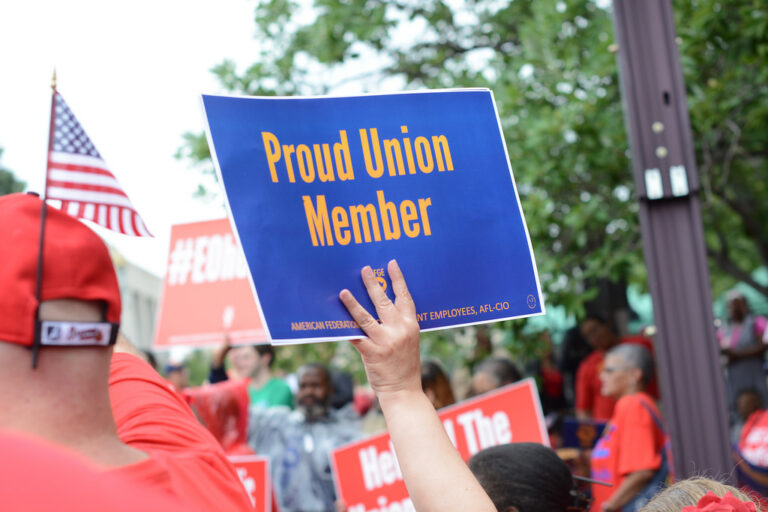
While individual labor unions and labor groups have continued calling for disaffiliation with police unions, the largest national labor unions’ leadership has largely closed ranks and defended including police unions. One striking defense of police unions recently came from the AFL-CIO’s President Richard Trumka, who defended police unions by analogizing them to employers at an Executive Council meeting. His comments compared unions’ ability to negotiate irreconcilable differences with employers to the ability of unions to “narrow” differences with police groups. Trumka also highlighted that many police groups are “community friendly.” The remarks’ analogy has confused commentators since employers are characteristically not a part of labor unions, particularly not the AFL-CIO, and signals further conflict on the issue.
Bath Iron Works workers in Maine have begun their strike. The Machinists Local S6 contract expired on Sunday at 11:59 p.m. after the union rejected the latest contract proposal and authorized the strike with 87% of the vote. Over 100 people were picketing by 6:30 a.m. on Monday morning. Internal strike rules include picketing in areas designated by Bath Iron Works and using signs provided by the union. The strike is primarily targeted at Bath Iron Works’s use of subcontractors and manipulation of workers’ duties to reduce assignments and overtime, as well as issues surrounding pay, benefits, and the pandemic. Bath Iron Works has expressed intent to not continue negotiations.
Major League Baseball negotiations are drawing to a close. The Major League Baseball Players Association rejected the latest proposal from the MLB, allowing the MLB to unilaterally schedule the season per a March agreement. A 60-game season, less than the 114 games that players originally wanted, is expected, pending agreements on health and safety protocols, with training to begin July 1. The MLBPA union was able to win full prorated pay and secured the right to file a grievance that the MLB did not schedule as many games as possible, which could win them damages, back pay, and access to league financial documents during discovery. However, the shorter season is expected to drastically hurt players’ pay, and the union lost out on some postseason revenue, extra jobs, and portions of salary advance forgiveness. The game scheduling grievance is expected to play a large leverage role in future negotiations.
San Francisco is soon to vote on a temporary ordinance that would give priority to workers laid off due to the pandemic to be rehired. The ordinance would apply to employers with more than 100 workers, and it includes seniority provisions. Exemptions are available for health care employers, independent contractors, employers covered by union agreements, employers that signed severance agreements with employees, and employers who laid off employees for worker misconduct. Employers would be required to attempt to rehire the workers with wages, scheduling, and benefits similar to their position before they were laid off, unless the employer can demonstrate financial impracticability. The ordinance is an effort to combat the city’s high unemployment, as 159,193 new unemployment claims were filed between February 29 and May 30. Los Angeles has a similar ordinance.
Mackenzie yesterday discussed restrictions on H1-B visas announced by the Trump administration. Since then, multiple Silicon Valley industry groups have come out strongly against the restrictions. Lobby and advocacy groups such as the Information Technology Industry Council, the Silicon Valley Leadership Group, TechNet, and the Software Alliance, which collectively represent tech giants such as Google, Facebook, Apple, and many others, have decried the changes. The industry groups point to over half of the engineers in the “innovation economy” coming from outside the United States, and they argue the restrictions will greatly impede the companies’ ability to strengthen their workforces, innovate, and contribute to economic recovery. They also argue that countries with looser immigration restrictions will syphon tech jobs that would have gone to the United States and bolster competitors.

Daily News & Commentary
Start your day with our roundup of the latest labor developments. See all
June 12
Third Republican NLRB member sails through appointment hearings; UAW secures symbolic deal with General Motors supplier.
June 11
DC Circuit enforces an NLRB bargaining order; House passes a bill to speed up negotiating between employers and unions.
June 10
SoFi Stadium workers narrowly avoid World Cup strike; Amazon's NLRB challenge to remain in Fifth Circuit; House passes strict timeline bill for first union contracts.
June 9
SoFi Stadium workers authorize a strike ahead of the World Cup; the NLRB finds Starbucks violated labor law; Trump’s $100,000 H-1B visa fee is struck down.
June 8
BLS releases May jobs reports; US Trade Representative proposes new tariffs.
June 7
SAG-AFTRA members ratify a four-year CBA and the International Trade Union Confederation releases its 2026 Global Rights Index.