
Sunah Chang is a student at Harvard Law School.
In today’s news and commentary: Volkswagen workers in Tennessee file for a union election, the Supreme Court declines to review McDonald’s no-poach agreements, and the Pew Research Center publishes new polling data analyzing public views about union membership.
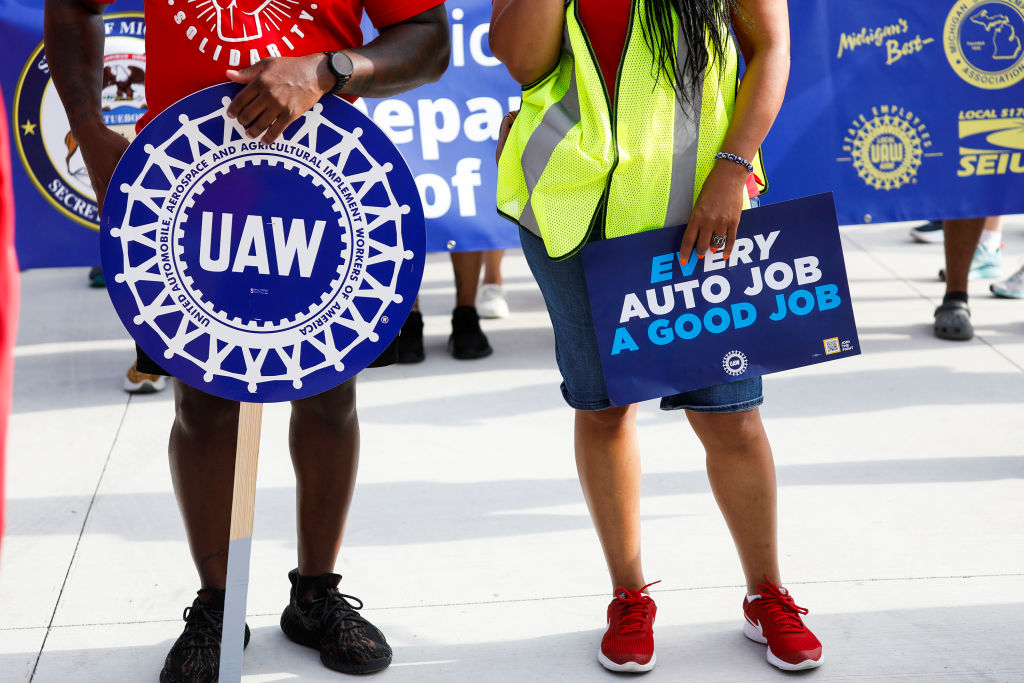
Yesterday, workers at the Volkswagen’s plant in Chattanooga, Tennessee, filed a petition with the NLRB to hold a union election. The UAW announced that a “supermajority” of the 4,000 eligible workers at the plant signed authorization cards supporting the union. Volkswagen workers who support unionization have expressed that they want to push for higher wages and improved safety measures, and hope to emulate the recent successes of the UAW with the Big Three automakers in Detroit.
The unionization of the Volkswagen workers in Chattanooga would represent a historic feat. The Volkswagen Chattanooga plant is currently the only Volkswagen factory that lacks union representation. If the Chattanooga workers vote to form a union, those workers would be the first American employees of a foreign automaker represented by a union. Successful union formation would also shift the tides for the Volkswagen Chattanooga plant, which previously voted against union representation by the UAW in 2014 and 2019. Today, the UAW’s amplified effort to unionize the Volkswagen workers in Tennessee reflects just one example of the union’s broader campaign to unionize workers employed at the American plants of foreign automakers, including BMW, Honda, Hyundai, Mazda, Mercedes, Nissan, Subaru, Toyota, and Volvo.
The Supreme Court has denied a petition by McDonald’s to review a class action case alleging that the company’s no-poach contracts violated antitrust laws. Without Supreme Court review, McDonald’s will now have to face the lawsuit at the district court level. The lawsuit alleges that McDonald’s no-poach contract provision—which prevented franchisees from hiring employees from other McDonald’s locations—violated the Sherman Act by preventing workers from moving to higher-paying locations and suppressing workers’ wages. In 2021, the district court reviewing the case rejected class certification and later dismissed the case. Plaintiffs appealed, and the Seventh Circuit held last year that the district court erred in dismissing the case.
The Pew Research Center recently published a report examining public perceptions about union membership, which found that the majority of Americans see the decline of union membership as bad for the nation and for working people. In particular, 54% of U.S. adults stated that the decline of union membership has been bad for the country, and 59% stated that the decline has been bad for working people. The Pew Research Center also found that these opinions predictably varied across party lines—with Democrats more likely than Republicans to report that the decline in union membership has been bad for the country and for working people.





Daily News & Commentary
Start your day with our roundup of the latest labor developments. See all
October 19
FDA reverses course on policy prohibiting off-duty union activity; FAA and NATCA reach deal to secure pay increase for air traffic controllers.
October 18
Federal judge again halts cancellation of the Bureau of Prisons’ CBA; tabletop gaming workers face roadblocks in union recognition.
October 16
Department of Labor reduces wage-and-hour enforcement at unionized workplaces; Fain's victory poses question of federal monitor's extension.
October 15
New reporting examines the rollback of child labor protections; California tries to block a strike; NLRB charges Wisconsin mental health provider with firing workers during union drive.
October 14
Eleventh Circuit overturns ERISA exhaustion rule; DHS finalizes removal of automatic renewal for work permits; AFGE challenges SSA over flexible scheduling policy.
October 13
Chicago hotel workers remain on strike; a coalition of Democratic states sues the Labor Department over canceled unemployment insurance grants; the Federal Labor Relations Authority establishes a new mediation framework for federal worker disputes.