
Benjamin Sachs is the Kestnbaum Professor of Labor and Industry at Harvard Law School and a leading expert in the field of labor law and labor relations. He is also faculty director of the Center for Labor and a Just Economy. Professor Sachs teaches courses in labor law, employment law, and law and social change, and his writing focuses on union organizing and unions in American politics. Prior to joining the Harvard faculty in 2008, Professor Sachs was the Joseph Goldstein Fellow at Yale Law School. From 2002-2006, he served as Assistant General Counsel of the Service Employees International Union (SEIU) in Washington, D.C. Professor Sachs graduated from Yale Law School in 1998, and served as a judicial law clerk to the Honorable Stephen Reinhardt of the United States Court of Appeals for the Ninth Circuit. His writing has appeared in the Harvard Law Review, the Yale Law Journal, the Columbia Law Review, the New York Times and elsewhere. Professor Sachs received the Yale Law School teaching award in 2007 and in 2013 received the Sacks-Freund Award for Teaching Excellence at Harvard Law School. He can be reached at [email protected].
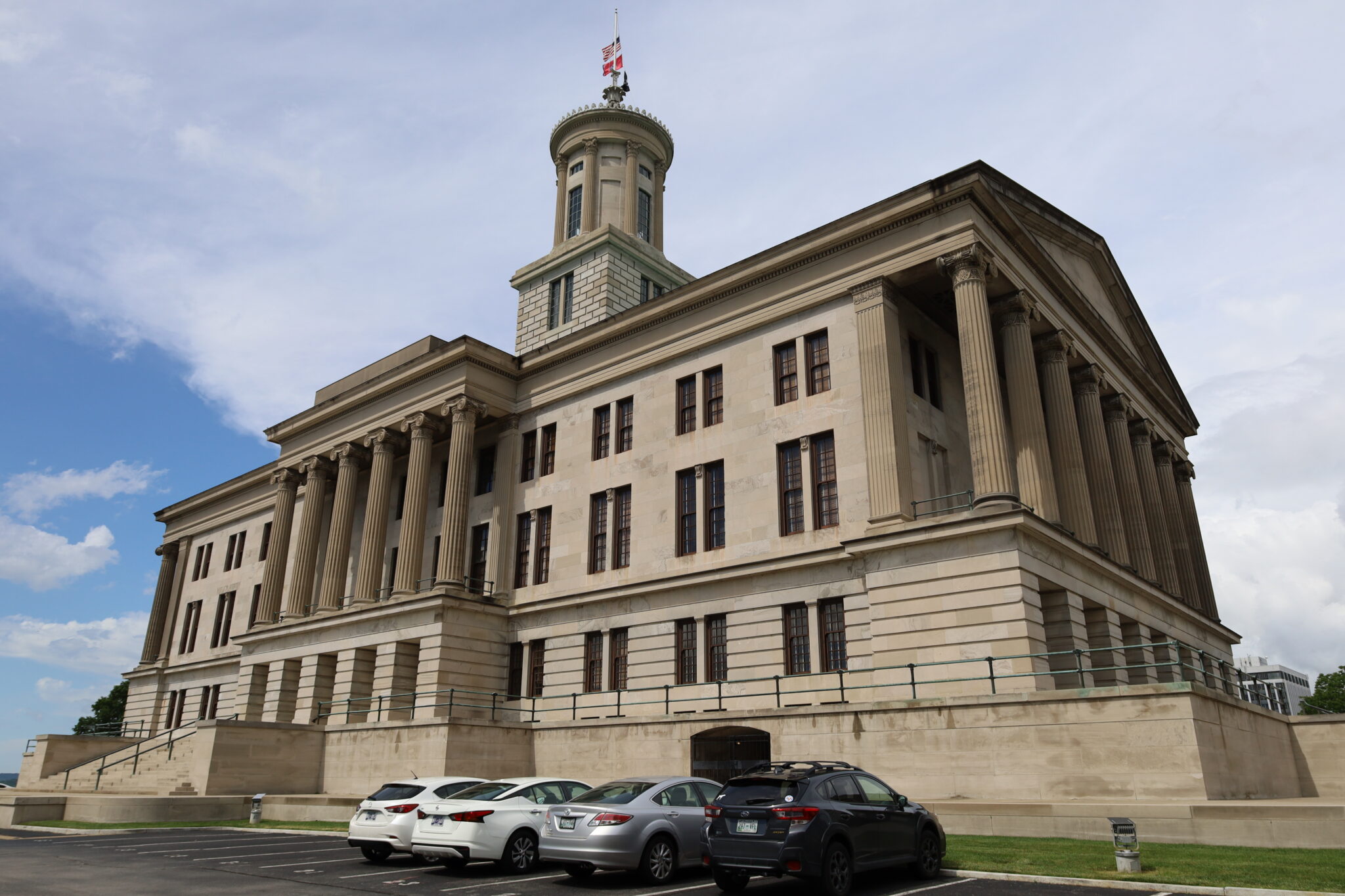
ALEC is promoting a model statute that conditions a corporation’s eligibility for any state “economic development incentives” on the corporation’s agreement not to respect the results of a card check. In simple terms, the statute dictates that any firm wanting state economic development funds must waive their federal labor law right to recognize a union based on cards. Tennessee has enacted the statute; the Georgia Senate just passed it. Chances are the law is preempted. Because the statute applies to things like tax credits in which the state has no specific proprietary interest but only a generic governmental interest, a court is likely to find that the market participant exception to NLRA preemption does not apply (this is different than, say, tax increment financing where a state or locality maintains an investment-like interest in the success of the project being financed; it is also different than a tailored grant program).
But I’ll leave the preemption analysis for another time. For now, I’d like to raise a different question: what if the ALEC statute isn’t preempted? What would it mean if states could condition access to all economic development money on a corporation’s compliance with the state’s vision of good labor policy? What would it mean if California, Illinois, Massachusetts, Michigan, Minnesota, and New York could enact their version of an ALEC-like law?
If the ALEC statute isn’t preempted, here’s a (very incomplete) list of what states might require corporations to do to qualify for economic development money:
- Recognize a union when a majority of workers signs authorization cards
- Agree not to hold captive audience meetings or 1-on-1 meetings with supervisors
- Grant union organizers access to non-work areas of company property
- Agree to multi-employer bargaining units upon union request
- Agree to participate in sectoral bargaining if the state establishes a sectoral bargaining process
- Agree to permit employees in the state to engage in so-called secondary activity
- Provide employee contact information to unions seeking to organize those employees
- Submit first contracts to binding arbitration after three months
Some of these conditions might raise other, non-preemption related questions. Tying the ban on captive audience meetings to economic incentives, for example, might be challenged on unconstitutional conditions grounds. And some of the conditions might change the costs of the incentive programs. To the extent that corporations view unions as an added cost, these conditions might require states to increase the amount of available development funds. At the same time, the conditions would serve as a highly effective guarantee that the jobs created through the deployment of the development funds are high-wage, high-quality jobs.
But the bottom line is that if the ALEC statute survives preemption review, states will be free to experiment with a whole host of ways to better enable workers to form and join unions.






Daily News & Commentary
Start your day with our roundup of the latest labor developments. See all
September 16
Trump nominates Catherine Eschbach as EEOC general counsel; NLRB declines to resolve union work-assignment dispute; Allina Health physicians begin four-day strike.
September 15
Documents reveal the inner workings of Amazon's union avoidance program; Washington state public sector unions reach tentative deals amid a difficult bargaining cycle; hundreds of Nevada Culinary Union members protest their union's health care changes.
September 14
NCAA and Big Ten file motion to dismiss in former star player's NIL suit; Seventh Circuit rules against former postal worker in discrimination suit.
September 13
Documents released on the 25th anniversary of the 9/11 attacks show that city officials encouraged workers to return to Ground Zero despite knowing the risks of asbestos exposure, and new polls demonstrate continued widespread support for labor unions.
September 10
Amazon workers allege pregnancy discrimination; federal unions challenge USDA reorganization; NYC warns of silicosis risks.
September 9
Wynn Las Vegas employees allege anti-union retaliation; Amazon faces a class action over pregnancy accommodations; H-1B demand plunges following a six-figure visa fee.