
In today’s News and Commentary, Major League Soccer locks out its referee union ahead of this week’s season opener, farmers in India hold talks with the government in an effort to end ongoing protests, and San Diego’s city council unanimously passed a Project Labor Agreement last week.
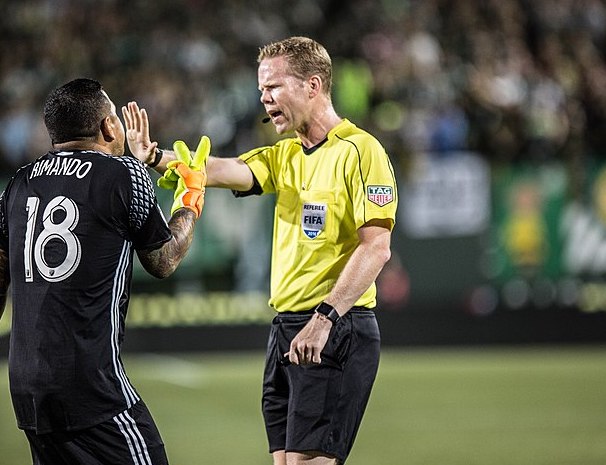
Major League Soccer (MLS) began a lockout of its referees yesterday after the Professional Soccer Referees Association (PSRA) rejected a tentative agreement with the Professional Referees Organization (PRO). PSRA, the union representing MLS match officials, announced that its members overwhelmingly rejected the proposal, with over 95% percent voting not to ratify. The 2024 season is scheduled to kick off on Wednesday with a match between Lionel Messi’s Inter Miami and Real Salt Lake. The lockout bars PSRA referees from officiating this match, and the league is prepared to call in less experienced replacement referees. The PSRA was negotiating for a contract that increased compensation, better subsidized travel, and addressed scheduling and quality-of-life issues. The rejected tentative agreement was a no-strike/no-lockout deal that kept average referee wages at the 2019 season’s levels, rolled back job security provisions, and did not address the increased workload and travel concerns of the union’s 260 members. PRO and MLS announced their disappointment with the union’s decision arguing that the proposal increased overall compensation by 25%. With the recent signing of superstar Lionel Messi and North America’s upcoming hosting of the 2026 FIFA World Cup, MLS has experience skyrocketing viewership and sponsorship.
Farmers unions in India met again with the government in order to resolve a crop price dispute that has led to nearly a week of protests. Many thousands of growers in India’s northern states of Punjab and Haryana gathered to block highways last week calling on the government to guarantee prices for their produce. The massive group planned to take their protest to the capital of New Delhi but police halted their progress with concrete and metal barriers, tear gas, and water cannons. The demand for guaranteed prices was central to similar protests in 2020 and 2021. At the time, the government promised to consider the issue, but has so far failed to address this particular demand. India’s Prime Minister, Narendra Modi, is up for reelection in just a few months and the farmers are seen as an influential voting bloc. The farmers committed to delay all actions until the talks with the government are over. India is the world’s second largest grower of rice, wheat, sugar, and cotton. These crops are often grown by small growers working land smaller than 5 acres. The farmers say guaranteeing prices will provide an economic boost for the country. The government counters saying that price guarantees could fuel inflation.
San Diego, California’s city council passed a Project Labor Agreement (PLA) last Wednesday reversing a long-time ban on these pre-hire collective bargaining agreements. The PLA covers projects with a construction value of at least $5 million over the next two years and will then include projects with a construction value of $1 million or more beginning in July 2026. The PLA establishes conditions of employment, minimum wage requirements, and safety protocols for the city’s capital projects. It also sets goals and provides incentives for the hiring of “Targeted Workers,” including unhoused people, formerly incarcerated workers, and undereducated workers. The agreement also states that the city, the San Diego County Building & Construction Trades Council, and the labor unions must work together to ensure that the PLA’s provisions do not “inadvertently establish impediments to participation” for smaller construction groups.

Daily News & Commentary
Start your day with our roundup of the latest labor developments. See all
July 16
Trump's NLRB nominee set for Senate vote, federal district court grants partial win on WARN Act claims, Brigham and Women's nurses return to work.
July 15
U.S. labor productivity climbs at its fastest pace in decades; a federal judge grants a preliminary injunction to anti-abortion groups challenging Michigan’s civil rights law; and Jackson, Mississippi’s bus workers walk off the job.
July 14
DOJ opens investigation of UAW president; LIUNA protests Pfizer building collapse; national park workers unionize
July 13
New York Times files retaliation suit against the EEOC; US government pushes back TPS designation termination for Haiti; federal judge grants preliminary injunction to federal workers seeking reasonable telework accommodations.
July 12
Postal workers demand investigation into Atlanta distribution center conditions following deaths; University of Chicago Press Workers vote to unionize.
July 10
Brigham and Women’s Hospital locks out 4,000 nurses after one-day strike; appeal filed challenging agency-shop agreements.