

Andrew Strom is a union lawyer based in New York City. He is also an adjunct professor at Brooklyn Law School.
In Flowers Foods v. Brock, for the third time in four years, the Supreme Court is deciding whether an employer may impose mandatory arbitration on a certain group of workers as a condition of employment.
The reason for all this litigation is the Supreme Court’s 2001 five-to-four opinion in Circuit City v. Adams. Darin Dalmat has a recent post providing new evidence that shows just how egregiously wrong that decision was. (Here’s my take on Circuit City before Darin discovered this evidence.) When Congress enacted the Federal Arbitration Act (FAA) in 1925, it provided that the Act would not “apply to contracts of employment of seamen, railroad employees, or any other class of workers engaged in foreign or interstate commerce.” As Darin explained, the FAA’s session law stated that the law was “[n]ot applicable to employment contracts of workers.” The dissenters in Circuit City cited abundant legislative history making the same point. Nevertheless, the five Justices in the majority ruled that the exemption is limited to transportation workers. Of course, this raised the question of who counts as a transportation worker. Given the current make-up of the Supreme Court, it’s no surprise that employers keep trying to come up with creative ways to get the Court to further narrow the exemption. So far, employers have struck out twice, but they are hoping that the third time will be the charm. Somewhat amusingly, one argument Flowers Foods makes is that unless the Court narrows the exemption, lower courts will be “flooded with litigation” regarding the scope of the exemption. What they mean is that employers will continue to seize on any potential ambiguity in their relentless effort to deprive workers of their right to trial by jury, even as the Chamber of Commerce argues elsewhere that National Labor Relations Board hearings unconstitutionally deprive employers of their rights to jury trials.
In Southwest Airlines Co. v. Saxon, the Court unanimously held that airline cargo loaders are exempt from the FAA, rejecting the employer’s argument that the exemption should only apply to workers who actually move people or goods across state lines. At the same time, the Court rejected the argument that the exemption should apply to all airline employees the same way that it applies to all railroad employees. The Court’s rationale was that the term “seamen did not include all those employed by companies engaged in maritime shipping,” and thus Congress didn’t intend to exempt workers on an industry-wide basis. The result was to further narrow the FAA exemption from all transportation workers to some subset of transportation workers. By issuing a holding limited to “that class of workers that loads or unloads cargo on or off airplanes bound for a different State or country,” the opinion sowed confusion, and invited employers to keep testing the limits of the exemption.
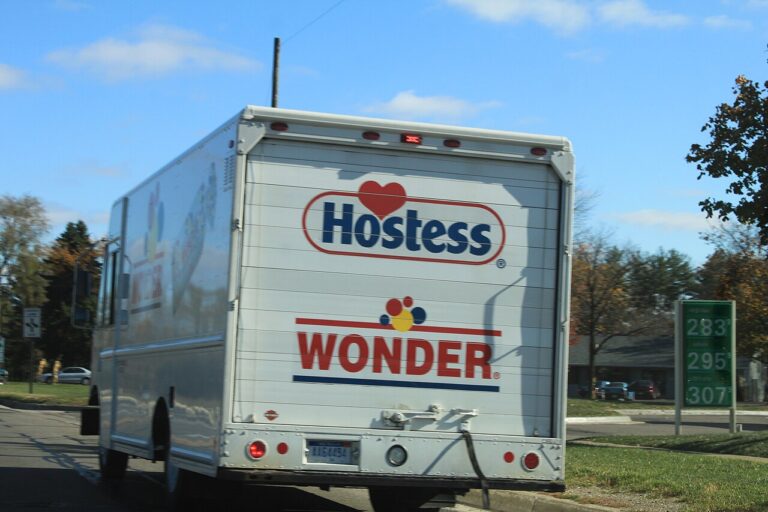
Two years after Southwest Airlines, in Bissonnette v. LePage Bakeries Park Street, the Court unanimously rejected another employer’s effort to further narrow the exemption. In Bissonnette, the Court reversed the Second Circuit, which had held that truck drivers for a bakery company are not exempt from the FAA because they work in the baking industry rather than the transportation industry. But once again, the Court issued a narrow opinion that left some unanswered questions. The Court merely held that to claim the exemption, workers do not need to work for a company in the transportation industry. The Court left open the question that it will resolve in Flowers — whether the exemption applies to “last mile” drivers who deliver goods in-state at the end of a journey that began out-of-state.
The Court’s initial misinterpretation of the FAA in Circuit City left employers with the argument that Congress didn’t even intend to exclude all transportation workers from the FAA. In Southwest and Bissonnette the focus was on who counts as a transportation worker, while in Flowers the focus is on which transportation workers are “engaged in foreign or interstate commerce.” The parties’ arguments in all three cases have a farcical quality because they proceed on the assumption that Congress only intended to exclude some workers from the FAA’s coverage. And, since most of the Republican appointees on the Court refuse to look at legislative history, the parties make their arguments about this non-existent Congressional intent relying on dictionaries and other legislation, rather than on statements made by members of Congress and the materials Congress actually considered when it enacted the FAA.
Angelo Brock is a commercial truck driver who delivers products that Flowers bakes in one state to customers located in another state. It sure sounds like he’s “engaged in interstate commerce.” Flowers’ business model of making interstate sales depends upon drivers like Brock. The only wrinkle is that instead of picking up the products at an out-of-state bakery, Brock picks them up from an in-state warehouse. Recall that the Court already decided in Southwest that the exemption applies to airplane cargo loaders who don’t cross state lines. So, Flowers is reduced to arguing that Brock’s case is different because Brock doesn’t interact with a vehicle that crosses state lines, ignoring the fact that Brock does interact with goods that cross state lines on their journey from the bakery to their final destination. In making this argument, Flowers demonstrates that employers won’t give up until the Court addresses their precise circumstances.
Notably, Amazon has filed an amicus brief urging the Court to rule in a way that allows it to impose arbitration agreements upon its last-mile drivers. Amazon’s entire business model is based on the premise that it will deliver products from around the world to their customers’ front doors. Amazon wouldn’t be one of the largest companies in the world if customers had to go to Amazon’s warehouses to pick up their packages. Yet, Amazon wants the Court to hold that the drivers who take their goods on the last leg of their journey are not engaged in foreign or interstate commerce. Here it’s worth noting that the only effect of a ruling that a certain class of workers is exempt from the FAA is that their arbitration agreements would be governed by state law rather than federal law. But in arguing for a narrow definition of which workers are “engaged in interstate commerce,” Amazon is relying upon the irrational “logic” that underlies the Circuit City decision. The Court decided that Congress wanted to create a uniform national law governing arbitration agreements between employers and workers, but at the same time, Congress wanted the arbitration agreements of workers who are most directly involved in moving people and goods across state lines to be governed by state law.
While the Chamber of Commerce makes a half-hearted attempt to argue that forced arbitration is good for workers, the employer-side briefs in the Flowers case show how scared employers are of letting their workers get access to jury trials, and thus, even if the Court rules against Flowers, the litigation over the FAA’s coverage is unlikely to end.







Daily News & Commentary
Start your day with our roundup of the latest labor developments. See all
March 10
Court rules Kari Lake unlawfully led USAGM, voiding mass layoffs; Florida Senate passes bill tightening union recertification rules; Fifth Circuit revives whistleblower suit against Lockheed Martin.
March 9
6th Circuit rejects Cemex, Board may overrule precedents with two members.
March 8
In today’s news and commentary, a weak jobs report, the NIH decides it will no longer recognize a research fellows’ union, and WNBA contract talks continue to stall as season approaches. On Friday, the Labor Department reported that employers cut 92,000 jobs in February while the unemployment rate rose slightly to 4.4 percent. A loss […]
March 6
The Harvard Graduate Students Union announces a strike authorization vote.
March 5
Colorado judge grants AFSCME’s motion to intervene to defend Colorado’s county employee collective bargaining law; Arizona proposes constitutional amendment to ban teachers unions’ use public resources; NLRB unlikely to use rulemaking to overturn precedent.
March 4
The NLRB and Ex-Cell-O; top aides to Labor Secretary resign; attacks on the Federal Mediation and Conciliation Service