
Will Ebeler is a student at Harvard Law School.
In this weekend’s news and commentary, OSHA fines Amazon for workplace hazards, UPS workers begin voting on tentative agreement, Alphabet Workers Union files unfair labor practice charge against Alphabet Inc., and recent reports explore the increasing relevance of automation for Hollywood’s actors and writers unions.
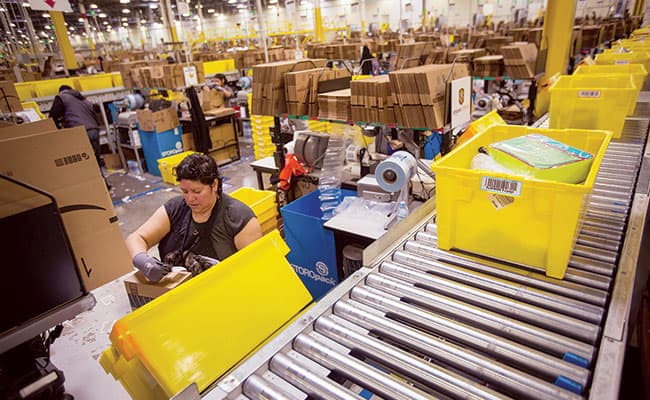
On Thursday the Department of Labor’s Occupational Safety and Health Administration found that Amazon had violated federal workplace safety laws at a fulfillment center in New Jersey. According to OSHA, workers were required to perform tasks that ultimately caused muscular disorders and neck and back injuries. Amazon also failed to make sure employees received proper medical care when they were injured on the job. The agency recommended a $15,625 penalty—the maximum penalty for this violation. The department has 18 open investigations at Amazon locations in the United States and, according to Reuters, has assessed roughly $150,000 in fines against Amazon this year.
On Friday, UPS workers began voting on the tentative agreement that the Teamsters reached in July. Voting will continue through August 22. As John explained, last week Teamsters locals voted to endorse the tentative agreement by a 161–1 vote. Outside analysts expect workers to approve the deal. However, a group of part-time UPS drivers called “Teamsters Organize” has mobilized a “Vote No” campaign pushing for a better deal for part-time workers. The tentative agreement would raise hourly wages for part-time workers from $16.20 to $21, and Teamsters Organize is pushing for part-time hourly wages of at least $25.
Next, on Thursday, Alphabet Workers Union—the union representing Google Help workers—filed an unfair labor practice charge against Alphabet Inc. The workers were employed by a third-party vendor, Accenture Plc, but their work was focused on supporting Google, and workers said they spent most of their time working closely with Google employees. For that reason, the union alleges Google was the workers’ joint employer; the NLRB found in July that Google was the joint employer of a group of workers doing similar work. According to the union, Alphabet illegally retaliated against employees as they were trying to unionize. In June Accenture workers announced a unionizing campaign then in July, Accenture announced that it was cutting its Google Help workforce from roughly 130 to 40. The union has alleged that the layoffs are retaliation for the unionizing effort.
Finally, artificial intelligence has become a high-profile point of disagreement between Hollywood studios and unions. Both WGA and SAG-AFTRA have pushed to ensure that members are protected from studio use of AI. In response, studios have tried to discount the risk that automation will replace actors by pointing to proposals that would, for example, require that actors consent to automated uses of their likenesses. However, reports in last week’s New York Times and Los Angeles Times highlight how automation is already present in the movie and television industry.
On Friday, the New York Times reported on existing technology that could let studios replace actors. The 2016 movie Rogue One included the likeness of Peter Cushing—an actor who died in 1994—by using motion capture and a digital rendition of Cushing’s face. One visual effects company said in a statement that existing technology lets it “create performances of historical figures based on existing footage.” And many studios use automation to fill out extras in crowd scenes. As the NY Times explains, although it may currently be too expensive to completely replace actors, existing technology can reduce studios’ need for actors, and possibly writers. Although studio proposals would require actor “consent,” in practice only high-profile stars would be able to effectively negotiate approved uses of their likeness.
Earlier in the week, the Los Angeles Times explored a recent hiring surge among Hollywood studios looking for automation workers. In its reporting, the LA Times found that Netflix has more than a dozen active LinkedIn job postings targeting workers with AI expertise, and one listing said that AI helps Netflix “create great content.” Other studios have posted such positions as “AI Prompt Animator.” Duncan Crabtree-Ireland, SAG-AFTRA’s national executive director and chief negotiator, said the job listings appear to point to a broader strategy to “set up a post-strike dynamic around AI” rather than a direct attempt to break the ongoing strikes.




Daily News & Commentary
Start your day with our roundup of the latest labor developments. See all
October 14
Eleventh Circuit overturns ERISA exhaustion rule; DHS finalizes removal of automatic renewal for work permits; AFGE challenges SSA over flexible scheduling policy.
October 13
Chicago hotel workers remain on strike; a coalition of Democratic states sues the Labor Department over canceled unemployment insurance grants; the Federal Labor Relations Authority establishes a new mediation framework for federal worker disputes.
October 12
Workers at the Obama Foundation begin organizing; MLB submits its latest collective bargaining agreement proposal; Brigham & Women's nurses postpone strike.
October 11
UAW President Shawn Fain succeeds in his reelection bid, and Spanish unions call for a general strike.
October 9
DHS proposes a $100k fee for the foreign grad employment program; Trump suspends tech company access to green card program; and private equity perpetuates poor working conditions for home care workers.
October 8
NLRB judge finds UPS unlawfully restricted union insignia; Harvard graduate workers authorize second strike; OSHA orders Union Pacific to pay $300,000 in damages in whistleblower case.