Finlay Adamson is a student at Harvard Law School.
In today’s news and commentary, California lawmakers and rideshare companies reach an agreement on collective bargaining legislation for drivers; six unions representing workers at American Airlines call for increased accountability from management; and Massachusetts Teamsters continue the longest sanitation strike in decades.
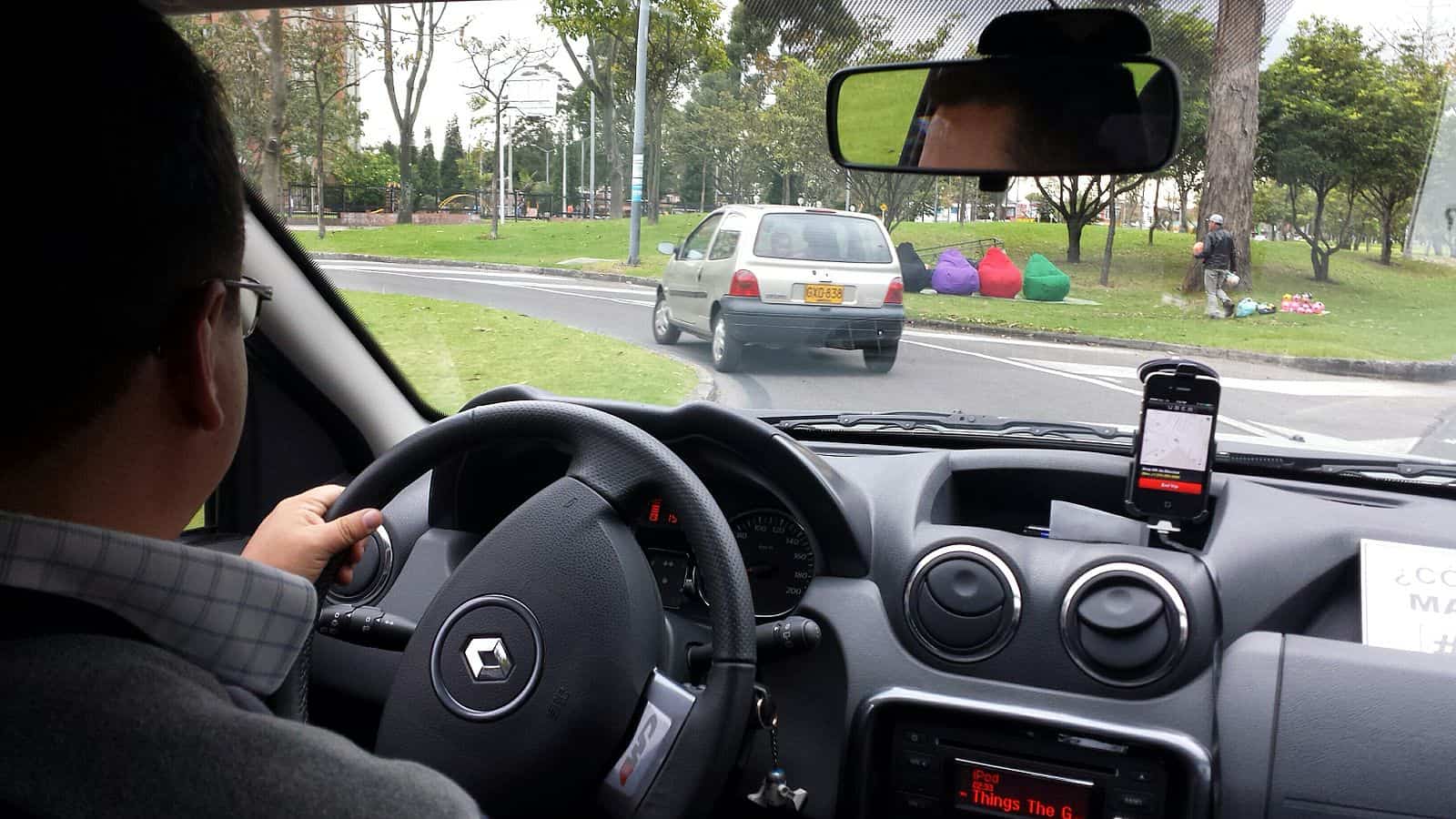
California Governor Gavin Newsom and state lawmakers recently reached an agreement with Uber and Lyft to advance a bill that provides rideshare drivers a path towards collective bargaining. The Transportation Network Company Drivers Labor Relations Act, or Assembly Bill 1340, guarantees drivers “the right to form, join, and participate in the activities of (drivers organizations)… to engage in other concerted activities for the purpose of collective bargaining or other mutual aid or protection.” The Act is structured similarly to Massachusetts General Law 150F, a bill that grants collective bargaining rights to rideshare drivers in the Commonwealth. In exchange for dropping their opposition to the bill, Uber and Lyft received assurances from legislators that they would support legislation reducing the cost of insurance coverage mandates. California currently imposes a $1 million liability coverage requirement on rideshare companies. The agreement marks a possible resolution to an intense legal and political battle between California labor unions and rideshare companies over the status of rideshare drivers. The 2018 California Supreme Court case Dynamex Operations and subsequent Assembly Bill 5 strictly limited the definition of independent contractors; however, Uber and Lyft funded Proposition 22 to exempt their drivers from the bill. As independent contractors, rideshare drivers are exempt from the National Labor Relations Act.
Six unions representing workers at American Airlines are calling for increased accountability from management following the company’s disappointing financial performance. The unions, including the Allied Pilots Association, the Association of Professional Flight Attendants, Communications Workers of America-Teamsters, Transport Workers Union, and the International Association of Machinists and Aerospace Workers, represent a wide variety of airline workers. Their decision to jointly and publicly call for influence over the company is highly unusual, and speaks to American’s precarious financial position. The unions cite the airline’s declining profitability as a result of overinvestment in domestic travel at the expense of international markets and the removal of in-flight amenities. In a summit earlier this week, the unions discussed “cross-union solidarity and coordinated advocacy,” as well as proposals that would increase employee protections and power. In their joint statement, the unions described their collaboration as a “significant step toward a more unified, impactful labor movement at American Airlines”; they plan to reconvene and engage in further discussions in October.
Massachusetts sanitation workers represented by the Teamsters continue a two month-long strike against Republic Services. Since July 1st, 450 workers in Boston and the surrounding suburbs have refused to return to work following contract negotiation disagreements over worker pay and safety protections. Their strike is the largest sanitation worker strike in a generation. While the parties met for negotiations earlier this week for the first time in over a month, they failed to reach an agreement. Additionally, temporary trash collectors hired by Republic to replace the striking workers are now suing the company for alleged labor violations.
Daily News & Commentary
Start your day with our roundup of the latest labor developments. See all
April 9
California labor backs state antitrust reform; USMCA Panel finds labor rights violations in Mexican Mine, and UPS agrees to cap driver buyout offers in settlement with Teamsters.
April 8
The Writers Guild of America reaches a tentative deal with the Alliance of Motion Picture and Television Producers; the EEOC recovers almost $660 million in compensation for employment discrimination in 2025; and highly-skilled foreign workers consider leaving the United States in light of changes to the H-1B visa program.
April 7
WGA reaches deal with studios; meatpacking strike brings employer back to table; union leaders take on AI.
April 6
Trump to shrink but not eliminate CFPB, 9th Circuit nixes use of issue preclusion to invalidate arbitration agreements.
April 5
Trump proposes DOL budget cuts; NLRB rules in favor of cannabis employees; Florida warehouse workers unanimously authorize strike.
April 3
NLRB says Amazon failed to bargain with union; Harvard graduate workers authorize strike, and states move to preempt local employment law.