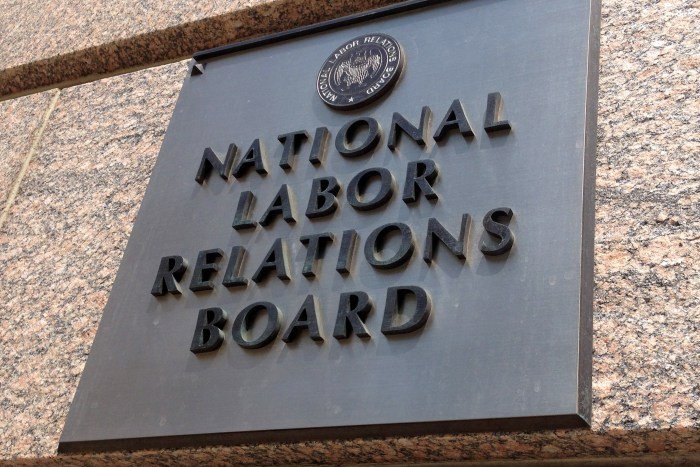

A Truthout op-ed evaluates the current National Labor Relations Board, arguing that under Trump’s administration, the NLRB has become more restrictive of workers’ rights. The author points mainly to two new rules as evidence of tighter restrictions: the recent extension of pre-election hearings from 8 calendar days to 14 business days – meaning workers now have to wait longer after petitioning for an election – and the requirement that all disputes regarding the bargaining unit scope and voter eligibility be litigated and resolved prior to an election. These changes, the author argues, ultimately weaken workers’ access to the NLRB election path. An official list of recent changes in the NLRB rules can be found here.
Meanwhile, outside of the U.S. context, France reached a historic ruling in its labor law. French criminal court held three former executives liable for the suicides of thirty-five employees. They are charged with “institutional moral harassment”. Former executives of Orange, one France’s telecommunication giants and formerly the national telephone company, are held responsible for creating a toxic corporate culture that led to these suicides. During the company’s massive restructuring in the early 2000s, the company sought to eliminate 22,000 workers and shift another 10,000 into new roles. According to the New York Times, the French court found that these executives engaged in “a conscious scheme to worsen the work conditions of the employees in order to speed up departures.” The convicted executives face fines and several months in prison.
Please note that On Labor will resume regular posting of News & Commentary after the holiday season.





Daily News & Commentary
Start your day with our roundup of the latest labor developments. See all
October 18
Federal judge again halts cancellation of the Bureau of Prisons’ CBA; tabletop gaming workers face roadblocks in union recognition.
October 16
Department of Labor reduces wage-and-hour enforcement at unionized workplaces; Fain's victory poses question of federal monitor's extension.
October 15
New reporting examines the rollback of child labor protections; California tries to block a strike; NLRB charges Wisconsin mental health provider with firing workers during union drive.
October 14
Eleventh Circuit overturns ERISA exhaustion rule; DHS finalizes removal of automatic renewal for work permits; AFGE challenges SSA over flexible scheduling policy.
October 13
Chicago hotel workers remain on strike; a coalition of Democratic states sues the Labor Department over canceled unemployment insurance grants; the Federal Labor Relations Authority establishes a new mediation framework for federal worker disputes.
October 12
Workers at the Obama Foundation begin organizing; MLB submits its latest collective bargaining agreement proposal; Brigham & Women's nurses postpone strike.