

Alexa Kissinger is a student at Harvard Law School.
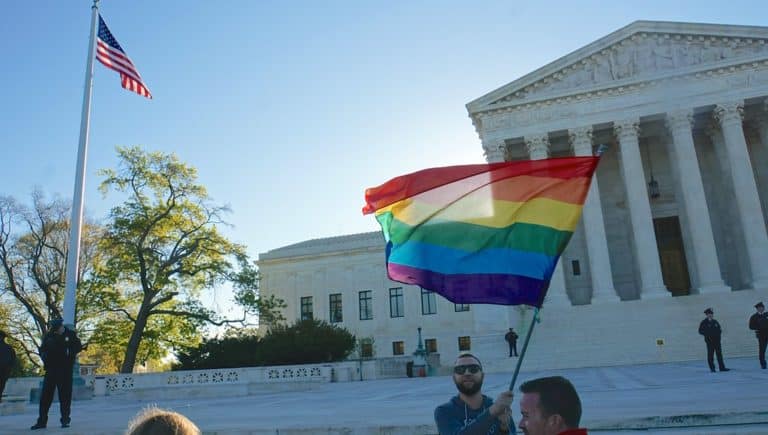
Earlier today in Zarda v. Altitude Express Inc., the Second Circuit ruled en banc that discrimination based on sexual orientation violates Title VII. Chief Judge Robert A. Katzmann wrote for the majority and was joined, in part or completely, by nine other judges. Three judges penned dissenting opinions.
The majority held that “sexual orientation discrimination is a subset of sex discrimination because sexual orientation is defined by one’s sex in relation to the sex of those to whom one is attracted.” This dynamic, the court argued, “[makes] it impossible for an employer to discriminate on the basis of sexual orientation without taking sex into account.” Addressing Congress’s original intent, Judge Katzmann wrote that even though sexual orientation discrimination was “assuredly not the principal evil that Congress was concerned with when it enacted Title VII . . . [laws] often go beyond the principal evil to cover reasonably comparable evils.” This decision overrules Second Circuit precedent in Simonton and Dawson, which held that although under Price Waterhouse gender stereotyping violates Title VII’s prohibition on discrimination because of sex, sexual orientation discrimination claims were not similarly cognizable. In overturning its precedent, the court overruled the lower court and remanded the case to be litigated in light of its new reading of Title VII.
Further complicating matters, the Second Circuit was presented with arguments from the federal government on both sides of the case. The EEOC filed a brief urging precedent be overruled in favor of the employee and the Department of Justice filed a brief arguing that discrimination based on sexual orientation is not cognizable under Title VII. This reversal hands a victory to the estate of a deceased skydiving instructor who was allegedly fired for telling a client he was gay, to LGBTQ rights groups that have been litigating these cases across the country, and to the EEOC which argued on Zarda’s behalf.
Most federal appeals courts have long held that Title VII does not protect workers against discrimination based on sexual orientation. However, in the last few years and continuing with this monumental case, the tide has begun to turn. In 2015, the EEOC held in Baldwin v. Foxx that “sexual orientation is inherently a ‘sex‐based consideration’ . . . [and] accordingly an allegation of discrimination based on sexual orientation is necessarily an allegation of sex discrimination under Title VII.” Last April in Hively, the Seventh Circuit became the first court of appeals to adopt the EEOC’s interpretation. Although not all courts have made the shift, this ruling deepens the circuit split and is a huge step toward protecting lesbian and gay employees from discrimination.




Daily News & Commentary
Start your day with our roundup of the latest labor developments. See all
October 2
Gov. Newsom signs bill regulating AI in workplace; federal judge blocks Trump's $100,000 H-1B visa fee.
October 1
Senate confirms Keith Sonderling as Labor Secretary; Amazon warehouse workers launch an unfair labor practice strike.
September 30
Harvard grad union wins in First Circuit; AI data trainers initiate misclassification suits; Trader Joe’s found liable under ERISA.
September 29
Unions, AI companies, and private equity firms form a new coalition to shape data center policies; unions express support for the Paramount-Warner Bros. merger.
September 28
The Protect College Sports Act nears passage in the Senate; San Francisco municipal workers agree to contract extensions.
September 27
The Trump Administration reaches a settlement with federal unions on reduction in force actions; the United Auto Workers file an en banc petition seeking review of a Second Circuit decision regarding labor arbitrations.