

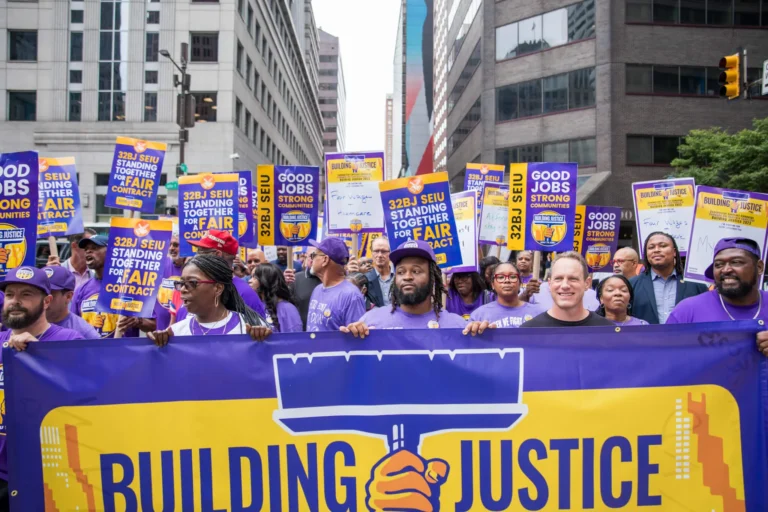
The Boston Globe reports that workers at Logan Airport took a significant step towards unionization this week, as two-thirds of baggage handlers, wheelchair assistants, and cabin cleaners declared through card check their desire to join 32BJ SEIU. The SEIU had been organizing these workers since 2011. The next step of the process will be convincing the ten contractors who employ the workers to recognize and negotiate with the union. Professor Sachs is quoted in the article about the difficulties in uniting the growing number of contract and franchise workers who work at multiple employers. “So much of the economy is becoming fissured and subcontracted,” he said, “that it is becoming more essential, and more common, to organize unions in this way.”
AP is reporting that workers at a Lear Corp. plant in Indiana that makes automotive seats have approved an agreement that will end a two-tiered pay system. The UAW, which facilitated the negotiations, says the deal could provide a model to help thousands of auto workers across the country.
The New York Times profiled Ai-jen Poo, the Director of the National Domestic Workers Alliance, who recently received a MacArthur Foundation “Genius” grant. The NDWA was instrumental in passing the nation’s first Domestic Workers Bill of Rights in New York in 2010, which has since paved the way for similar laws in three other states.
Tens of thousands of people marched in New York City today to urge action on climate change, with UN leaders convening this week for a climate summit meeting. According to the New York Times, participants channeled many themes during the action, including the need for a renewable energy plan and a sustained focus on environmental justice.
Avi Asher-Schapiro critiques the fairness of the “sharing economy” in Jacobin Magazine. Citing companies like Uber, which classify their workers as independent contractors, he argues that when these companies reduce prices for competitive gain, their workers take home far less pay, with many making under minimum wage. Though Uber has discouraged unionization, drivers have reached out to at least one union for support. The article argues that the “sharing economy,” based on the premise that “apps” can connect workers with those needing work done, has systematically stripped down worker protections and wages. Similarly, Kevin Roose writes for New York Magazine on the broader phenomenon of contract-based start-ups in the Bay Area and the residual problem of misclassification of workers as independent contractors.




Daily News & Commentary
Start your day with our roundup of the latest labor developments. See all
October 5
Delaware bans captive audience meetings; EEOC settles remote work national origin discrimination claim; First Circuit stays enforcement order in VA's dispute with AFGE.
October 4
Boston nurses announce open-ended strike; federal judge restores federal prison workers' union protections; St. Louis workers form the first movie theater union in Missouri.
October 2
Gov. Newsom signs bill regulating AI in workplace; federal judge blocks Trump's $100,000 H-1B visa fee.
October 1
Senate confirms Keith Sonderling as Labor Secretary; Amazon warehouse workers launch an unfair labor practice strike.
September 30
Harvard grad union wins in First Circuit; AI data trainers initiate misclassification suits; Trader Joe’s found liable under ERISA.
September 29
Unions, AI companies, and private equity firms form a new coalition to shape data center policies; unions express support for the Paramount-Warner Bros. merger.