
Fred Messner is a student at Harvard Law School.
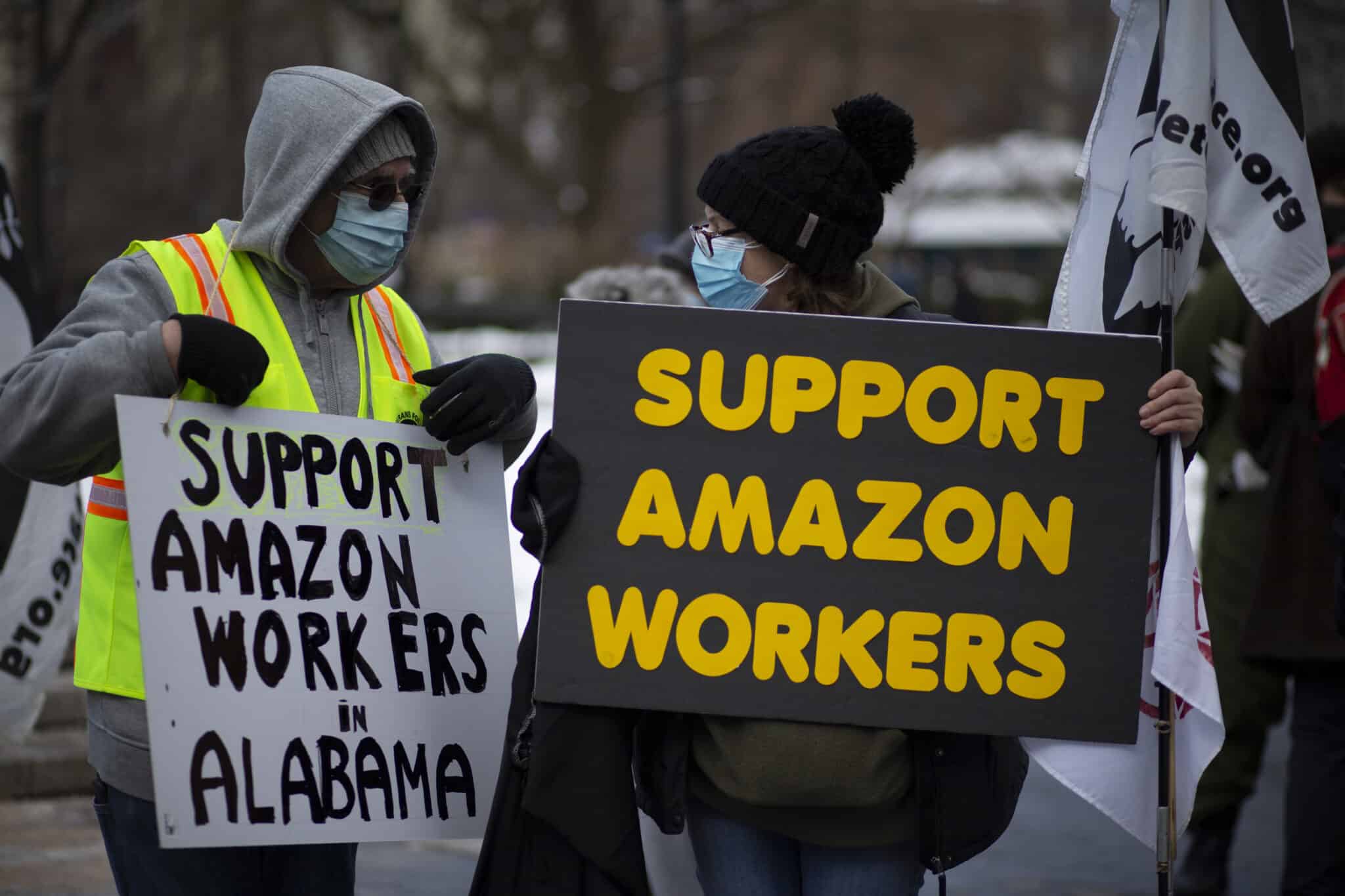
Today is Labor Day in the United States. And, as on every Labor Day, it is worth pausing to note the oddity—and the irony—of the United States celebrating the holiday on the first Monday in September, rather than the first day of May. The notion of a holiday to celebrate labor came about in the final two decades of the nineteenth century, at the height of the Gilded Age and amidst an upswell of labor activism across the country. In the summer of 1884, the Federation of Organized Trades and Labor Unions, the predecessor organization to the American Federation of Labor (AFL), called for May 1, 1886 to be the beginning of a national movement for an eight-hour workday. On that day, tens of thousands of workers—80,000 by one account—convened for a March in Chicago. While that day’s action went off without significant disruption, marches throughout the Midwest over the following few days were met with violence by local police. On May 3rd, police attacked and killed workers striking a Chicago factory. When labor activists met in Haymarket Square the next day to protest the prior day’s killings, they were met by almost 200 heavily armed officers. Then, in a moment still shrouded in uncertainty, “the first dynamite bomb thrown in America” went off, killing one policeman and causing mass chaos. In a fit of panic, the police began to shoot, hitting protestors but also many of their own men. Four workers and seven policemen were dead by the end of the night. The days that followed were tragic for the American labor movement. Martial law was declared throughout the country, and local police rounded up labor leaders, shuttered newspapers, and ransacked union offices. Ultimately, eight Chicago labor activists were arrested, tried, and convicted for their purported role in what the Chicago authorities had begun to describe as a “riot” at Haymarket Square. Four of the men were later hanged, and one committed suicide in prison, though the remaining three were pardoned in 1893 after an immense campaign of international pressure on Illinois Governor John P. Altgeld.
Years later, an American delegate to the 1889 International Workers Congresses of Paris proposed that May 1 be set aside as International Labor Day to commemorate the events of 1886. The holiday caught on, and today almost every major industrialized nation commemorates May Day on May 1. But events unfolded differently in the United States. Although half of the labor movement observed the new May 1 holiday, the other half observed Labor Day on the first Monday in September. The latter date won out as the national holiday in 1894, when President Grover Cleveland, eager to placate the labor movement after his violent response to the Pullman Strikes but hesitant to empower the primarily socialist elements that observed May 1, designated the first Monday in September as a national Labor Day. Having already refused to make May Day a national holiday, the Federal Government would later attempt to erase its historical connection to organized labor: In 1955, at the height of the Cold War, President Eisenhower established May 1 as “Loyalty Day”; for good measure, he also proclaimed May 1 as “Law Day” three years later.
This Labor Day, explore the New York Times’s retrospective on the 1921 Battle of Blair Mountain, the largest labor uprising in American history. Today’s Times also hosts a guest essay by Harvard Law School’s own Terri Gerstein, in which she calls for a renewed commitment to “workers’ rights as a matter of social justice and basic humanity.” The American Prospect and Capital & Main have also marked the holiday, compiling a rich timeline of the rise and decline of unionism in America. Finally, the Department of Labor has created a Labor Day page marking the holiday and detailing the Department’s efforts to “build a future that empowers all workers.”




Daily News & Commentary
Start your day with our roundup of the latest labor developments. See all
October 22
SCOTUS declines Wilcox appeal; Penn State research assistants win bargaining rights; SEIU sued over military leave firing.
October 21
DOL withdraws tipped-worker rule; Instacart settles hiring-bias claims; Phillips 66 locks out New Jersey refinery workers.
October 20
Korean unions oppose labor exemption bill; Portland city workers prepare for strike; UPenn grad student union looks to dismiss university filing
October 19
FDA reverses course on policy prohibiting off-duty union activity; FAA and NATCA reach deal to secure pay increase for air traffic controllers.
October 18
Federal judge again halts cancellation of the Bureau of Prisons’ CBA; tabletop gaming workers face roadblocks in union recognition.
October 16
Department of Labor reduces wage-and-hour enforcement at unionized workplaces; Fain's victory poses question of federal monitor's extension.