
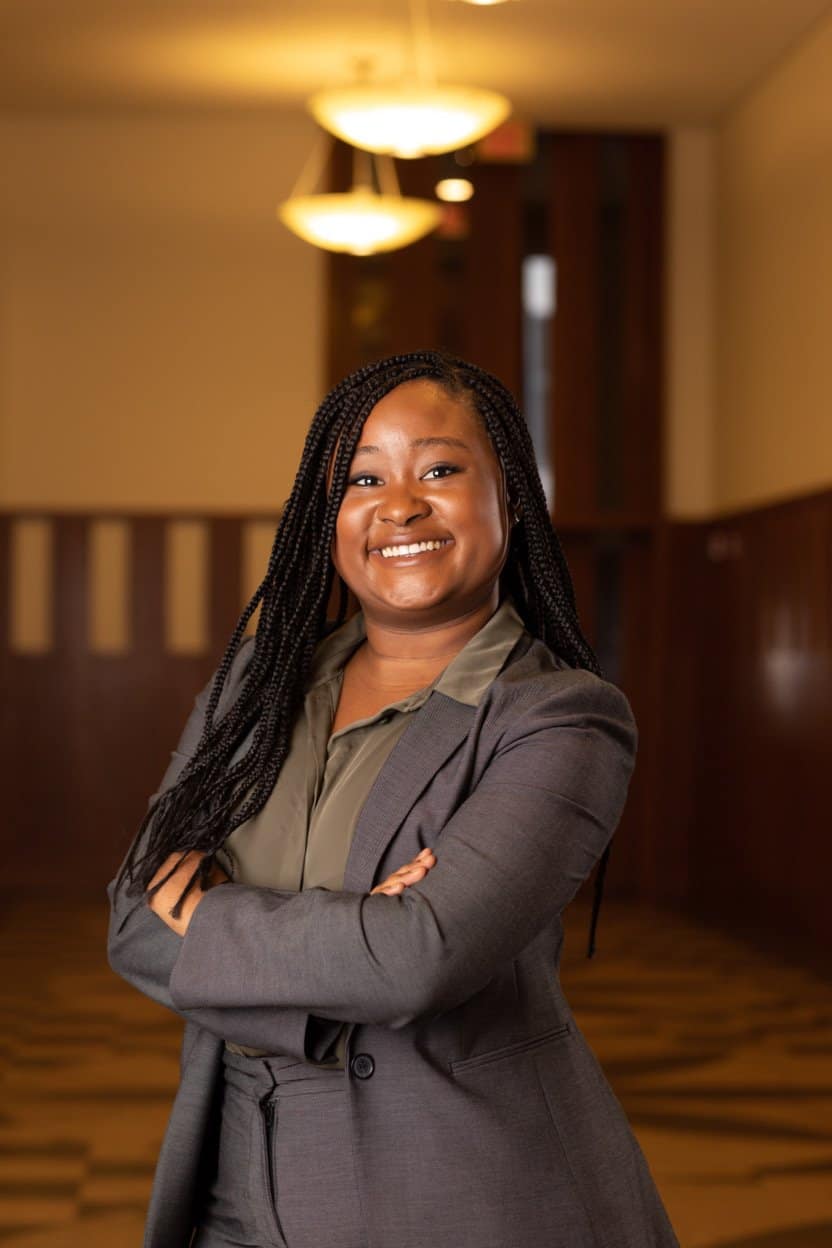
Courtney Brunson is a student at Harvard Law School and member of the Harvard Legal Aid Bureau.
On the first night of the Republican National Convention, multiple speakers took to the stage to highlight President Trump’s actions to help the American economy. One of those speakers, Donald Trump Jr., spoke about the President’s quick and decisive actions to equip front line workers with the personal protective equipment (PPE) they needed to work safely during the coronavirus pandemic. However, many individuals may recall that when health care providers throughout the country faced significant shortages in PPE, the Trump Administration responded by telling the states that it was their responsibility to procure their own supplies. Therefore, Americans should continue to fact check information being relayed during the convention regarding the White House’s actions, or lack thereof, to protect workers.
According to a recent global survey by UNICEF, violence prevention and response has been disrupted and significantly curtailed during the pandemic, which has left children throughout the world at increased risk. In response, Antonio Guterres, the UN Secretary-General, took to Twitter yesterday to highlight how social workers have been providing invaluable labor during the pandemic to address these realities. Secretary-General Guterres also tweeted about the launch of a UN policy brief on COVID-19 and the impact it has had on local and global tourism. According to this report, tourism generated seven percent of global trade and employed one in every ten people globally last year. This year’s significant decrease in tourism due to the pandemic has therefore put an estimated 120 million tourism jobs at risk.
As OnLabor commentators have previously discussed, the state of California heavily relies on incarcerated labor. On example of this reliance is their use of prisoners as firefighters to fight forest fires throughout the state. According to a recent report by the New York Times, Governor Gavin Newsom’s decision to release thousands of incarcerated individuals to limit the spread of the coronavirus has actually led to a significant depletion in their firefighter force. Paid about $5.12 per day for their efforts, these workers’ release has actually hindered the state’s ability to effectively combat fires currently burning in the state, which has led to Newsom reaching out to other states for assistance.
Finally, the Oxford University press published a new paper in The Economic Journal that argues that a worker’s social network significantly impacts their productivity and earnings. The authors’ hypothesize that “large and loosely connected networks lead to better access to information [while] smaller and tighter networks lead to more peer pressure.” One of the paper’s conclusions is that – across different educational, vocational, and professional environments – female workers have smaller networks and male workers have larger ones, which the study believes may be a source of wage differences. Though additional research into the gender wage gap is helpful for fostering discussion and developing solutions, it remains important to remember that factors like wage secrecy, lack of legal recourse, discrimination, and disproportionate familial/childcare obligations are also significant barriers to pay equity.



Daily News & Commentary
Start your day with our roundup of the latest labor developments. See all
October 27
Some California union locals defy their statewide leadership to back the state’s billionaire tax proposal; a Brown University technology center releases a map of the hidden global workforce behind AI; the National Women's Soccer League and its players union settle six grievances.
October 26
Harvard dining workers authorize strike; New York City bans horse carriages; Brooklyn nurses rally in support of colleague.
October 25
Dallas Cowboys Cheerleaders unionize; Bureau of Prisons again pushes for union contract cancellation; CSU faculty votes on strike authorization.
October 23
Employers increasingly shift health care costs onto workers and NYC proposes placing restrictions on fully automated customer service.
October 22
SCOTUS declines Wilcox appeal; Penn State research assistants win bargaining rights; SEIU sued over military leave firing.
October 21
DOL withdraws tipped-worker rule; Instacart settles hiring-bias claims; Phillips 66 locks out New Jersey refinery workers.