
Meredith Gudesblatt is a student at Harvard Law School and a member of the Labor and Employment Lab.
In Today’s News and Commentary, a strike by Long Island Railroad employees is temporarily averted, the Department of Justice sues Rhode Island over a minority teachers student loan repayment program, and University of California employees sue the Trump Administration for financial coercion.
On Tuesday, in response to a request from a coalition of unions, President Trump issued an executive order establishing an emergency board to review a dispute between the Long Island Rail Road and the unions. The railroad’s workforce is among the highest paid in the nation, and while representatives of other Metropolitan Transit Authority employees have already agreed to a 9.5 percent wage increase over the next three years, the unions want an additional 6.5 percent increase in a fourth year to help keep pace with inflation. Contract negotiations have been in mediation for over a year, but in August, the National Mediation Board released the unions from ongoing mediation. Before asking for assistance from President Trump, the unions had planned to go on strike yesterday for the first time in over 30 years. Whether the presidential emergency board will result in a contract or simply postpone the strike until next year remains to be seen. But for now, riders of the biggest commuter rail service in the United States can breathe a sigh of relief.
Meanwhile, Bloomberg reports that the Department of Justice filed suit against Rhode Island for race discrimination in public employment related to a student loan forgiveness program designed to boost teacher diversity. The case is United States v. State of Rhode Island. The Educators of Color Loan Forgiveness Program, established in 2021 after the Rhode Island Department of Education took control of the Providence Public School District, allows teachers of color (defined as those who identify as Black, Hispanic, Asian, American Indian, or people of two or more races) to receive student loan repayments of up to $25,000. The suit alleges that excluding White teachers is “blatant race discrimination” in violation of Title VII of the Civil Rights Act. In July, the EEOC found “reasonable cause to believe” the student loan program was in violation of Title VII. The Department of Justice seeks an injunction blocking the program and an award of relief to non-minority teachers who were ineligible.
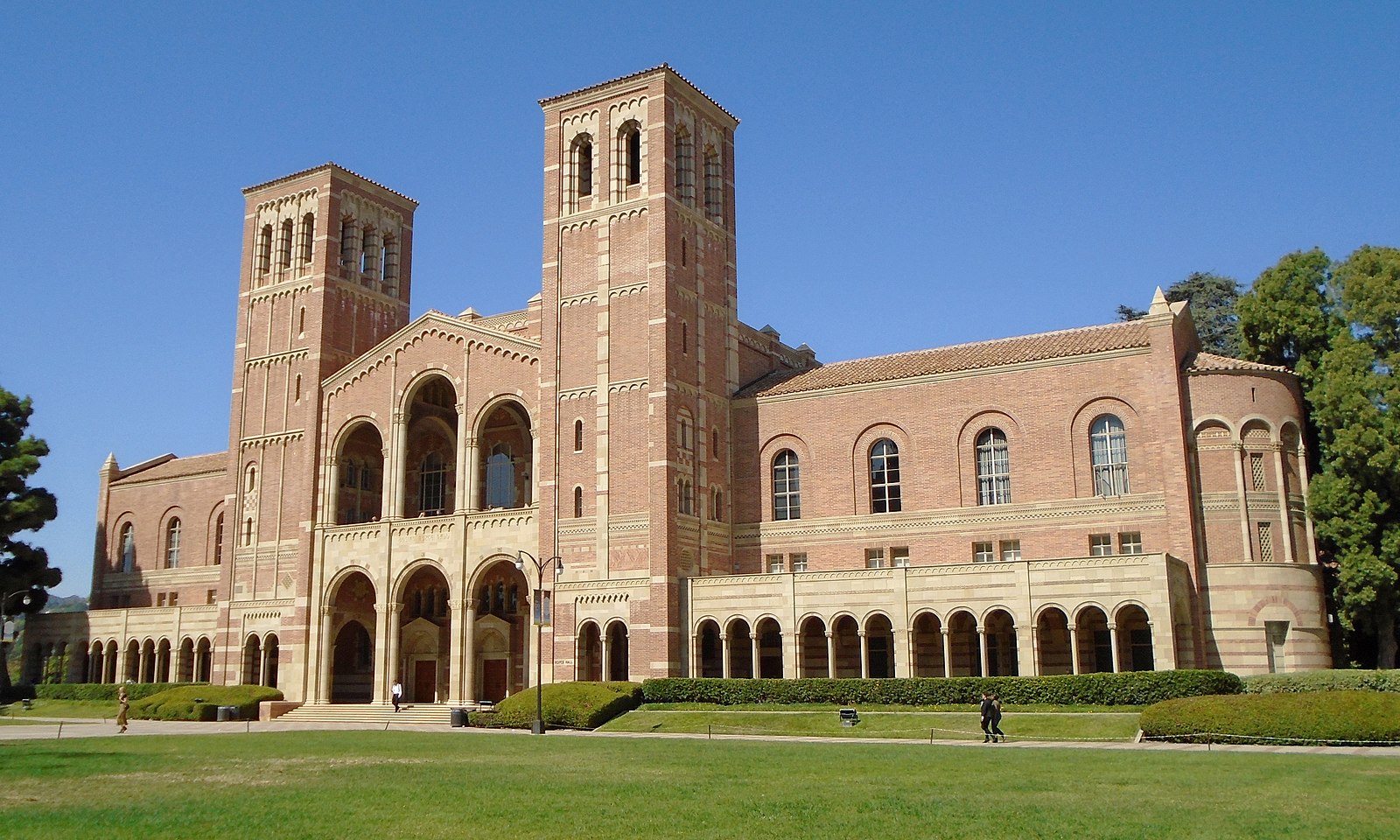
Lastly, a group of 21 labor unions representing over 100,000 faculty and student employees in the University of California education system have filed suit in the U.S. District Court for the Northern District of California against the Trump Administration over its weaponization of Title VI and financial threats against academic institutions in an attempt to stifle views it opposes. The Los Angeles Times has described the unions as “not waiting on leaders.” Up until now, the University of California has limited itself exclusively to negotiations, but the president of the UCLA Faculty Association expressed hope that UC administration would join them in this suit. The 123-page complaint alleges that the funding cuts and $1.2 billion fine levied against UCLA violates employees’ free speech and due process rights, as well as the 10th Amendment due to the Trump Administration’s attempt to take over and micromanage the UC system. It also describes the Trump Administration as “[d]etermined to exert ideological control over the nation’s core institutions,” following a playbook “employed by autocratic movements around the world—be it Hungary, Turkey, or Brazil.” The Plaintiffs are represented by Altshuler Berzon LLP, Democracy Forward Foundation, and the American Association of University Professors, among others.


Daily News & Commentary
Start your day with our roundup of the latest labor developments. See all
March 16
Starbucks' union negotiations are resurrected; jobs data is released.
March 15
A U.S. District Court issues a preliminary injunction against the Department of Veterans Affairs for terminating its collective bargaining agreement, and SEIU files a lawsuit against DHS for effectively terminating immigrant workers at Boston Logan International Airport.
March 13
Republican Senators urge changes on OSHA heat standard; OpenAI and building trades announce partnership on data center construction; forced labor investigations could lead to new tariffs
March 12
EPA terminates contract with second-largest union; Florida advances bill restricting public sector unions; Trump administration seeks Supreme Court assistance in TPS termination.
March 11
The partial government shutdown results in TSA agents losing their first full paycheck; the Fifth Circuit upholds the certification of a class of former United Airline workers who were placed on unpaid leave for declining to receive the COVID-19 vaccine for religious reasons during the pandemic; and an academic group files a lawsuit against the State Department over a policy that revokes and denies visas to noncitizens for their work in fact-checking and content moderation.
March 10
Court rules Kari Lake unlawfully led USAGM, voiding mass layoffs; Florida Senate passes bill tightening union recertification rules; Fifth Circuit revives whistleblower suit against Lockheed Martin.