Ryan Gorman is a student at Harvard Law School.
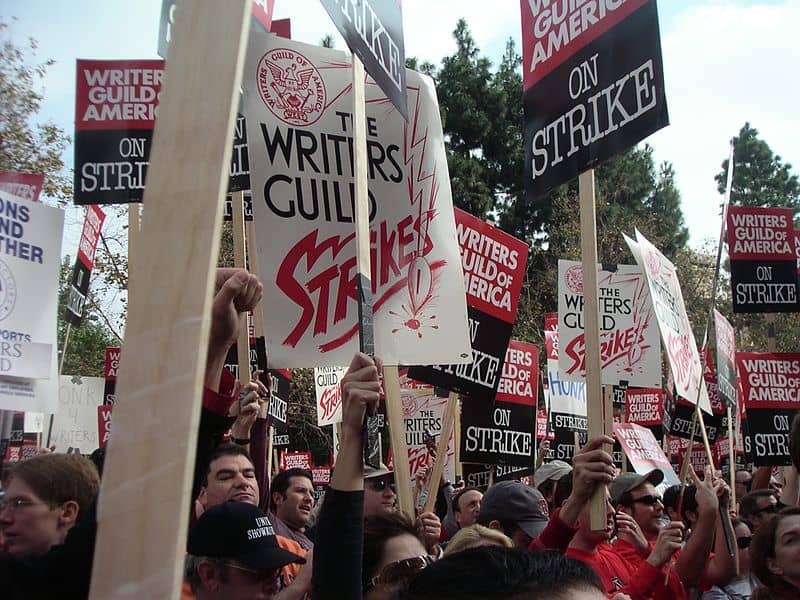
Yesterday, workers at Hearst Magazines announced plans to form a union with the Writers Guild of America, East (WGAE). Union organizers told The Daily Beast that they spent over a year building support across 24 Hearst-owned brands, among which include well-known publications like Esquire, Good Housekeeping, and Cosmopolitan. Organizers said that a “strong majority” of the 500-member staff signed cards authorizing unionization. Editorial, video, design, photo, and social media staff at Hearst Magazines will follow in the footsteps of workers at other publications that have recently unionized and fought for contracts, such as Vox and BuzzFeed News. The Hearst Magazines unionization effort is unique in its scope, however, spanning across two-dozen of the company’s print and digital brands. You can read the press release from WGAE’s Hearst Magazines Organizing Committee here, where organizers discuss the issues they hope to address by forming a union. WGAE now represents almost 6,000 writers across various forms of media.
Meanwhile, today in Vox, Ian Millhiser has a piece discussing the decisions of two regional directors with the NLRB who declined to investigate accusations of unfair labor charges lodged against Sens. Elizabeth Warren and Bernie Sanders’ presidential campaigns. The regional directors noted that prosecution of a presidential election committee would be “so entwined with political speech protected by the Constitution” as to raise First Amendment concerns, attributing these worries to the Board’s General Counsel, Trump appointee Peter Robb. Millhiser is concerned that this policy might stretch beyond political campaigns to insulate other employers who engage in large amounts of protected speech, such as news organizations. Millhiser notes that such a stretch would conflict with long-standing Supreme Court precedent holding that newspaper companies are no more insulated from labor laws than any other employer. Nevertheless, the Board’s General Counsel has broad discretion over which enforcement actions will and will not be brought.
Teachers in Little Rock, Arkansas, have announced a one-day strike to take place on Thursday of this week. The strike would be only the second time in history that teachers in Little Rock will have walked out. The announcement comes after the Arkansas Board of Education decided to no longer recognize the district’s bargaining agent when the teachers’ contract expired on October 31. That decision was made by surprise motion at meeting in early October, with virtually no opportunity for public comment. However, Thursday’s strike is focused on more than just getting the union’s bargaining power back. In 2015, the state board took control of public schools in Little Rock, citing low test scores at several schools within the district. The state board recently voted to return partial control over all the schools to the district, after backing down from a plan that would have only returned control over the district’s highest performing schools. That plan, which many within the community decried as a step backwards towards segregation, would have sustained state control of the district’s “underperforming” schools—many of which have high minority populations. Union leaders have said that the strike is aimed at ensuring that local control is fully restored.
At the end of this week, 25,000 Chicago Teachers Union members will vote via secret ballot on whether to ratify the agreement reached between the union and the city on October 31. Though teachers and students returned to the classroom after that tentative agreement was reached, the two sides have continued to work on various contract details, including laying out a full pay schedule for veteran teacher raises that proved to be one of the final sticking points in the negotiations. While the strike authorization vote required three-fourths of union members to vote for a strike, the contract can be ratified by a majority.





Daily News & Commentary
Start your day with our roundup of the latest labor developments. See all
October 21
DOL withdraws tipped-worker rule; Instacart settles hiring-bias claims; Phillips 66 locks out New Jersey refinery workers.
October 20
Korean unions oppose labor exemption bill; Portland city workers prepare for strike; UPenn grad student union looks to dismiss university filing
October 19
FDA reverses course on policy prohibiting off-duty union activity; FAA and NATCA reach deal to secure pay increase for air traffic controllers.
October 18
Federal judge again halts cancellation of the Bureau of Prisons’ CBA; tabletop gaming workers face roadblocks in union recognition.
October 16
Department of Labor reduces wage-and-hour enforcement at unionized workplaces; Fain's victory poses question of federal monitor's extension.
October 15
New reporting examines the rollback of child labor protections; California tries to block a strike; NLRB charges Wisconsin mental health provider with firing workers during union drive.