
Miriam Li is a student at Harvard Law School and a member of the Labor and Employment Lab.
In today’s news and commentary, the NLRB finds a reporter’s online criticism of the Washington Post was not protected activity under federal labor law, top union leaders leave the Democratic National Committee amid internal strife, and Uber reaches a labor peace agreement with Chicago drivers.
On Monday, an NLRB administrative law judge dismissed a complaint by former Washington Post breaking news reporter Felicia Sonmez, who was fired after publicly criticizing a fellow Post reporter for retweeting a misogynistic joke as well as the Posts’ newsroom culture more broadly. The Washington-Baltimore News Guild and former NLRB General Counsel Jennifer Abruzzo had argued that Sonmez’s termination violated her rights under the NLRA because her tweets constituted protected concerted activity under Section 7 of the Act. In his decision, administrative law judge Robert A. Giannasi rejected this argument, reasoning that the tweets were not “sufficiently related to a labor dispute between the Post and its employees.” The opinion also noted that “Twitter was not Sonmez’s workplace” and characterized the tweets as “reckless disparagement” that was “unnecessary to engage in legitimate protected activity.”
Meanwhile, two prominent labor leaders have resigned from the Democratic National Committee (DNC), citing concerns about the party’s failure to expand their coalition in an “urgent” political moment. Randi Weingarten, president of the American Federation of Teachers, and Lee Saunders, head of the American Federation of State, County, and Municipal Employees, announced their departures this week, signaling a divergence between the two union leaders and current DNC chairman Ken Martin. Both Weingarten and Lee backed Martin’s opponent, Ben Wikler, in the recent DNC leadership race. In her resignation letter, Weingarten explicitly cited disagreements over Martin’s direction, writing, “While I am proud to be a Democrat, I appear to be out of step with the leadership you are forging.”
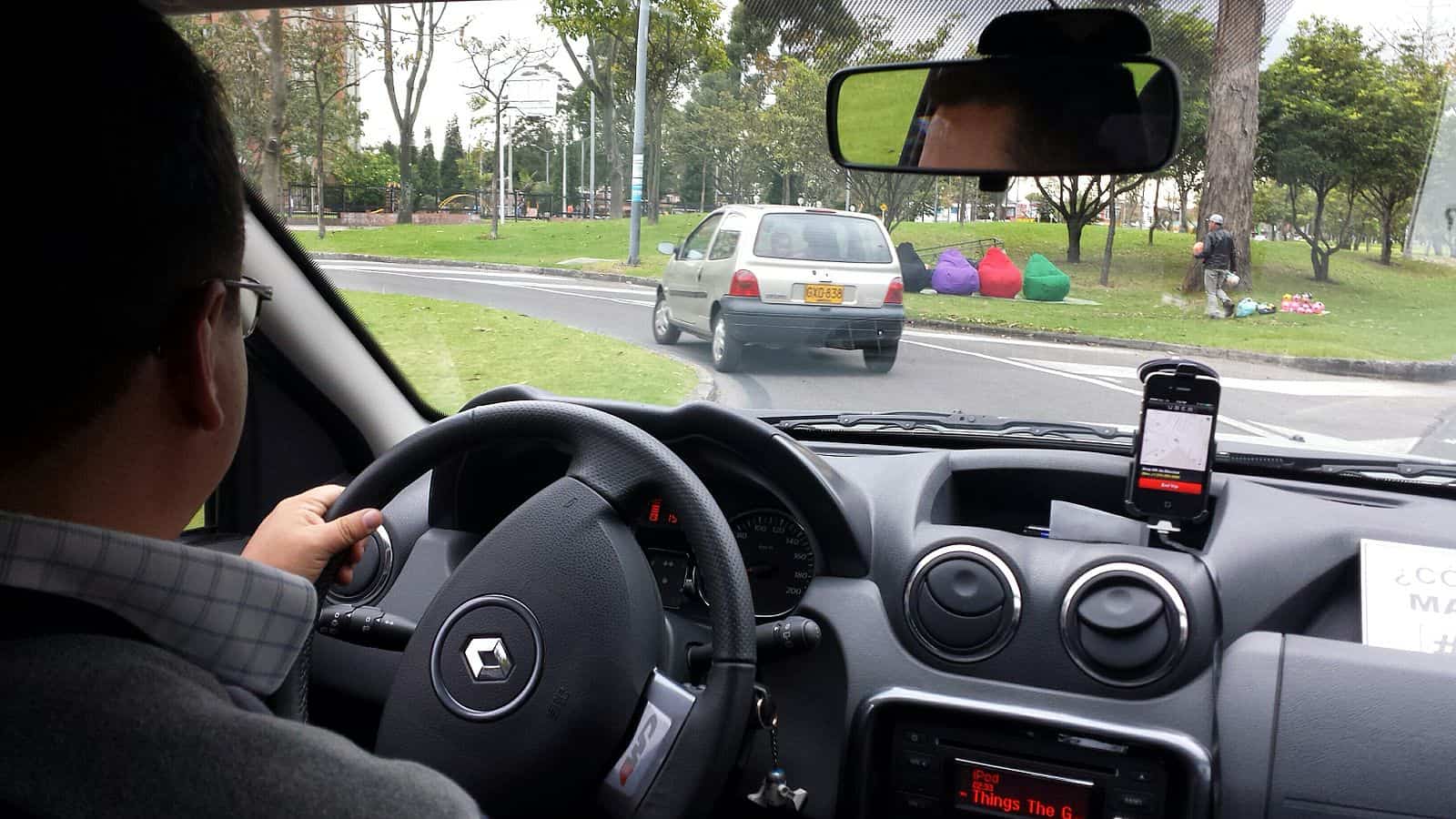
Finally, Uber reached a labor peace agreement with Chicago ride-share drivers, resolving a contentious campaign to increase driver pay in the city. Under the agreement announced Monday by the Illinois Drivers Alliance, Uber agreed not to oppose union efforts to organize roughly 100,000 rideshare drivers across Illinois. As part of the deal, Uber has also committed to supporting statewide legislation allowing rideshare drivers to collectively bargain while remaining classified as independent contractors, according to Local 1 spokesperson Bailey Koch. Lyft has not yet agreed to a similar arrangement, though discussions between the company and unions are reportedly ongoing. The deal, struck ahead of a Chicago City Council vote on a pay-transparency ordinance that was subsequently shelved, marks a key victory for unions and sets up a competition among regional driver coalitions. Proponents of the city council ordinance aruged that it would have ensured drivers earned above minimum wage, while Uber and Lyft contended the measure would have forced thousands of drivers out of work.



Daily News & Commentary
Start your day with our roundup of the latest labor developments. See all
March 27
“Cesar Chavez Day” renamed “Farmworkers Day” in California after investigation finds Chavez engaged in rampant sexual abuse.
March 26
Supreme Court hears oral argument in an FAA case; NLRB rules that Cemex does not impose an enforceable deadline for requesting an election; DOL proposes raising wage standards for H-1B workers.
March 25
UPS rescinded its driver buyout program; California court dismissed a whistleblower retaliation suit against Meta; EEOC announced $15 million settlement to resolve vaccine-related religious discrimination case.
March 24
The WNBPA unanimously votes to ratify the league’s new CBA; NYU professors begin striking; and a district court judge denies the government’s motion to dismiss a case challenging the Trump administration’s mass revocation of international student visas.
March 23
MSPB finds immigration judges removal protections unconstitutional, ICE deployed to airports.
March 22
Resurgence in salting among young activists; Michigan nurses strike; states experiment with policies supporting workers experiencing menopause.